
Hey, let’s play a game: What’s your favorite scary movie? Better yet: What’s your favorite Scream?
As a horror fan, I have to say that since 1996, the Scream franchise has completely ruled the slasher world. Created by Kevin Williamson and brilliantly directed by the late Wes Craven, the original Scream really breathed new life into a genre that had become stale. What I loved was how self-aware it was – the characters actually knew horror movie tropes! They weren’t just helpless victims; they understood the rules, even if that knowledge didn’t save them. The first film was a huge hit, launching the careers of its stars and inspiring a ton of copycats. And Ghostface keeps coming back, every few years, to haunt Courteney Cox, Neve Campbell, and generally poke fun at less inventive horror movies.
Interestingly, the Ghostface mask from Scream wasn’t originally made for the movie! It was a pre-existing, commercially available Halloween mask produced by Fun World, which the filmmakers then licensed for use in the franchise. It’s a pretty unusual origin story!
Kevin Williamson penned the screenplays for the first two and fourth Scream films, while Wes Craven directed the initial four. Matt Bettinelli-Olpin and Tyler Gillett took the helm for the fifth and sixth installments, with James Vanderbilt and Guy Busick writing the scripts. Williamson then returned to co-write and direct the seventh film. Over the years, the Scream franchise has experienced both successes and failures. Some entries haven’t been much better than the low-quality horror films they playfully satirize, while others have significantly impacted the horror genre.
We’ve ranked all the Scream movies, from the least favorite to the best. (It’s not much of a surprise what the top pick is…)
Every Scream Movie Ranked

7. Scream 3
With its focus on the tropes of trilogies, Scream 3 had a lot of potential for self-aware humor. However, the movie discovered that the conventions of third films aren’t all that distinct from those of any sequel, leading to jokes that often fall flat. After releasing three Scream movies in just five years, the series was beginning to feel creatively exhausted – even resorting to Ghostface mimicking voices, including one of a deceased character, which felt like a desperate attempt to be clever. It’s no surprise it took over a decade for a fourth film to finally appear.
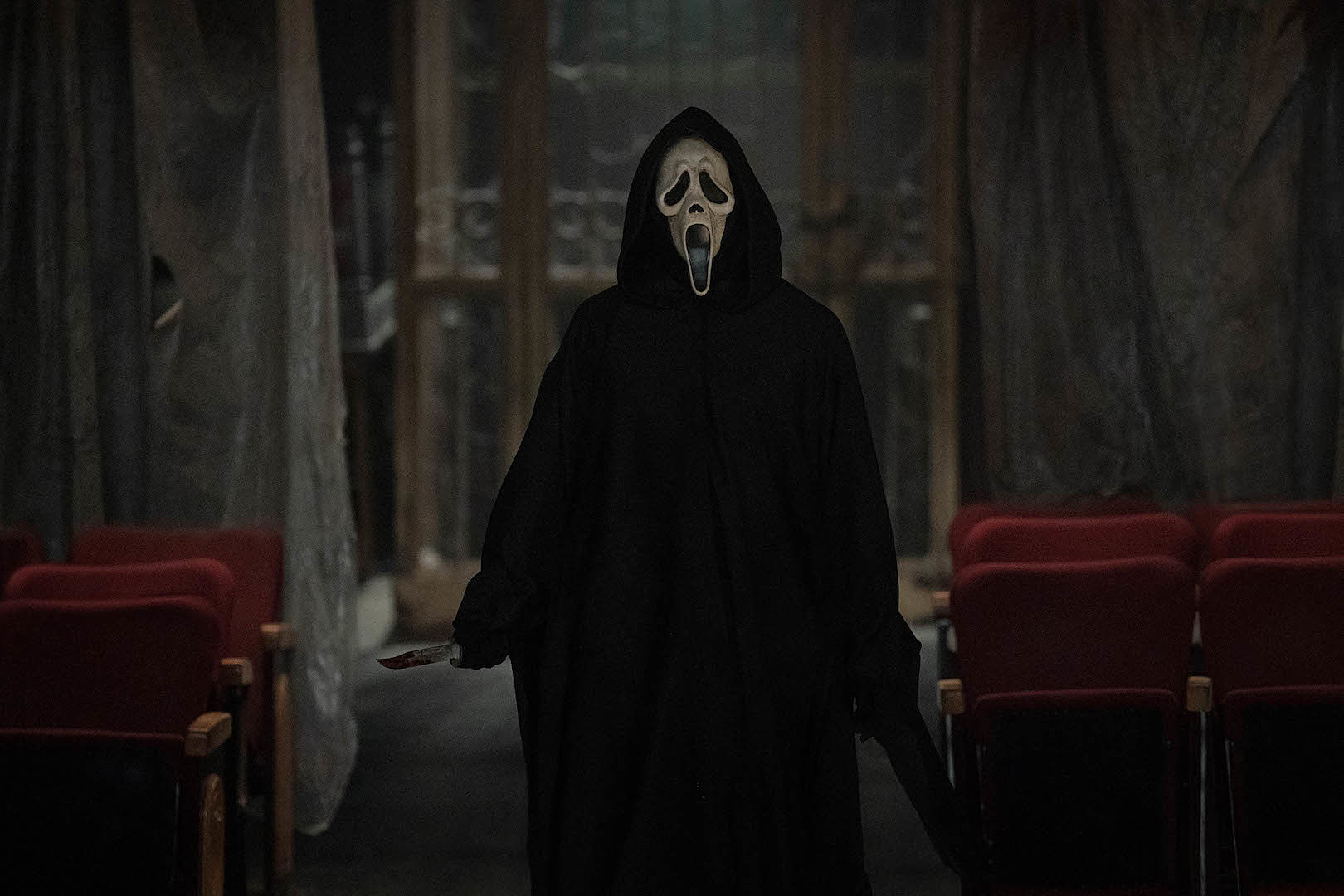
6. Scream VI
While some genuinely frightening scenes – particularly a clever opening – prevent this film from being a total failure, it ultimately falls short of expectations. Scream VI feels less like a self-aware commentary on horror movies and more like it’s stuck repeating familiar patterns from its own series. The ending is particularly weak, and significantly brings down the overall quality of the film.
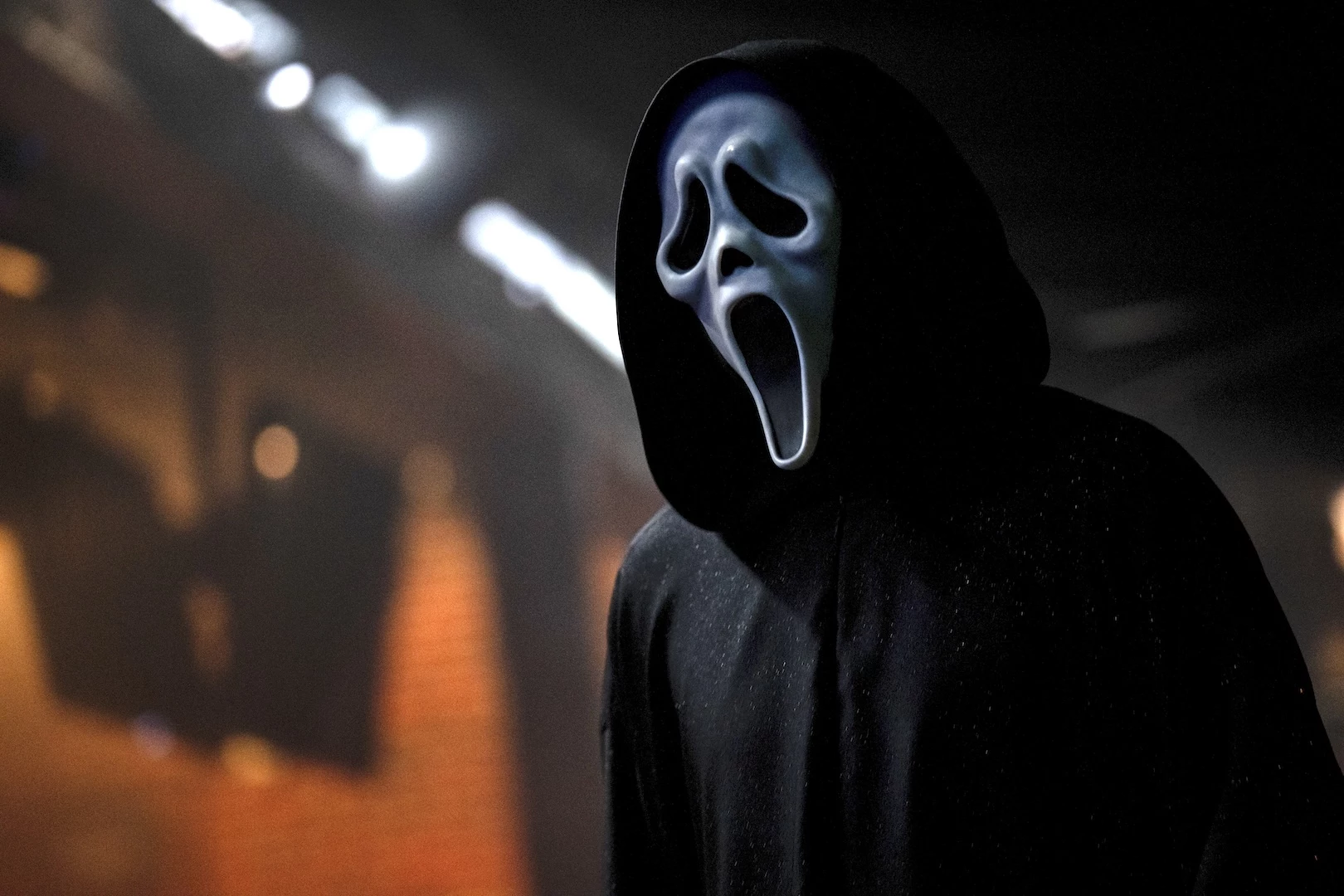
5. Scream 7 (2026)
The original Scream movie was a clever and refreshing take on the horror genre, playfully subverting tired tropes. But by 2026, the series had become predictable and repetitive. While this latest installment suffers from a disappointing ending and some questionable decisions about its characters, it’s good to see Neve Campbell back as Sidney. She brings a real emotional weight to the role, portraying a middle-aged mother trying to shield her daughter, Isabel May, from the lingering effects of past trauma – and, of course, Ghostface.

4. Scream 4
The Scream movies are most effective when they clearly satirize a specific horror trope; the first Scream poked fun at slasher films, Scream 2 focused on sequels, and so on. Scream 4‘s weakness is that it doesn’t have a well-defined target for its satire. It hints at the idea of a ‘legacyquel’ – a sequel that comments on the franchise’s history – but that concept wasn’t really established in 2011, so there weren’t any established rules to parody. It also attempts to mock early YouTube culture, which was still developing at the time. While the killer reveal is effective, the over-the-top, bloody hospital climax is even more ridiculous than usual for this series.

3. Scream (2022)
After an eleven-year gap, Hollywood had plenty of time to make sequels that revisit old franchises, and those movies brought a lot of tired tropes with them. The best parts of 2022’s Scream – a film with a somewhat confusing title – are the ways it plays with those clichés and introduces a new group of teenagers linked to the original characters. While the new, younger cast doesn’t quite have the energy and charisma of the originals (though Jack Quaid as Sam’s boyfriend is a standout), this installment does a better job of connecting to the series’ history. Unlike some previous sequels, the Ghostface killer’s motives in this film actually make sense.

2. Scream 2
The cast of Scream 2 is widely considered the strongest in the series, featuring all the original stars alongside impressive additions like Sarah Michelle Gellar, Timothy Olyphant, Laurie Metcalf, Jada Pinkett Smith, Omar Epps, Portia de Rossi, and Jerry O’Connell. After brilliantly satirizing slasher films in the first movie, Scream 2 cleverly targeted the clichés of sequels themselves. Many fans believe this was the last Scream film to truly feel innovative, which may be linked to the fact that series creator Kevin Williamson only wrote one of the four movies that followed.

1. Scream (1996)
Scream wasn’t simply good—it was a landmark horror film, arguably the most impactful since the original Halloween in 1978. It broke the mold of typical horror movies by featuring characters who were knowledgeable about the genre and used that knowledge to survive—or even become—the killer. While it inspired many imitators and a whole franchise, and the formula eventually became predictable, that wasn’t a flaw of the original Scream. It remains a hugely important film in horror history.
10 Famous Actors Who Almost Played Iconic Horror Villains

1. Sean Connery as Hannibal Lecter in The Silence of the Lambs (1991)
A major reason The Silence of the Lambs is so compelling is Anthony Hopkins’ chilling portrayal of Dr. Hannibal Lecter, the cannibalistic psychiatrist. However, Hopkins wasn’t the first choice for the role. Sean Connery reportedly received the script first but declined, finding the character too disturbing to play. Director Jonathan Demme also thought about casting Robert De Niro, Dustin Hoffman, or John Lithgow before ultimately choosing Hopkins.

3. Robin Williams as Jack Nicholson in The Shining (1980)
During the casting of The Shining, Stanley Kubrick strongly considered Robin Williams for the role of Jack Torrance, the man who descends into madness while snowbound at a mountain hotel. The story goes that an episode of Mork & Mindy changed Kubrick’s mind. He apparently felt Williams’ performance in the sitcom showed he was too unhinged for the part. Williams’ portrayal of Jack would have likely been very different from Jack Nicholson’s; Nicholson’s character carries a sense of darkness throughout the film, while Williams might have started as more lighthearted.

2. Leonardo DiCaprio as Patrick Bateman in American Psycho (2000)
It’s not uncommon for directors and producers to clash over casting choices. A good example is the film American Psycho. Director Mary Harron was convinced Christian Bale was perfect for the role of Patrick Bateman, but the studio preferred Leonardo DiCaprio. Harron believed DiCaprio’s image as a young heartthrob didn’t fit the character – a sophisticated investment banker with a dark secret. The studio, however, wanted DiCaprio because of his widespread popularity, as Bale wasn’t as well-known at the time. Although DiCaprio was initially chosen, Bale ultimately landed the part.

4. Jodie Foster as Margaret White in Carrie (2013)
As a horror fan, I always knew Jodie Foster had the chops after The Silence of the Lambs, but did you know she was almost in a Carrie remake? It’s fascinating to learn that both she and Julianne Moore were considered for the intensely difficult role of Margaret, Carrie’s mother. Ultimately, Moore got the part, which is ironic considering she later stepped in to play Clarice Starling in Hannibal – taking over from Foster herself! It’s a small world in Hollywood, and a testament to both actresses’ talent that they were both considered for such iconic, challenging roles.

5. Eddie Murphy as Candyman in Candyman (1992)
Tony Todd’s powerful voice and height—he’s 6’5”—made him perfectly suited to play the terrifying Candyman in the 1992 horror film of the same name. Interestingly, Eddie Murphy was originally the frontrunner for the role, but reportedly asked for a salary that was too high for the film’s budget. While Candyman became a beloved horror classic, Murphy’s other attempts at the genre—Vampire in Brooklyn and The Haunted Mansion—didn’t impress critics. Fortunately, Murphy is much more famous for his comedic work.

6. Tilda Swinton as Pennywise in It (2017)
Tim Curry’s performance as Pennywise the Dancing Clown in the 1990 miniseries It was iconic, setting a high bar for Bill Skarsgard in the 2017 adaptation. Skarsgard delivered a chilling and unique take on the character, but director Andrés Muschietti revealed they also considered Tilda Swinton for the role. Unfortunately, a scheduling conflict prevented Swinton from taking the part, though Muschietti believes she would have been phenomenal.

7. John Lithgow as Seth Brundle in The Fly (1986)
Jeff Goldblum is well-known for playing intelligent, quirky scientists, and his performance in the 1986 film The Fly is a prime example. He plays Seth Brundle, a man who tragically turns into a human-insect hybrid, known as the Brundlefly. Though not initially a villain, Brundle becomes antagonistic as he loses his ability to think rationally and feel empathy. Director David Cronenberg initially considered several famous actors for the role, including Michael Keaton, Mel Gibson, and Willem Dafoe, but they all declined. John Lithgow, a highly respected actor, specifically turned down the part because he found the film too disturbing and unpleasant. He later admitted he would have preferred to play Hannibal Lecter in The Silence of the Lambs, and was actually the second choice for that role.

8. Johnny Depp as The Invisible Man
With Leigh Whannell’s fantastic reimagining of The Invisible Man starring Elisabeth Moss, we’ll likely never know what Johnny Depp’s version would have been like. Years ago, Universal planned a shared cinematic universe called the “Dark Universe,” and Depp was set to star in The Invisible Man, based on the classic H.G. Wells story. But after 2017’s The Mummy didn’t perform well at the box office, Depp’s movie was canceled. Ultimately, that was probably a good thing – the 2020 The Invisible Man offers a fresh take on the story, while a film with Depp would have been restricted by the limitations of the Dark Universe concept.

9. Jamie Lee Curtis as Regan in The Exorcist (1973)
I always find it fascinating learning about how casting almost happened! Did you know Jamie Lee Curtis originally auditioned for the role of Regan in The Exorcist? Apparently, a producer contacted her mom, Janet Leigh, to see if Jamie Lee would read for the part, but Janet thought the role was way too intense and scary for her daughter. It’s wild to think how different things could have been! Jamie Lee has even joked recently that she’d love to play the devil in the new Exorcist movies to finally get a chance to be involved. She told Entertainment Weekly that it would be a really cool, full-circle moment for her, a kind of meta return to the franchise.

10. Freddie Prinze Jr. as Billy Loomis in Scream (1996)
Freddie Prinze Jr. is well-known for his role in the 1997 horror film I Know What You Did Last Summer, but he almost got his start in another famous scary movie. He actually auditioned for the part of Billy Loomis in Scream, and screenwriter Kevin Williamson thought he was a great fit. However, the director, Wes Craven, ultimately chose Skeet Ulrich for the role, as Prinze Jr. revealed in an interview with Mic.
Read More
- Everything We Know About Georgie & Mandy’s First Marriage Season 3
- Belissa Escobedo, on Happy’s Place
- Playdate’s Ending On Amazon Is So WTF I Need To Talk About It
- 10 Dystopian Anime With Horrifying Worlds You Wouldn’t Want to Live In
- Пермэнергосбыт акции прогноз. Цена акций PMSB
- Nintendo Releases First Official Zelda Movie Photos, Revealing Link and Zelda in Costume
- Adam Sandler Talks Really Wanting To Make A Serious Movie Early In His Career, Plus The Funny Prediction His Grandma Made
- Iconic Marvel Location to Finally Debut in Avengers: Doomsday — Report
- ‘Wuthering Heights’ Debuts Fresh Rotten Tomatoes Score
- Netflix’s #1 Trending Comedy Proves Critics Are Wrong About This $523 Million Franchise
2026-02-26 17:59