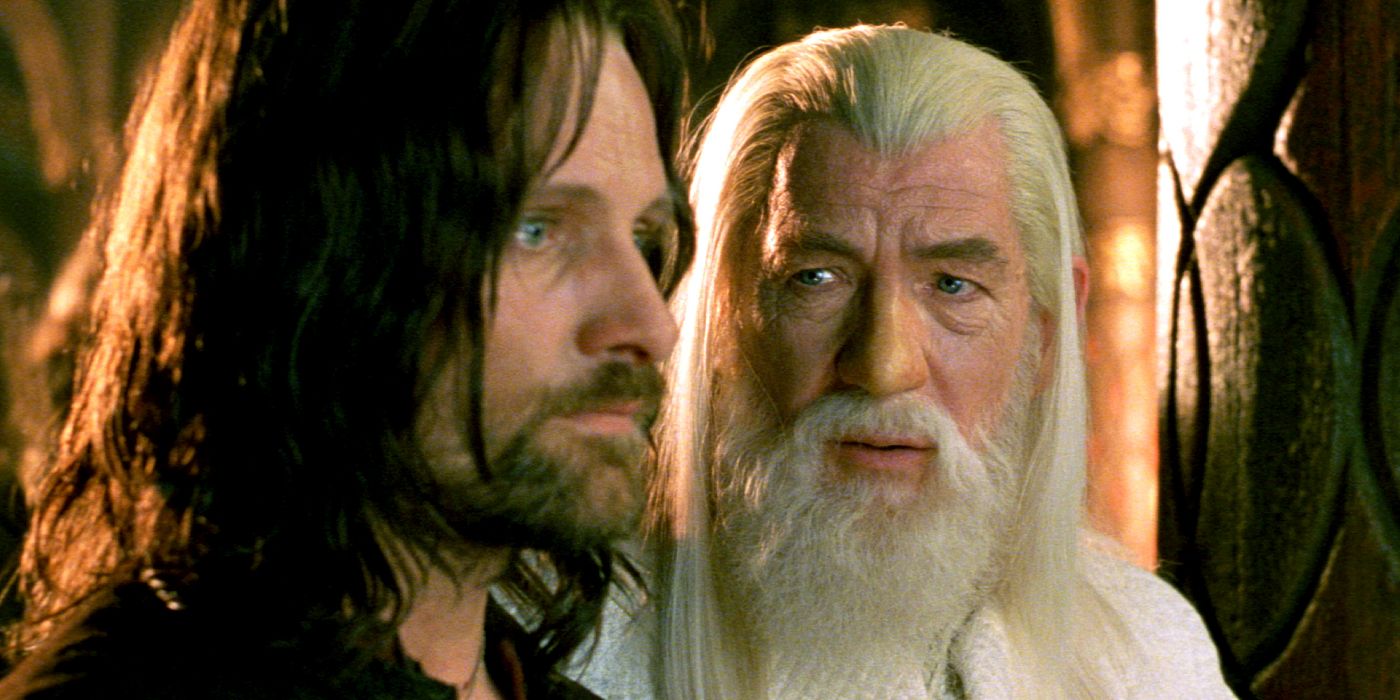
For nearly a century, the writings of J.R.R. Tolkien have been the basis for most modern fantasy stories, including the famous film trilogies directed by Peter Jackson. The story, set in Middle-earth and following Sauron’s quest for power, is a classic example of epic storytelling and the hero’s adventure. With eight films available, there’s a lot of content for fans to enjoy.
Tolkien’s stories are known for being long, which can make watching them a significant commitment, even for longtime fans. Though they unfold at a more deliberate pace than most fantasy movies, they hold up remarkably well and offer endless rewatchability for those who enjoy the world he created.
Ralph Bakshi’s The Lord of the Rings Pales Next to Jackson’s Trilogy
I remember being absolutely fascinated when Ralph Bakshi brought Tolkien’s world to the screen long before Peter Jackson’s films! It was the first attempt to adapt The Lord of the Rings as a movie, and though ambitious, it tried to squeeze the first two books into just two hours. It’s a tricky film, honestly. For animation fans, it felt a little drawn out, but for those of us who truly loved Tolkien’s books, it just didn’t have enough of the details and depth that made the story so magical. It felt like so much was lost in the compression.
This movie isn’t particularly strong on its own, but it’s enjoyable if you’re already a fan of Peter Jackson’s films. It works best as a companion piece, and people tend to appreciate it more after seeing the live-action versions. However, once you’ve seen it, it becomes clear how much content was cut from the overall story.
The Hobbit: The Desolation of Smaug is Pure Filler
Following the events with the Goblins in the last movie, The Desolation of Smaug focuses on Thorin’s group as they try to reach Erebor. After a conflict with the Elven king Thranduil, they escape down a river, which leads them to the troubled town of Lake-town and its ruler, The Master. With the Misty Mountains now within reach, Bilbo and the dwarves have only one major challenge remaining: the dragon Smaug.
As much as I love Tolkien’s world, The Desolation of Smaug always felt a little… unnecessary to me. It’s not a bad movie, not at all, but it really plays the role of just connecting the beginning and end of the story. The extended scenes in Lake-town dragged on, and the cliffhanger ending felt totally predictable. Honestly, watching it just reinforced the idea that these stories might have worked better as two films instead of three. It felt like a bridge to get to the conclusion, rather than a story that truly stood on its own.
Rankin and Bass’ The Return of the King
Following Ralph Bakshi’s initial Lord of the Rings film, Rankin and Bass concluded the story with Return of the King. This version wasn’t afraid to explore darker themes – more so than later adaptations – as seen in its frightening depiction of Gollum and the grueling journey of Sam and Frodo through Mordor. The movie built towards a memorable battle at the Black Gate between Aragorn’s forces and the Orcs, and for many years, it was considered a sincere attempt to bring Tolkien’s book to life.
Bakshi’s animated version of The Lord of the Rings felt less hurried than the earlier film and benefited from a particularly strong ending. While it leaned more into a dark, gothic fantasy style than Jackson’s films, offering a refreshing change of pace, it still suffered from a rushed conclusion, cutting short many of the emotional moments the story needed.
Rankin and Bass’ The Hobbit Should Have Been Better
In 1977, Arthur Rankin Jr. and Jules Bass created the first animated movie adaptation of The Hobbit. The film follows Bilbo and Thorin’s company on their journey to reclaim Erebor, covering the entire story in one feature-length presentation, staying true to the author’s original vision. It begins with the initial gathering of Bilbo and the dwarves and culminates in their triumphant battle against Azog for control of the Lonely Mountain.
While The Hobbit film stays closer to Tolkien’s original story than Peter Jackson’s three-part adaptation, it doesn’t hold up as well in comparison. It feels somewhat unnecessary after the newer films, and its animation choices proved controversial with audiences.
The Hobbit: An Unexpected Journey Sent Bilbo On An Adventure
Peter Jackson revisited the beloved world of Middle-earth in 2013 to create a film trilogy based on J.R.R. Tolkien’s novel, The Hobbit. The first movie, An Unexpected Journey, tells the story of Bilbo Baggins, who joins a group of Dwarves and the wizard Gandalf on a dangerous quest to take back their homeland, the mountain city of Erebor. Their journey is blocked by Orcs, Goblins, and the terrifying dragon Smaug.
While An Unexpected Journey successfully reintroduced Middle-earth and its new heroes, Bilbo in particular, with more depth than the cartoon version, it doesn’t quite create the same strong connections with its characters as The Fellowship of the Ring. Though it moves at a quicker pace, it doesn’t build the same engaging relationships.
The Hobbit: The Battle of the Five Armies Marks the End of Peter Jackson’s Vision for Tolkien
Following the successful return of the Dwarves to Erebor, Jackson finished his film. Hoping to recapture the magic of The Return of the King, the movie is a continuous, large-scale battle sequence. It begins with the arrival of Sauron’s army at the Lonely Mountain, coinciding with the gathering of Elves, Dwarves, and Men. As war breaks out, Bilbo tries to help a weakened Thorin before it’s too late, while Azog leads his Orcs into the fight.
While not perfect, The Battle of the Five Armies offers the most action-packed installment of The Hobbit trilogy, and happily brings Legolas back into the fight. It provides a satisfying conclusion to a series that had begun to feel overlong for many Tolkien enthusiasts, and gives Thorin’s story a poignant ending. Importantly, the film connects Bilbo’s journey to that of Frodo, offering both a sense of completion and a hint of adventures to come.
The Lord of the Rings: The Fellowship of the Ring Elevated Fantasy Overnight
I’m a huge fan of The Lord of the Rings: The Fellowship of the Ring! It all starts with Frodo, a hobbit, and his wizard friend Gandalf discovering this really powerful, ancient ring that once belonged to the evil Sauron. They quickly realize how dangerous it is and gather a group of heroes – the Fellowship – to take it all the way to Mordor, the only place where it can be unmade. But things get complicated when they find out Saruman, another wizard and Gandalf’s friend, has actually sided with Sauron and sends forces to try and stop them on their journey!
The first part of The Fellowship of the Ring is a bit slow to start, which might frustrate viewers who aren’t already familiar with the world of Middle-earth. But once the story picks up, it’s a stunning journey focused more on creating a rich and detailed world than on constant action. From introducing frightening monsters like the Balrog to the memorable moment when the Fellowship splits apart, the film brilliantly sets the stage for everything that follows, leaving audiences eager for the next installment.
The Lord of the Rings: The Two Towers is an Ambitious Masterpiece
The second film in Jackson’s Lord of the Rings trilogy, The Two Towers, picks up after the fellowship has broken apart. While Frodo and Sam travel towards Mordor with the guide Gollum, Aragorn, Gimli, and Legolas pursue the Uruk-Hai to rescue Merry and Pippin. Their quest takes an unexpected turn when they meet a powerful wizard who directs them to the kingdom of Rohan, where they must save King Theoden from the evil influence of Saruman.
The Two Towers truly represents the best of fantasy storytelling, carefully building momentum towards its climax. It delivers some of the trilogy’s most powerful and memorable moments, from Gandalf’s return to freeing Théoden from Saruman’s influence. With its grand battles, compelling characters, and overall scope, it’s equally as deserving of the top spot as Return of the King when it comes to rewatchability.
The Lord of the Rings: Return of the King Brings the Saga to an End
Concluding Peter Jackson’s epic trilogy, Return of the King finishes the story of the War of the Ring as Frodo and Sam bravely approach the dangerous land of Mordor. Following the victory at Helm’s Deep, the story focuses on Sauron’s advancing armies threatening to destroy the last major defenses of humanity. Despite the deceitful Gollum, Sam tirelessly supports Frodo in completing his difficult mission, while the remaining forces of Gondor and Rohan prepare for what could be their final, desperate battle.
Even though it’s the longest movie in the series, Return of the King is satisfying because it wraps up every storyline. From thrilling battles, like the charge of the Rohirrim, to memorable moments like Sam’s promise to carry Frodo, it’s a film Tolkien fans can enjoy repeatedly. After twenty-three years, The Lord of the Rings: The Return of the King remains the definitive fantasy film.
Read More
- ‘YouTube Customers Are Suffering.’ Disney CFO Says Company Isn’t Backing Down As Cable Outage Continues
- HBO’s New Drama I Love LA Rotten Tomatoes Score Unveiled
- Zoey Deutch Expresses Interest in Joining Jesse Eisenberg’s Now You See Me Franchise
- How Benedict Differs From Bridgerton’s Other Male Leads, According To Luke Thompson
- With Frank Grillo Confirmed For Man Of Tomorrow, I Hope It Means The Next Superman Movie Will Include A Specific Peacemaker Crossover
- I Didn’t Think The Mighty Nein Would Spoil The Legend Of Vox Machina, But Episode 4 Dropped An Interesting Reveal
- Michael C. Hall’s ‘Safe’ Is Perfect for ‘Dexter’ Fans
- James Bond Is Great, but Atomic Blonde Deserves More Love
- Доллар обгонит рубль? Эксперты раскрыли неожиданный сценарий
- Евро обгонит тайский бат? Эксперты раскрыли неожиданный сценарий
2026-01-24 00:39