
Sci-fi movies often attract viewers with their creativity, but not every one succeeds. The special effects and futuristic concepts should enhance the story, not overshadow it. When they don’t, the film can feel empty or meaningless. It’s a delicate balance, but when achieved, sci-fi has the power to explore what it means to be human in a world where anything is possible.
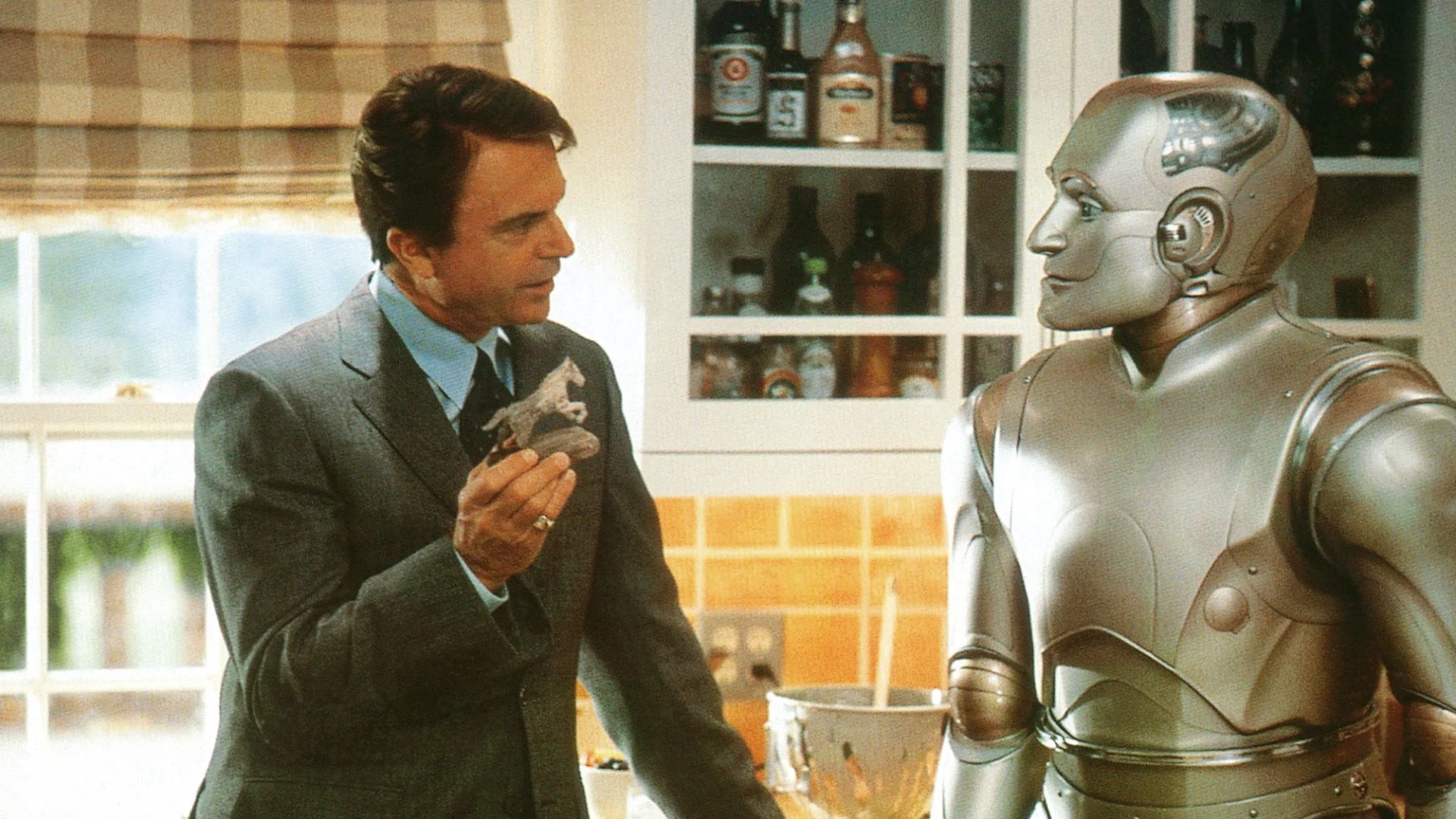
Released in 1999, Disney’s sci-fi film Bicentennial Man is a well-made movie that successfully blends different genres, though it didn’t perform well in theaters. Starring the beloved Robin Williams, it’s a film that holds up even today, nearly thirty years later. Thanks to impressive special effects and Chris Columbus’s skillful direction, this story about a kind robot is a hidden gem deserving of a second look, despite its initial failure at the box office.
One of Robin Williams’ Most Underrated Performances
Buena Vista Pictures Distribution
The movie is based on the 1992 novel The Positronic Man by Isaac Asimov and Robert Silverberg. It features Robin Williams as Andrew, a robot created to be a helpful household assistant. Andrew joins the Martin family and develops a close connection with their youngest child, which unexpectedly leads him to become self-aware and far more advanced than originally intended.
Andrew starts to understand and experience a full spectrum of emotions, from joy to sorrow, truly feeling what it means to be alive. Inspired by the lives of humans, he embarks on a quest to be recognized as a person under the law, and actively works to appear human. Throughout his 200-year transformation from a thinking machine to a man, Andrew finds love and also confronts the pain of loss – both essential parts of being human that he had been searching for.
An Ambitious Project That Didn’t Deserve the Hate It Got
From the beginning at Disney, the movie Bicentennial Man faced a lot of problems during its making. Despite a high budget of almost $100 million and starring Robin Williams – who was enjoying success with films like Good Will Hunting and Patch Adams – the movie didn’t generate much excitement. Production was actually stopped before Sony Pictures stepped in to help fund it.
Released in December 1999, the science fiction film aimed at families wasn’t successful in theaters, earning just over $87 million. Plans for sequels were quickly dropped as a result. While it received an Academy Award nomination for its makeup, critics generally didn’t like the movie. The well-known critic Roger Ebert gave it two stars, calling it a disappointment and describing it as overly sentimental with drawn-out, melodramatic scenes. Currently, the film has a 38% rating on Rotten Tomatoes from critics, while audiences give it a slightly higher score of 59%.
Even decades after its release, Bicentennial Man is gaining new fans thanks to streaming, currently ranking high in popularity on Tubi. While some viewers may be discovering Robin Williams’ charming performance for the first time, it’s clear the film is actually much better than many remember. It’s a well-crafted story about a character’s evolution, avoiding overly dramatic or sad moments and instead focusing on the natural joys of life. Despite exploring potentially serious themes, Bicentennial Man is a surprisingly heartwarming film that might even bring a tear to your eye.
Read More
- The Mummy Returns Sets 25th Anniversary Rerelease Date With Poster & Teaser
- Darth Maul Theory Teases The Return Of A Surprising Star Wars Villain In Shadow Lord
- Heated Rivalry Star Christina Chang Discusses Season 2 and Handling Fame
- Прогноз криптовалюты OP: прогнозы цены OP
- New Chris Pratt Sci-Fi Flop Already Out on Streaming
- Whether Dunk Was Really Knighted in A Knight of the Seven Kingdoms Revealed
- ‘Black Mirror’ Is a Great and Relevant Sci-Fi TV Series on Netflix
- 7 Series Finales Worse Than Stranger Things
- 10 Years Later, Hugh Jackman’s Underseen Winter Olympics Movie Is Worth Watching At Last
- The Boys Season 5: The 8 Spoilers Revealed About Homelander, Butcher & More By the Trailers, Interviews & Marketing
2026-03-20 19:22