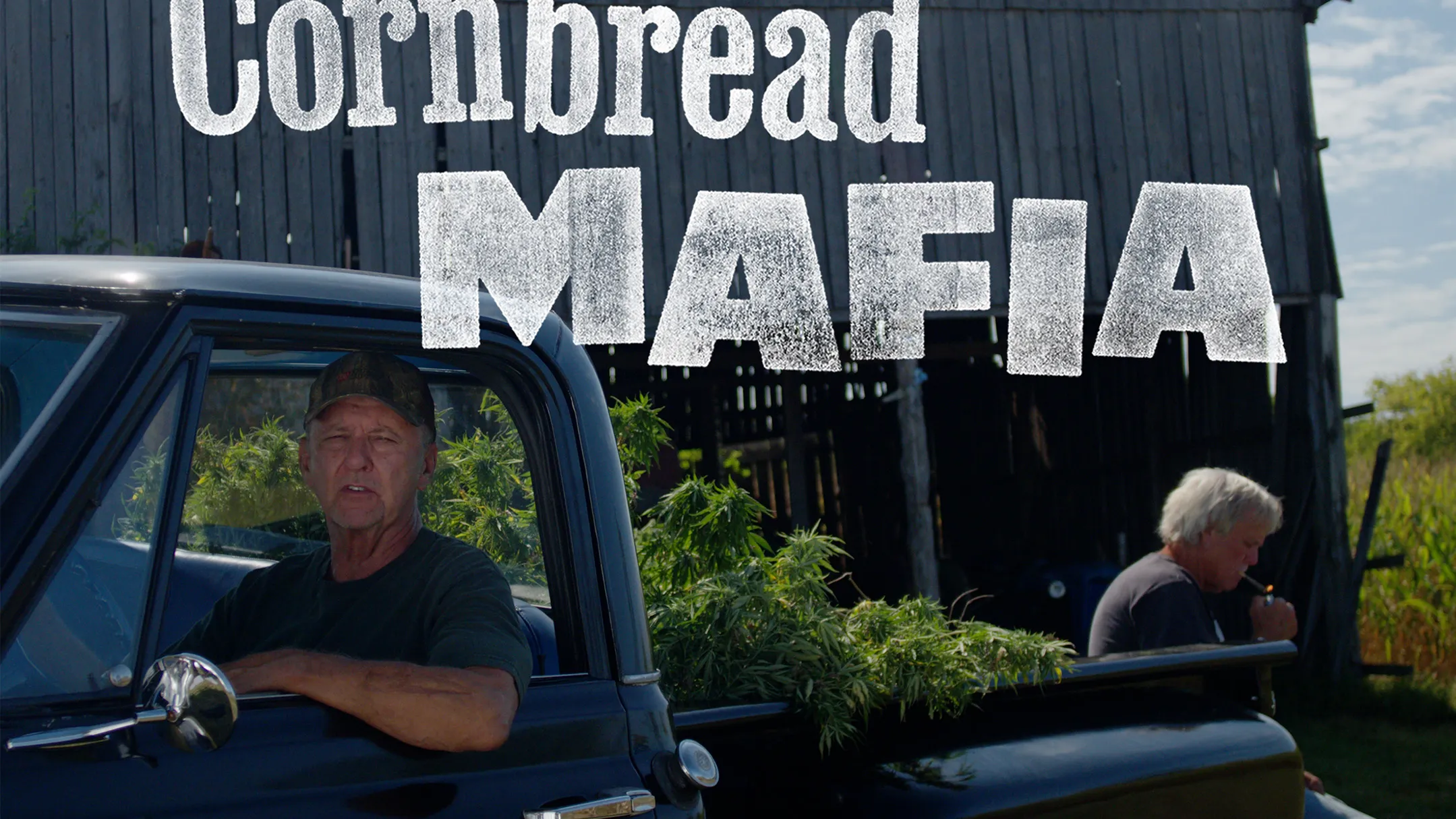
The story of the “Cornbread Mafia” might seem like a sensational true-crime tale, but in Kentucky, it’s a well-known legend passed down for generations. Before it was made into a documentary, the story circulated as local folklore – a large-scale marijuana operation run by an unexpected group of criminals, and a memorable name that everyone recognized, even if they didn’t know the full story.
Director Evan Mascagni felt a personal connection to the story because he grew up in Marion County, the story’s setting, and was familiar with the local legends surrounding the group. He notes that most Kentuckians have at least heard of these stories, though the specifics are often unclear. The documentary truly began to develop when he met Drew Morris, who shared his interest in the subject.
ScreenRant’s Ash Crossan recently interviewed the team behind the film Cornbread Mafia in Austin, Texas. She discovered the fascinating story of how the movie came to be and the events that led to the arrest of several people involved.
Growing up in Kentucky, everyone’s heard of the Cornbread Mafia, though the details are often unclear. Outside of Kentucky, it’s not well known at all. I first became interested in the story, and Joe Keith connected me with Drew, and together we decided to explore it – that’s how this all started.
According to former member Joe Keith, there are different stories about how the cannabis group got its name, but he claims to know the real origin. He shared his version of the story with ScreenRant.
There are a few stories about where that term originated, but here’s mine. It goes back to 1978. We were growing marijuana in Nelson County, and the local sheriff’s department raided us. We had three large fields planted, and they found two of them. They arrested several of us, intending to seize the remaining crop as well. While we were all in jail, we found out the sheriff wasn’t going to destroy that last field of marijuana.
After we were released from jail, we heard the sheriff’s department was going to be monitoring Muhammad Ali – I don’t recall which fight it was for. We came up with a plan to go back and harvest the crop ourselves, sneaking it out while the police weren’t looking. During our planning, one of us jokingly called our group the ‘Cornbread Mafia.’
Keith states that while federal authorities believe the group originated in 1989, he, Jimmy Bickett, and Bobby Joe Shewmaker all insist it actually formed much earlier.
There are different accounts of when it started. The federal government says it was in 1989, but people here know it happened much earlier. They labeled us with that term, but that’s inaccurate. This documentary tells the real story of how the term actually originated.
The Bizarre Way Lions Led To The Cornbread Mafia’s Demise
 ScreenRant
ScreenRant: So, tell me how you all met, and just like a little bit about who you are.
I went to high school with Jimmy and Joe Keith. I graduated a year before Jimmy, but we all grew up in a close-knit, small town where everyone knows each other – from local officials all the way up to the governor.
Evan Mascagni: These two are brothers.
ScreenRant: What are some of the highlights we can look forward to?
Bobby Joe Shewmaker: About the lions?
Evan Mascagni: How’d you come about those?
Okay, so this is a story I heard from a guy named Bobby Joe Shewmaker, and it’s wild. He was actually trying to lay low, maybe even get involved in something illegal out west, but he decided to stop and buy some cattle first. He gets to the farm, but the owner’s not there, so he’s just wandering around. And get this – he finds a live cougar in the corn crib! He was so impressed, he actually told the farmer he wanted one. It didn’t work out – he didn’t end up buying the cattle or the cougar – but the farmer gave him a lead on someone who sold African lions. So, he drove to central Kansas that same day and bought two lions! Later, he found out the farmer also had a bear, and of course, Bobby Joe decided he needed that too. He went back and got the bear, and then even bought two more lions later on. Seriously, the guy just kept collecting big cats and a bear! It’s an incredible story.
ScreenRant: What?
Bobby Joe Shewmaker: They was African lions.
The surprising part of this story is that Bobby Joe was actually a fugitive from federal charges in Savannah, Georgia, and was supposed to report to the Marshals. Instead of turning himself in, he fled to Kansas and started a large marijuana growing operation. That’s where things got really unusual – he decided he needed lions and a bear, specifically lion cubs, instead of something like a guard dog. They had a massive operation going, with around 60,000 plants.
Bobby Joe Shewmaker: Well, less than what they said. They said 74,000.
Joe Keith: 74,000 plants on six counties out there.
When illegal operations were discovered – like the farms in Kansas and Kentucky – investigators found connections between them. For example, Bobby Joe had given a lion cub to Jimmy Bickett. Prosecutors were trying to prove a large-scale conspiracy by tracing these cubs across state lines, demonstrating how widespread the organization was.
ScreenRant: The lions were the part of the downfall?
So, this guy Bobby Joe gave me a female lion, and she was a lot of trouble – always carrying on and causing a scene. I decided to trade her for a male lion, so I drove all the way to Kansas to do that. On the way, my wife and I had quite the trip, going through the Rocky Mountains. I got the male lion and headed home, but then the federal game wardens showed up, along with some DEA agents. I tried to run, but they caught me. They asked if I had a lion cub, and I admitted I did, saying I’d bought it from a traveling salesman – I left out the part about Kansas. They kept pressing me about where I got it, asking about the seller’s appearance and vehicle, even after arresting me. I just made up a story. Eventually, they took the lion. Turns out, they weren’t really interested in the lion itself. They were actually looking for a man named Shewmaker, who was on the run, and were using questions about the lion as a way to locate him.
Investigators discovered lions on a farm owned by Bobby Joe, and then learned that Jimmy Bickett also had a lion cub. They believed these cubs could connect Bickett to Bobby Joe’s operation. Bobby Joe was involved in distributing drugs in Kentucky, while the actual drug production happened in Kansas. The DEA hoped linking the cubs would prove a connection between the two and establish a larger conspiracy.
Bobby Joe Shewmaker: And the lion cubs wasn’t even related.
During a trial, someone argued that the lion must have originated in Kansas, referencing a nearby area where lions and bears were previously found. However, the judge rejected this claim.
Bobby Joe Shewmaker: They couldn’t find out where the lion come from.
Be sure to dive into some of ScreenRant‘s other SXSW coverage with:
- The Sun Never Sets Review
- Brian Review
- The Fox Review
- I Love Boosters Review
- Dead Eyes Review
- One Another Review
- Kill Me Review
- Ready or Not 2: Here I Come Review
- The Saviors Review
- Family Movie Review
- Power Ballad Review
- Seekers of Infinite Love Review
- Mike & Nick & Nick & Alice Review
- Over Your Dead Body Review
- Sender Review
- Crash Land Review
- Normal Review
- Phoenix Jones: The Rise and Fall of a Real Life Superhero Review
- Dakota Fanning reacting to All Her Fault‘s record-breaking success
- Sydney Chandler sharing her ideal Alien: Earth season 2 story for Wendy and the Lost Boys as production ramps up
- Robin Tunney weighing in on a Mentalist revival after its Netflix resurgence
- Yul Vazquez explaining why he has yet to return to Severance
- Jake Johnson on the chances of Peter B. Parker getting a Spider-Verse live-action spinoff
- Elijah Wood teasing that his mysterious Ready or Not 2: Here I Come character may be immortal
- Wood on reuniting with his Faculty co-star Shawn Hatosy in the Ready or Not sequel
- The Ready or Not 2: Here I Come director and cast on the sequel’s new cabal of wealthy Satanists
- Jessica Rothe on the ongoing wait for Happy Death Day 3 to close out the Blumhouse franchise
- BenDavid Grabinski on how Mike & Nick & Nick & Alice breaks a classic sci-fi time-travel trope
- Grabinski and Vince Vaughn on the accidental Dodgeball reunion in Mike & Nick & Nick & Alice
- John Goodman responding to Monsters Inc. 3 reports
- Kevin Hamedani sharing how the Adam Scott and Danielle Deadwyler-led The Saviors was inspired by both The Twilight Zone and The X-Files
- Emily Browning on how Hulu’s Prison Break reboot will be different from the original series
- Raviv Ullman on the chances of a Phil of the Future revival
- Jamie Lee Curtis sharing why she ultimately didn’t play One Piece season 2’s Dr. Kureha after fan campaigning
- Barbara Crampton on her goal to become “the Betty White” of the horror genre
- Jorma Taccone and Brian McElhaney on how the Timothy Olyphant-starring Over Your Dead Body remake is gorier than the original
- Taccone confirming his, Akiva Schaffer and Andy Samberg’s Popstar: Never Stop Never Stopping won’t get a sequel
- Leighton Meester reacting to the new Blair Waldorf-focused Gossip Girl book
- Riz Ahmed explaining why Andor didn’t bring back his Star Wars character, Bodhi
- Adam Scott teasing the “terrific” scripts for Severance season 3 as he confirms filming begins soon
- Kelly Marie Tran reflecting on how Star Wars: The Last Jedi opened the door for her to make everything from The Wedding Banquet remake to Rock Springs
- Derek Kolstad on how Bob Odenkirk’s Normal differs from their Nobody movies
- Kolstad offering a disappointing update on his Streets of Rage movie adaptation
- Bob Odenkirk on how his remake of The Room connects to Tommy Wiseau’s cult classic, and reflecting on its lack of a release
- Graham Parkes on how Lewis Pullman and Maya Hawke’s Wishful Thinking puts a dark twist on a 20-year-old book
- Chandler, Takehiro Hira, Maximilian Lee Piazza and Brian Tetsuro Ivie talk Anima‘s experimental filming
- The cast and producer of I Love Boosters hype Boots Riley & Keke Palmer’s “unapologetic” new crime movie
- David E. Kelley, Elle Fanning and the Margo’s Got Money Troubles cast on their Apple TV comedy and why Michelle Pfeiffer was the only choice to help lead it
- The AI Doc: Or How I Became An Apocaloptimist team breaking down just how extensive their research was
- Dakota Fanning, Joe Swanberg, Jake Johnson and Cory Michael Smith on the bizarre experience filming The Sun Never Sets
- Brea Grant and her Grind team on how they turned a short film into a DIY horror hit
- Uma Thurman and the Pretty Lethal team on mixing R-rated ballet-fu action with a touching central message
- Kathryn Newton on still not being used to watching people blow up after reuniting with Radio Silence on Ready or Not 2
- Adam Scott and Damian McCarthy on how Hokum gives the star a return to a rare villain-like role
- BenDavid Grabinski and the Mike & Nick & Nick & Alice cast on how the sci-fi action comedy is like two movies in one
- Kevin Hamedani on how Adam Scott and Danielle Deadwyler’s Saviors casting specifically is meant to go against audience expectations
- Lucy DeVito, Danny DeVito, Lizzy Caplan and the rest of the Drag team sharing how their thriller offers a new twist on Home Alone
- Jessica Rothe, Caleb Phillips and Yul Vazquez recalling the house they filmed Imposters in was “150% haunted”
- Luchina Fisher on how her award-winning short The Dads became a Dwayne Johnson-produced feature
- Bob Odenkirk, Derek Kolstad, Ben Wheatley and Marc Provissiero on how Normal almost cut one of its funniest jokes from a brutal fight scene
- Rachel Mason on how My Brother’s Killer solved a brutal murder 30 years later
- Rob Riggle on how his new comedy The Pirate King hit him on a “very deep level” as a veteran
Read More
- Taylor Sheridan’s Mayor of Kingstown Kills Off Tracy in Season 3
- НОВАТЭК акции прогноз. Цена акций NVTK
- Прогноз криптовалюты OP: прогнозы цены OP
- James Cameron Blasts America: Hollywood Billionaire Trashes the Nation That Made Him Rich
- Why Star Wars’ 2-Part Prequel Masterpiece Was Missing Key Rebel Character Explained
- Heated Rivalry Star Christina Chang Discusses Season 2 and Handling Fame
- House of the Dragon Season 3 Teaser, Photos Reveal New Character
- Captain America’s Cut Fantastic Four First Steps Scene Revealed (Report)
- ‘I’m Gonna Give You Receipts For Free.’ Todd Chrisley Doesn’t Mince Words About His Daughter Lindsie Making Blackmail Claims And More Against Him
- Happiness Apocalypse: Inside Vince Gilligan’s Brave New Sci-Fi World At Apple TV
2026-03-23 21:56