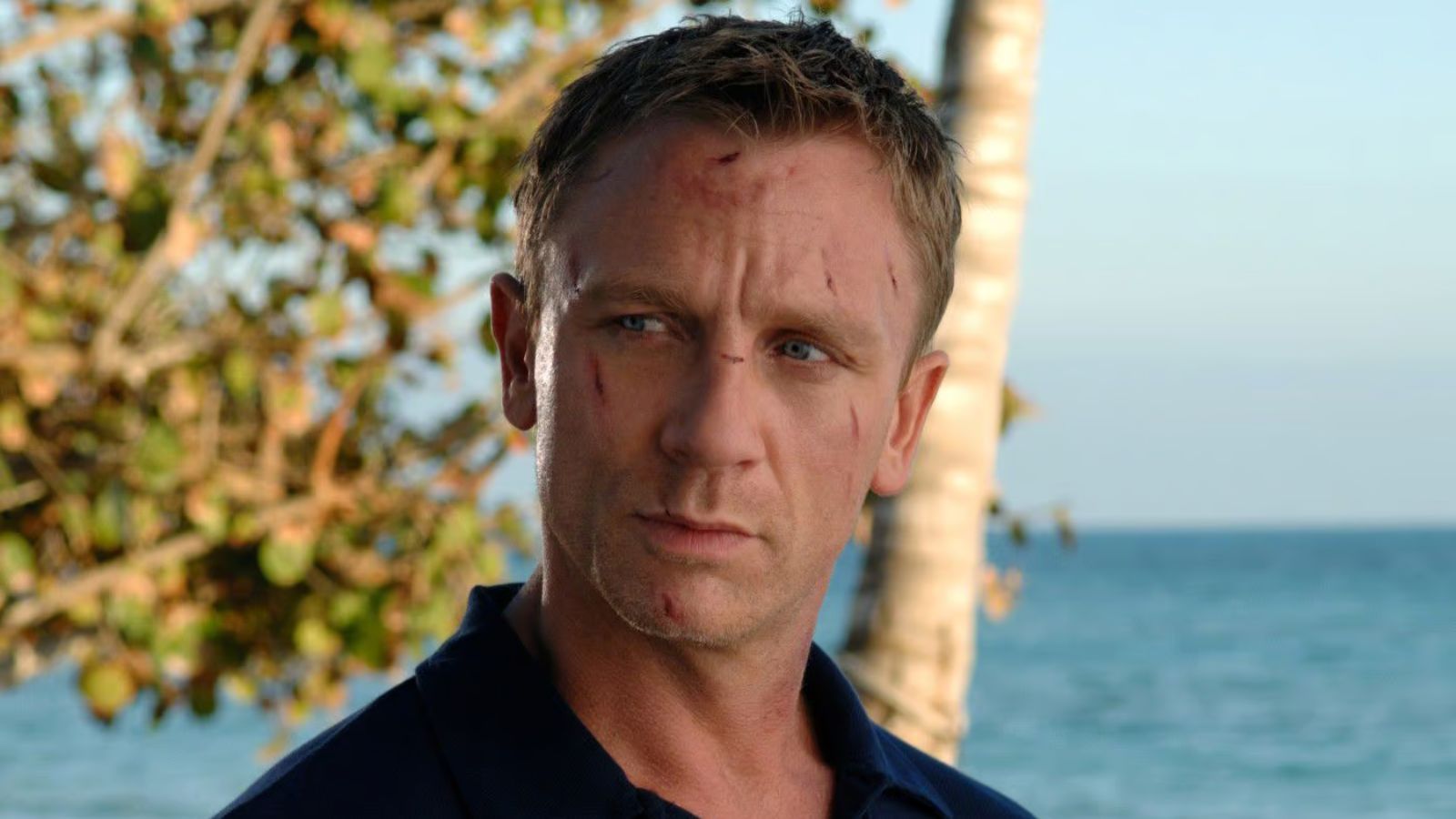
Daniel Craig first appeared as James Bond in Casino Royale twenty years ago, quickly winning over both audiences and critics. He successfully captured the character’s darker, more complex side – a quality not seen since Sean Connery first played Bond in Dr. No back in 1962. Most notably, the film stayed true to Ian Fleming’s original novels by giving Bond his most morally ambiguous moment yet.
James Bond was originally conceived as a complex and somewhat troubled character, a vision consistently maintained by his creator. Though actors like Roger Moore and Pierce Brosnan played him with a bit more charm, Sean Connery, Timothy Dalton, and Daniel Craig all leaned into the character’s darker, more serious nature. Fans immediately knew Daniel Craig’s portrayal would be special when he delivered what is considered the most unsettling line ever written for Bond. Director Martin Campbell, known for his work on GoldenEye, was the perfect choice to reimagine Bond for a modern audience.
Casino Royale is a James Bond Origin Story
Unlike typical James Bond films, this story begins by showing us Bond completing two crucial missions to earn his ‘license to kill.’ It then jumps ahead to when M assigns him a new task: investigating a complex international money laundering operation.
Bond’s investigation leads him to Le Chiffre, a corrupt banker who funds terrorism to profit from the stock market. Le Chiffre launders money for criminals, then returns it with a hefty profit. When Bond disrupts one of Le Chiffre’s schemes and causes him to lose a powerful warlord’s money, Le Chiffre enters a high-stakes poker game hoping to recover his losses.
When Bond learns of the plan, he too travels to the high-stakes poker game at Casino Royale in Montenegro. He’s joined by a stunning agent who manages his funds, making sure he can stay in the game. MI6 hopes Bond will win, forcing Le Chiffre to come to them with information on his criminal clients in exchange for protection in the UK. Soon after arriving, Le Chiffre quickly figures out who Bond is and starts plotting his response.
How Vesper Lynd Gave Bond His Coldest Line
The climax of Casino Royale shockingly shows that Vesper had betrayed Bond, using her position to steal the mission funds for Mr. White in order to save someone she cared for. Bond quickly realizes he wasn’t just deceived, and rushes to find her, only to discover she’s with White’s associates. Though he defeats the men, he’s too late to save Vesper, who is trapped in an elevator sinking into the water. Helpless, Bond can only watch as the woman who connected him to his humanity drowns.
When M calls Bond to explain what happened with Vesper, revealing she was forced to betray him by White, she asks if he needs some time to recover. Bond responds harshly, stating, “What reason do I have to need more time? The mission is complete. She’s dead.” This final line perfectly reflects the story’s beginning and solidifies Bond’s transformation into a ruthless, cold-blooded agent, which was the author’s intention.
Following the events of Casino Royale, Bond was clearly a different person, and Daniel Craig brilliantly captured this transformation in subsequent films. The part of him that had considered a normal life or finding love vanished with Vesper’s death. His conversation with M symbolized him abandoning that hope. While the audience recognizes his stoicism is a mask to conceal his feelings about Lynd, they also understand he can’t return to who he once was. He was left with only the ruthless killer that Ian Fleming originally envisioned.
Ian Fleming’s Antihero Was Always A Stone Cold Killer
What always struck me about James Bond, and what I think got a little lost in some of the later films, was the core of who he really was. Beyond the charm and sophistication, Bond was a truly ruthless operative. I remember being shocked – and honestly, captivated – by a scene in one of the early Sean Connery films. He’d let a villain go, pretending he was disarmed, only to shoot him with a cold, precise shot and deliver that iconic line, “That was a Smith and Wesson, and you’ve had your six.” It was a daring move to show a hero casually kill an unarmed man, but it felt absolutely true to the darker, more complex character Ian Fleming originally created.
Martin Campbell’s 2006 film, Casino Royale, stands out as the most emotionally detached installment in the Bond series, but it also captured the essence of the character better than any film since Timothy Dalton’s portrayal. Two decades later, Daniel Craig delivered a grittier, darker take on James Bond, and Casino Royale served as a powerful reminder that 007 is, at his core, a deadly killer.
Found an error? Send it so it can be corrected.
Read More
- Netflix’s Lincoln Lawyer Has a Secret Michael Connelly Easter Egg
- My Final 2026 Oscar Predictions, Including A Chalamet vs. Jordan Upset
- 7 Years Later, the Sci-Fi Action Hit Fans Call “The Best Video Game Movie Ever Made” Finally Returns to Streaming
- I Don’t Think We’re Talking Enough About How Predator: Badlands Nails Its Alien Connection
- Eleven’s Kryptonite In Stranger Things Explained
- Shrek 5’s Marcello Hernández Shared Some Wild Photos And Video After Being Cast, And Stars And Fans Are Loving It
- Jenna Ortega’s 80% RT Netflix Mystery Thriller Is Now More Important Than Ever
- 2026 Oscar Contenders: Where to Stream Sinners, Bugonia, Jay Kelly
- Nikki Glaser’s Brutal Cut Jokes Included Sydney Sweeney’s Short Shorts, Leonardo DiCaprio’s Younger Dates And So Much More
- Tom Holland’s Spider-Man: Homecoming Is Heading to Peacock
2026-01-29 00:10