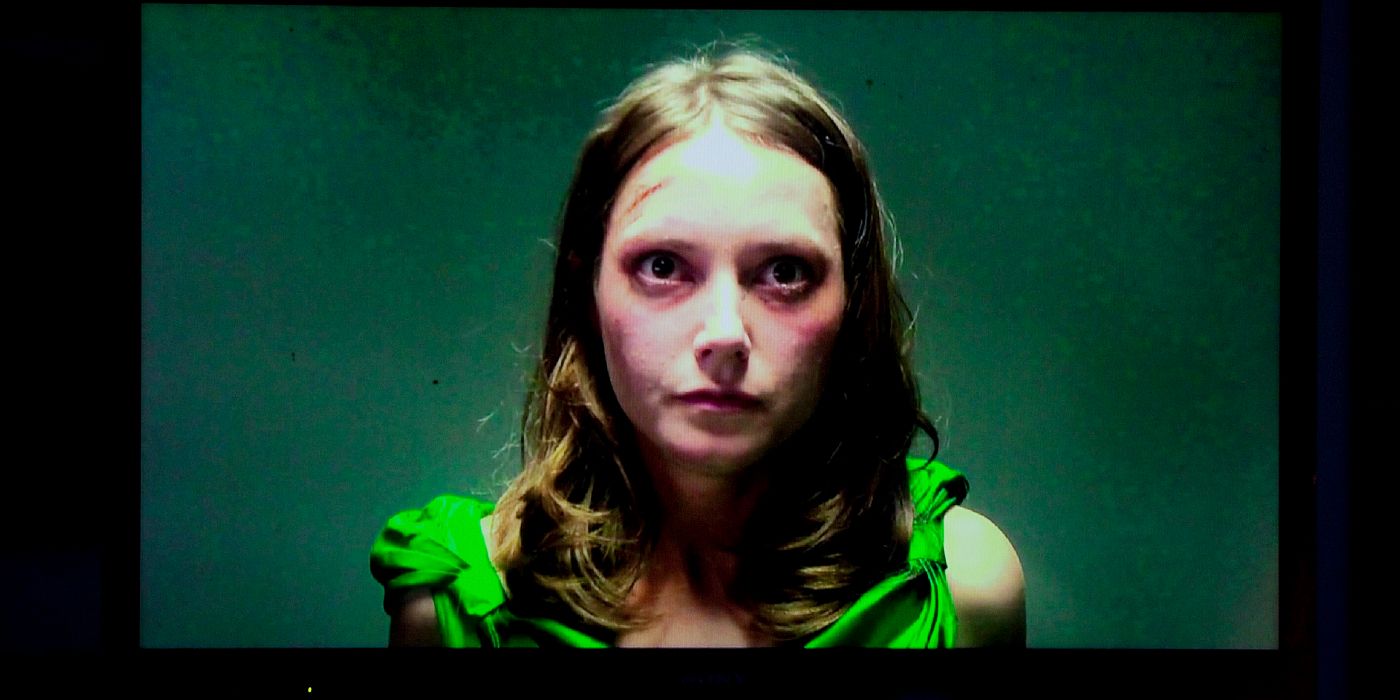
When it first aired on Channel 4 in the UK, the show immediately caused a huge stir. The very first episode, titled “The National Anthem,” is still considered one of the most shocking and unsettling pieces of television ever made. It centers around a terrorist kidnapping Princess Susannah and demanding that the British Prime Minister, Michael Callow, commit a horrific act – sexually assaulting a pig – on live TV.
The demand felt unnecessarily harsh, especially since Prime Minister Callow wasn’t known as a villain. However, the terrorists’ threats and the public’s love for Princess Susannah left him with no choice, resulting in a scenario reminiscent of a particularly disturbing episode of Black Mirror. Though the event involving the pig was deeply upsetting for those involved and viewers alike, the story carries a chilling message about a troubling aspect of human nature and society.
The National Anthem Shows How Terror Controls the Government
In 2011, “The National Anthem” sparked debate by cleverly examining how politics, art, and protest overlap. The episode delved into questions about democracy and political power – topics that have long been debated – and showed that simple answers are often hard to find. The 44-minute program demonstrated the complexity of these issues.
Prime Minister Michael Callow initially tried to ignore the terrorist’s demands and save Susannah. However, the terrorist escalated the situation by sending a severed finger and a video appearing to show the princess’s finger being cut off to a news station. This shocking act of violence left Callow with no choice but to fulfill the terrorist’s horrifying request: performing a sexual act with a pig on live television, much to the distress of his wife, Jane. The broadcast deeply disturbed those watching as well.
Surprisingly, the princess was freed thirty minutes before the planned public announcement, and she wasn’t hurt at all. The terrorist later took his own life after cutting off one of his fingers. This seemed to be another tactic to get attention while escaping punishment. Ultimately, the incident demonstrated how violence can be used to pressure governments into responding to what people want.
The terrorist in “The National Anthem” exploited politicians’ anxieties about hostage crises, disrupting their feeling of control and national security. This made him a particularly frightening villain, even compared to characters like Mia from Black Mirror‘s “Crocodile,” whose motives were different. The act of taking a hostage was intended to highlight perceived inequalities within British society. While the terrorist aimed to demonstrate governmental weakness, his actions also uncovered a disturbing reality about power and value.
Black Mirror Mocks Human Morality in The National Anthem
Princess Susannah was safely returned, but for thirty minutes, she wandered the empty streets of London without anyone noticing. Everyone, including the police, was captivated by what was about to happen on television. This highlighted the terrorist’s point: people are easily distracted by exciting events, even if those events are wrong.
The shocking sight of the British Prime Minister engaging in a disturbing act captivated viewers, but it also overshadowed the disappearance of a princess. This highlights a troubling aspect of human nature – our fascination with sensational events, a tendency clearly visible in popular culture like reality television, disturbing online content, and social media trends.
The terrorist revealed a disturbing truth about human morality. When life is peaceful, people often act as if they have high moral standards. But during a crisis, that supposed morality disappears. Instead of being horrified, people become fixated on the terrible events, and sometimes even find a dark fascination in them.
As a film lover, what really struck me about this scene wasn’t just the act itself, but how quickly everyone seemed to abandon their morals. It was unsettling to see how easily people dropped any pretense of being ‘good’ and just… watched. What was even more disturbing was the disconnect – these viewers knew what was happening to the Prime Minister was wrong, they even believed it was awful, yet they couldn’t look away. They actively participated in his humiliation by tuning in to the live broadcast, and that felt incredibly telling about human nature.
The National Anthem Shows How Personal Connections Change Acceptance
The play doesn’t just address larger social issues; it also explores how people relate to each other. For example, “The National Anthem” focused on the wife of the character Callow, Jane, showing the contrast between what the public thinks and what truly matters in personal relationships.
Jane begged Callow not to subject himself to such a degrading act to rescue Princess Susannah, understanding it would forever tarnish his reputation – and, by extension, hers. Even after it boosted his public image, she remained deeply upset, refusing to speak to him. This highlights how personal emotions can complicate political situations, as Jane viewed the event not as a public performance, but as a deeply personal matter.
It’s easy for personal feelings to cloud what’s right, particularly when the consequences of our actions last a lifetime. This series skillfully explored those complicated emotions, solidifying its lasting impact.
The National Anthem Clearly Defines Black Mirror’s Premise
You can see the show’s core themes right from the beginning. Although Black Mirror is often labeled as being against technology, it really focuses on how people react to a world that’s becoming more and more artificial. In the episode “The National Anthem,” technology isn’t just a backdrop – the shocking event is broadcast on television, and its spread online, fueled by manipulation, is what drives the entire plot.
Blake’s poem, “The National Anthem,” argues that people repeatedly make the same errors by blindly following whatever system is currently in power. Today, many simply accept being exploited just to be able to watch others suffer alongside them. The supposed benefit of this endless cycle of pain and unfairness is the perverse satisfaction of witnessing the misfortune of others.
We’re all caught up in the consequences of technology. It’s reached a point where machines handle almost everything, leaving us with very little to do except, potentially, harm ourselves – a situation similar to the one depicted in the “The National Anthem” episode of Black Mirror. While we’re all facing this together, no one is truly secure.
The episode also showed that the lines between good and bad characters aren’t always clear. The terrorist and the government agents were overshadowed by the wider society that was eager to watch the violence as a form of entertainment. This reflects the old Roman idea of ‘bread and circuses’ – keeping the public happy with simple pleasures to distract them from more important issues. Interestingly, Black Mirror itself might be falling into this pattern.
*Black Mirror’s First Episode Has Led to an Ironic Legacy of Spectacle
Most fans agree that recent seasons of Black Mirror haven’t been as strong as earlier ones. Seasons 5 and 6 received noticeably lower ratings – 66% and 78% on Rotten Tomatoes – and many of their episodes ranked among the series’ lowest-rated on IMDb. While Season 7 showed improvement with an 85% Rotten Tomatoes score, it still didn’t quite recapture the show’s former brilliance.
While “Demon 79,” the sixth season’s standalone episode, was intended to showcase Charlie Brooker’s interest in supernatural horror, it felt more like a jarring detour than a natural extension of the show’s usual focus on technology. The series, aptly named Black Mirror to evoke the dark reflection of a turned-off screen, seems out of place when exploring werewolves, demons, and found-footage tropes.
Similar to the shocking performance in “The National Anthem,” it seems we’re fascinated by genuineness and cultural truth. If so, are audiences today just like the ones depicted in the artwork – constantly seeking sensational experiences?
Ultimately, the main reason for creating a sequel to “USS Callister” seemed to be its initial success. While “USS Callister: Into Infinity” is enjoyable, it mostly retreads familiar ground, presenting the same ideas with a few new twists. The sequel primarily expands the story’s world and adds more visual effects, but doesn’t offer much beyond that.
Black Mirror initially stood out as a sharp and critical look at how much we rely on technology. While episodes like “San Junipero” and “White Christmas” are considered truly exceptional, later installments sometimes prioritized spectacle over substance, signaling a shift in the show’s focus.
Even though recent seasons haven’t always hit the mark, Season 7 showed promising signs of getting back to what made the show great. Episodes like “Common People” and “Eulogy” focused more on the characters and their stories, rather than just expanding the show’s futuristic technology. Creator Charlie Brooker himself noted the improvement, calling Season 7 a return to form and promising that future seasons will feel even more like classic Black Mirror.
The big question now is whether the show can recapture the strong moral compass that made it so good. Judging by what’s happened before, it will succeed if it focuses on meaningful storytelling and avoids relying too much on flashy, but ultimately empty, thrills.
Found an error? Send it so it can be corrected.
Read More
- Black Phone 2 Ending & Grabber’s Fate Explained
- Прогноз криптовалюты BNB: прогнозы цены BNB
- Прогноз криптовалюты USD1: прогнозы цены USD1
- Netflix’s New 84% RT Thriller Has Given Us The Most Terrifying TV Villain Of The Year
- 28 Years Later’s Controversial Ending Just Got An Explanation Thanks To The Sequel’s Trailer
- Game Of Thrones’ New Targaryen Show Is Officially Breaking An HBO TV-M Trend
- How Travis Kelce Reportedly Pulled Off His Sweet Proposal To Taylor Swift: ‘He Knew He Wanted To Marry Her’
- 3 Must-Watch Movies On Prime Video This Week (October 27-30)
- Cancel Culture is Killing Horror Anime, 1 Series at a Time
- Dexter: Resurrection Season 2 Release Date: Avoiding Streaming Delays and Honoring Original Series Tradition
2026-03-07 07:18