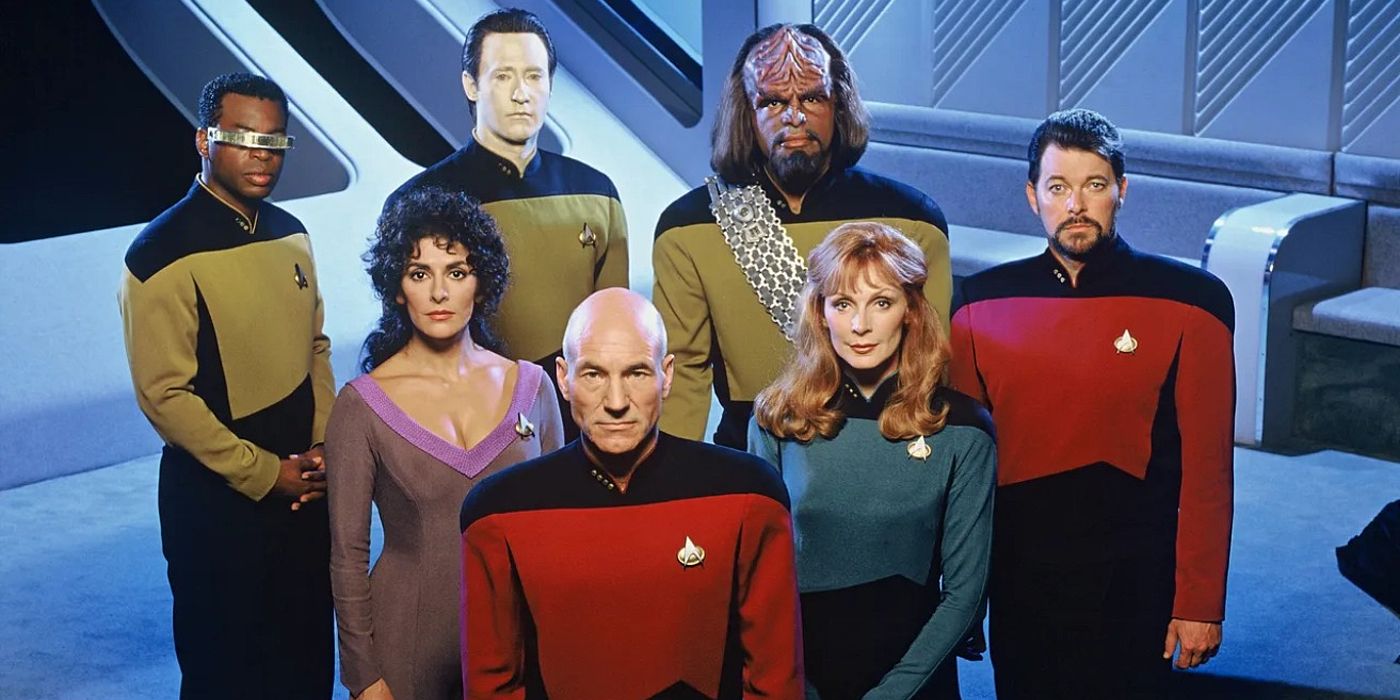
Certain TV shows stand out due to compelling narratives, both within the episodes and in their production. When The Next Generation first aired, viewers were unsure if it would succeed. One particularly acclaimed episode, “The Measure of a Man,” is a memorable science fiction story, a key moment for the Star Trek series, and the first TV script written by Melinda Snodgrass, a dedicated Star Trek fan and author. Interestingly, the episode was created quickly, using her independently written script, because a writers’ strike was looming.
Snodgrass shared on her blog that Gene Roddenberry almost scrapped the Star Trek: Discovery episode because he believed lawyers wouldn’t exist in the future. Beyond introducing the legal profession to the Star Trek universe, “The Measure of a Man” also showed the Enterprise crew playing poker for the first time – a scene that was later revisited as the final shot in both The Next Generation and Picard‘s series finales. However, the episode is best remembered for establishing how Starfleet views artificial life, like the character Data, and later, the holographic doctor from Voyager.
Data’s Personhood Was Established Right Before ‘The Measure of a Man’
The question of whether Data is a person was first explored in an earlier episode, “The Schizoid Man.” In that story, the USS Enterprise responds to a distress call from Ira Graves, a cybernetics expert who was a mentor to Data. Graves had a close relationship with Data’s creator and even asked Data to call him “Grandpa.”
Graves develops a scheme to transfer his mind into a computer, but he ends up attempting to replace Data’s consciousness with his own. The episode, penned by Tracy Tormé, received criticism from some, including a harsh assessment from one source who dismissed the storyline as unrealistic in the book Captains’ Logs: The Unauthorized Complete Star Trek Voyages by Edward Gross and Mark A. Altman.
He explained that stripping Data of his unique personality would diminish his essential innocence. Fortunately, Hurley’s concern about this storyline didn’t come to pass. Instead, it foreshadows the themes explored in “The Measure of a Man” by highlighting Data’s struggle to define himself and become more human.
The episode begins with Data seeking opinions from Geordi and Deanna on a new appearance – a false beard designed to look like Commander Riker’s. This highlights how Data’s efforts to understand and emulate humanity lead to unusual behavior and shifts in his personality. Consequently, they initially fail to notice that someone else is actually controlling him.
During a tense showdown with Picard, Graves argues he’s more deserving of life than Data, simply because he’s human. Picard strongly disagrees, implying he sees Data as fully alive and equal in value.
‘The Measure of a Man’ Episode Title Had Multiple Meanings
In The Captain’s Logs, Snodgrass explained that the story “The Measure of a Man” is actually about Picard and his assessment as a person.
Originally, in the episode “The Schizoid Man,” Data freely chose to connect with Graves, but this was altered to add more tension and excitement. A similar choice was made in “The Measure of a Man,” where Commander Riker’s personal biases were ignored to heighten the drama. This approach proved effective; the scene where Riker disconnects Data’s arm and then switches him off is particularly moving and sad.
Earlier in the episode, there’s a powerful scene where Riker realizes what’s happened. He initially feels proud of himself for solving the puzzle, but then he’s saddened as he remembers his friendship with Data. Because he feels he didn’t earn it, Riker ultimately skips Data’s celebration.
Surprisingly, Data doesn’t blame Riker, and even insists Riker deserves as much credit for saving him as Picard does. According to a now-deleted blog post by writer Ronald D. Moore, Picard was actually the one being judged in this situation. Picard’s strong support of Data is a key reason why he was able to succeed at a critical moment.
The show avoids external conflicts and villains, focusing instead on internal challenges within Starfleet. It echoes earlier, lighter episodes like “The Naked Now” from the first season, and revisits the memorable exchange where Data insists he is “fully functional” to Tasha Yar. This interaction is key to demonstrating that Data is far more than just a machine.
Data’s Trial Is One of Star Trek’s Greatest ‘Courtroom’ Episodes
Though initially conceived as a space adventure, the series also explored deeper themes. A central idea behind Roddenberry’s vision of the future was the possibility of building an ideal society.
I recently came across a fascinating detail about the early days of Star Trek. Apparently, Gene Roddenberry initially resisted having lawyers involved in the show, believing it would complicate things. He even suggested a pretty intense solution to crime: forcibly re-educating offenders! It’s a bit unsettling, honestly. But even in The Original Series, we consistently see characters facing some kind of formal judgment – court-martials, mostly – when they break Starfleet rules or otherwise step out of line. It’s a funny contrast, considering his initial idea!
The core of this legal issue is its unusual nature. For a long time, viewers of Star Trek: The Next Generation accepted that Data was both an android and an individual. In fact, just three episodes prior, Captain Picard strongly argued that Data was a sentient being with the right to exist.
Bruce Maddox’s disregard for Data’s rights as an individual was surprising, especially given Starfleet’s supposed progress. The fact that the Admiralty backed him made it even worse. After Tasha Yar’s death, viewers were already worried about the main characters’ safety, and this situation amplified that tension.
While fans knew Data wasn’t in mortal danger, the episode still frustrated many. Riker’s apology was important because it explained his actions and prevented viewers from seeing him as a traitor to Data.
As a long-time Star Trek fan, what really struck me about this episode was how boldly it portrayed a villain within Starfleet. We just hadn’t seen that level of betrayal from someone wearing a uniform before. And the small detail at the end, when Maddox starts referring to Data as ‘he’ instead of ‘it,’ was brilliant. It was a really subtle way to show his change of heart and acknowledge Data’s humanity.
Star Trek: Picard Followed in the Footsteps of TNG’s ‘The Measure of a Man’
Following his appearance in the Star Trek: The Next Generation episode “The Measure of a Man,” Bruce Maddox didn’t reappear on the show. We later learned, in the TNG episode “Data’s Day,” that he continued researching artificial life, keeping detailed records of Data’s experiences. The character eventually returned in Star Trek: Picard, and that series expanded on themes first introduced in the TNG episode “The Offspring.”
Following Data’s death in Star Trek: Nemesis, Dr. Maddox and his colleague, Alison Jurati, used Data’s remaining brain components to create new, sentient androids. Maddox also built the twins Soji and Dahj with a particular purpose in mind. As Picard explained, Starfleet prohibited the creation of artificial intelligence after a less advanced android caused massive destruction at the Utopia Planetia shipyards on Mars.
Maddox was involved in a plan to eliminate all artificial life. Working with Alton Soong, he established a colony of intelligent synthetic beings on a distant planet. Despite later supporting the rights of synthetics, Picard demonstrated in “The Measure of a Man” that Maddox needed the information within Data to continue creating similar beings.
Near the end of the first season of Picard, the main character was betrayed by someone he mentored and loved. She acted on her belief in a Romulan prophecy that warned of a dangerous, vengeful race of artificial beings threatening all life. However, mirroring his past defense of Data in “The Measure of a Man,” Picard put himself in danger to ensure Soji and her fellow androids could live peacefully.
A script submitted as a last resort during a writers’ strike turned out to be more than just a great science fiction story. It launched a central, ongoing storyline for both Captain Picard and the android Data, fundamentally shaping their characters and their journeys for years to come.
You can find all of Star Trek: The Next Generation and Picard on DVD, Blu-ray, and for digital purchase. They’re also available to stream on Paramount+ and Pluto TV.
Found an error? Send it so it can be corrected.
2026-03-22 21:53