Early films were incredibly important in creating the big-budget movies we love now. But some of those older classics haven’t held up over time. What was groundbreaking then often contains outdated and even troubling ideas that don’t sit well with audiences today.
Filmmakers like John Ford and John Wayne were hugely influential, but their movies frequently contain harmful and offensive portrayals of women and Native Americans. Despite being widely studied and celebrated, these films can be difficult to watch today because of these issues.
The Wild Bunch Is More Violent Than Nuanced
When it was released in 1969, The Wild Bunch was considered incredibly shocking due to its realistic and brutal violence – particularly the intense gunfights and scenes of widespread killing shown in slow motion. While groundbreaking at the time, that same level of violence can now feel over-the-top and depressing rather than thought-provoking.
The film largely portrays Mexican characters as disposable fighters or corrupt figures. Women are similarly limited to roles as either sex workers or victims. While The Wild Bunch attempts to subvert traditional Western tropes, it ultimately repeats the violence and lack of meaningful character development found in other films of its time, failing to offer genuine moral complexity.
Cimarron’s Opening Scene Says It All
The film Cimarron was the first Western to win Best Picture, but looking back, that decision doesn’t hold up well. The movie starts by glorifying the forced removal of Native Americans during the 1889 Oklahoma Land Rush, essentially setting the stage for a story that portrays white settlers as heroes taking possession of supposedly empty land. Native Americans are shown as a dangerous, silent presence on the edges of the story, with no real voice or personality.
The film Cimarron wants viewers to cheer for Yancey Cravat, its main character, but he’s a journalist who profits from the displacement of Native Americans. It’s essentially a glorification of westward expansion presented as a grand cinematic story, and the fact that the Academy Awards recognized it reveals a lot about the values of that time.
Apache Is Racist Casting at Its Worst
Many older films haven’t held up well due to how they portray Native Americans. A particularly problematic example is the movie Apache, where Burt Lancaster plays a Native American warrior named Massai with a heavy-handed and offensive performance. His exaggerated makeup and stereotypical costume, combined with a simplistic portrayal of the Apache people, completely ruin any good intentions the film might have had.
While Lancaster gave a dedicated performance, his casting as an Apache character relies on a stereotypical and ultimately harmful fantasy. This choice is especially problematic given the strong history of Apache storytelling and the fact that Indigenous actors with genuine cultural understanding and personal experience could have played the role with far more authenticity.
Seven Brides for Seven Brothers Is a Case of Stockholm Syndrome
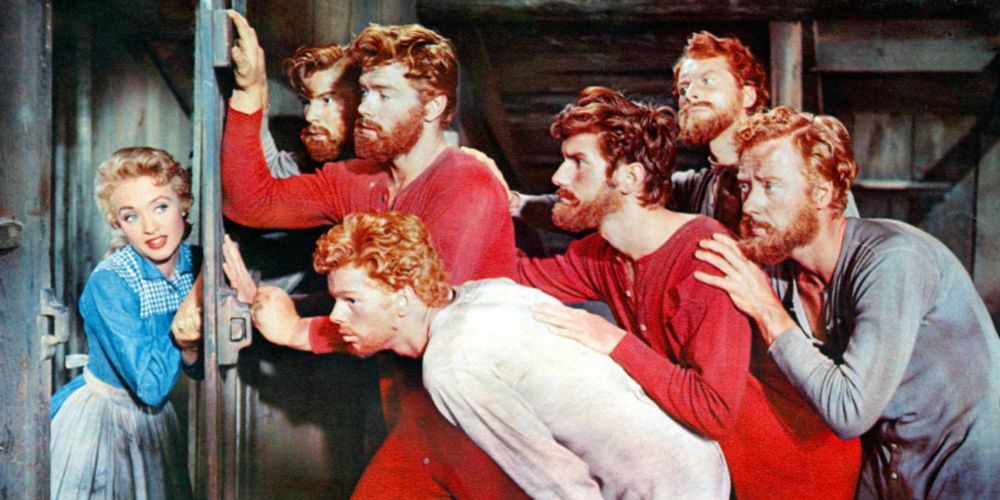
As a classic movie-musical fan, I have to admit Seven Brides for Seven Brothers really delivers on the spectacle. The songs are beautiful, the dancing is fantastic, and it’s just a visually stunning film. However, and this is a big however, the story is…wild. It’s a Western musical where the Pontipee brothers literally kidnap women and then use an avalanche to keep them captive. It’s a beautifully made film with a seriously problematic premise, and that’s putting it mildly.
What seems like a sweet romance in classic musicals—where women fall in love and everyone gets a happy ending—looks very different today. We now recognize behaviors that were once considered charming as potentially harmful, even resembling situations like Stockholm syndrome and predatory actions. The 1954 film Seven Brides for Seven Brothers is a prime example; its female characters have remarkably little independence, even within the context of the movie. Energetic musical numbers like “Sobbin’ Women,” while catchy, actually glorify male aggression and portray women as prizes to be won.
Drums Along the Mohawk Is Whitewashed
Drums Along the Mohawk perfectly illustrates how a once-important American film can become problematic over time. While it’s historically significant for its stunning use of color and strong acting, its story and underlying values make it difficult to enjoy by today’s standards.
The movie portrays a simplified and biased version of the American West, showing white settlers as victims and Native Americans as simply violent attackers. It focuses on a newly married couple, Gil and Lana Martin, who are threatened by unnamed Native American enemies, ignoring the complex historical reasons why Indigenous people were displaced from their lands.
Even in 1939, the film Drums Along the Mohawk presented a simplistic and insensitive portrayal of Native Americans. John Ford depicted the Mohawk Valley as an uninhabited land ready to be ‘civilized’ by white settlers, ignoring the fact that it was already home to a flourishing society. The film essentially promotes the idea of Manifest Destiny and functions as both a reflection of puritanical beliefs and racist propaganda, ultimately celebrating the taking of land from Indigenous people.
Stagecoach Normalized Harmful Western Tropes
The film Stagecoach heavily influenced many Westerns that came after it, for better or worse. Unfortunately, its success also popularized the harmful “cowboys vs. Indians” trope, presenting a simplified and negative view of Apaches as threats to white settlers.
The film fails to portray the indigenous people as complex individuals or within their historical context, and this problematic approach extends to other characters as well. Characters like Dallas, the sex worker, and Doc Boone, the alcoholic doctor, feel like flat, stereotypical figures. While these depictions might have been meant as a form of social commentary when Stagecoach came out in 1939, today they actually reinforce the harmful systems the film seemingly tried to critique.
The Searchers Is a Would-Be Masterpiece Marred by Racism
John Ford’s The Searchers is considered a landmark film, not only within the Western genre, but in cinema as a whole. Its stunning visuals – expansive landscapes and fluid camera movements – heavily influenced directors like Steven Spielberg. However, the film’s portrayal of race makes it uncomfortable to watch for many viewers.
John Ford’s Western, The Searchers, stars John Wayne as Ethan Edwards, a Civil War veteran who comes home to find his niece has been captured and is now living with the Comanche tribe. The film follows his relentless and all-consuming quest to find and bring her back.
Okay, so I recently watched The Searchers, and honestly, the whole thing felt really problematic. Ethan, the main character, is clearly driven by prejudice, but the movie presents his quest as heroic, which is… weird. The way the Comanche people are shown is all over the place – sometimes they’re portrayed as noble, other times as straight-up bad guys – but director John Ford never really lets you understand them as people, you know? A lot of critics now say the film is about racism, but I think that’s reading a lot into it. It feels like we’re projecting our current views onto a movie that mostly just celebrates the violent actions of a Confederate soldier. It’s tough to watch, honestly.
Marlon Brando’s Only Directorial Effort Is an Outdated Western
Many consider One-Eyed Jacks a pivotal film in the history of Westerns, marking a shift towards darker, more complex stories. It was also Marlon Brando’s only time directing a movie, and it shows – the film is somewhat chaotic and features problematic portrayals of race and gender. The main character, Rio, isn’t a typical heroic gunslinger; he’s a troubled and unstable figure, struggling to carry out even a questionable quest for revenge.
The film attempts to address issues of race and gender, but falls short. While Marlon Brando’s character is strongly implied to be Mexican, this is never explicitly stated, which feels like a major issue throughout the movie. Beyond Brando, Mexican characters are underdeveloped and only serve to support the stories of the white characters. Despite appearing innovative, the film ultimately reinforces and glorifies outdated power structures.
The Man Who Shot Liberty Valance Is a Self-Professed Frontier Myth
I’ve always thought about that line from The Man Who Shot Liberty Valance – “When the legend becomes fact, print the legend.” Looking back, it feels like a pretty straightforward confession that the film was happy to play along with the romanticized, but ultimately false, stories about white pioneers. Basically, the movie presents the idea that pushing aside Native Americans and wiping out their way of life was just a regrettable, but necessary, part of progress – even portraying it as something good. It’s a tough thing to watch now, realizing how casually it accepted that narrative.
It’s particularly troubling that the film completely omits Native American characters – a total erasure of their presence. The portrayal of women is also problematic. The main female character, Hallie, is simply a romantic choice between two men, and isn’t developed as a complex person with her own motivations and story.
The Lone Ranger TV Series Made Tonto Miserable
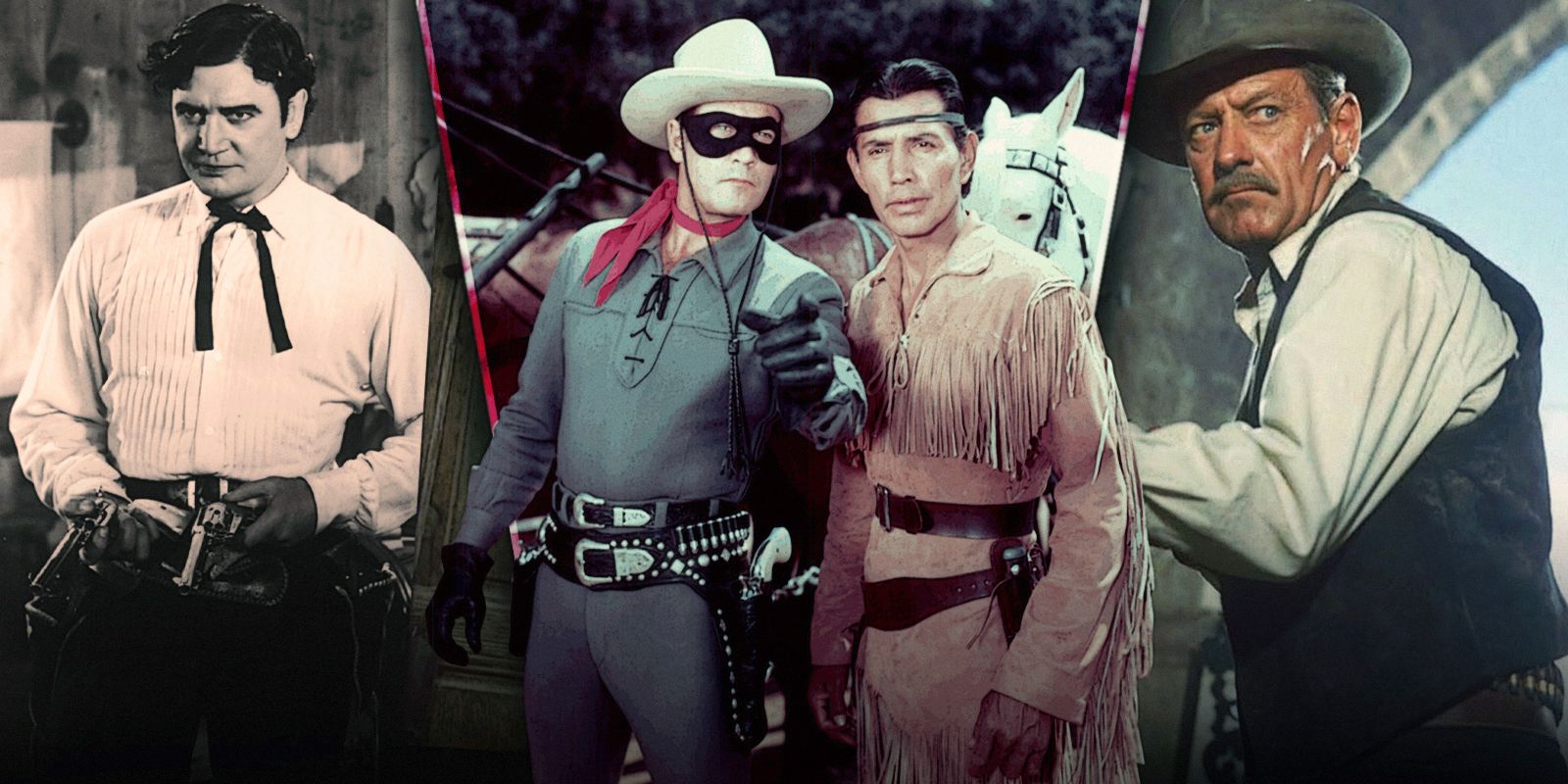
Even though many fondly remember The Lone Ranger, the TV show unfortunately reinforced harmful stereotypes about Native Americans. The character of Tonto, the hero’s Native American companion, was depicted with broken English and as a subservient figure, contributing to decades of similar, damaging portrayals in popular culture.
While many people likely saw Tonto, portrayed by Mohawk actor Jay Silverheels, as a positive step for representation, he actually found the role difficult. In fact, Silverheels reportedly disliked reinforcing stereotypes about Native American loyalty through the character. According to his authorized biography, Tonto: The Man in Front of the Mask by Zig Misiak, Silverheels felt embarrassed every time he had to deliver Tonto’s well-known lines in broken English, such as “Me Tonto” and “Kemosabe.”
As a film buff, I’ve always been fascinated by how a show’s impact goes beyond just initial viewership. While things like reruns and all the related merchandise definitely contribute to its legacy, what really sticks with people – the moments that truly resonate – are just as powerful, if not more so.
2026-02-15 01:09