Director Gore Verbinski has strong opinions for younger audiences, and he doesn’t hold back. Despite a lengthy script by Matthew Robinson (known for Love and Monsters and Dora and the Lost City of Gold), the director of the Pirates of the Caribbean films criticizes the widespread use of AI, the negative impact of social media on the environment, and school shootings. While these issues are connected, the film examines them separately, using over-the-top, generational humor that ultimately makes it feel overly long and tiresome.
The film is certainly fun and has a playful energy, but these strengths are overshadowed by its confusing plot and a script that feels aimless. Sam Rockwell is great as the potentially unhinged time traveler, and Haley Lu Richardson provides good support, but much of Good Luck, Have Fun, Don’t Die comes across as showy and self-satisfied, both in its predictable jokes and its attempts at social commentary.
Good Luck, Have Fun, Don’t Die Is Too Meandering and Unfocused
The most enjoyable part of the film is its intricate and imaginative world-building. It begins with a straightforward idea – a frantic man bursts into a diner late at night, ranting about the end of the world – and quickly turns into a fast-paced, unusual race against time to prevent global destruction. However, the main storyline is constantly broken up by lengthy backstories that feel like low-budget versions of episodes from Black Mirror, and could easily stand alone as their own movies.
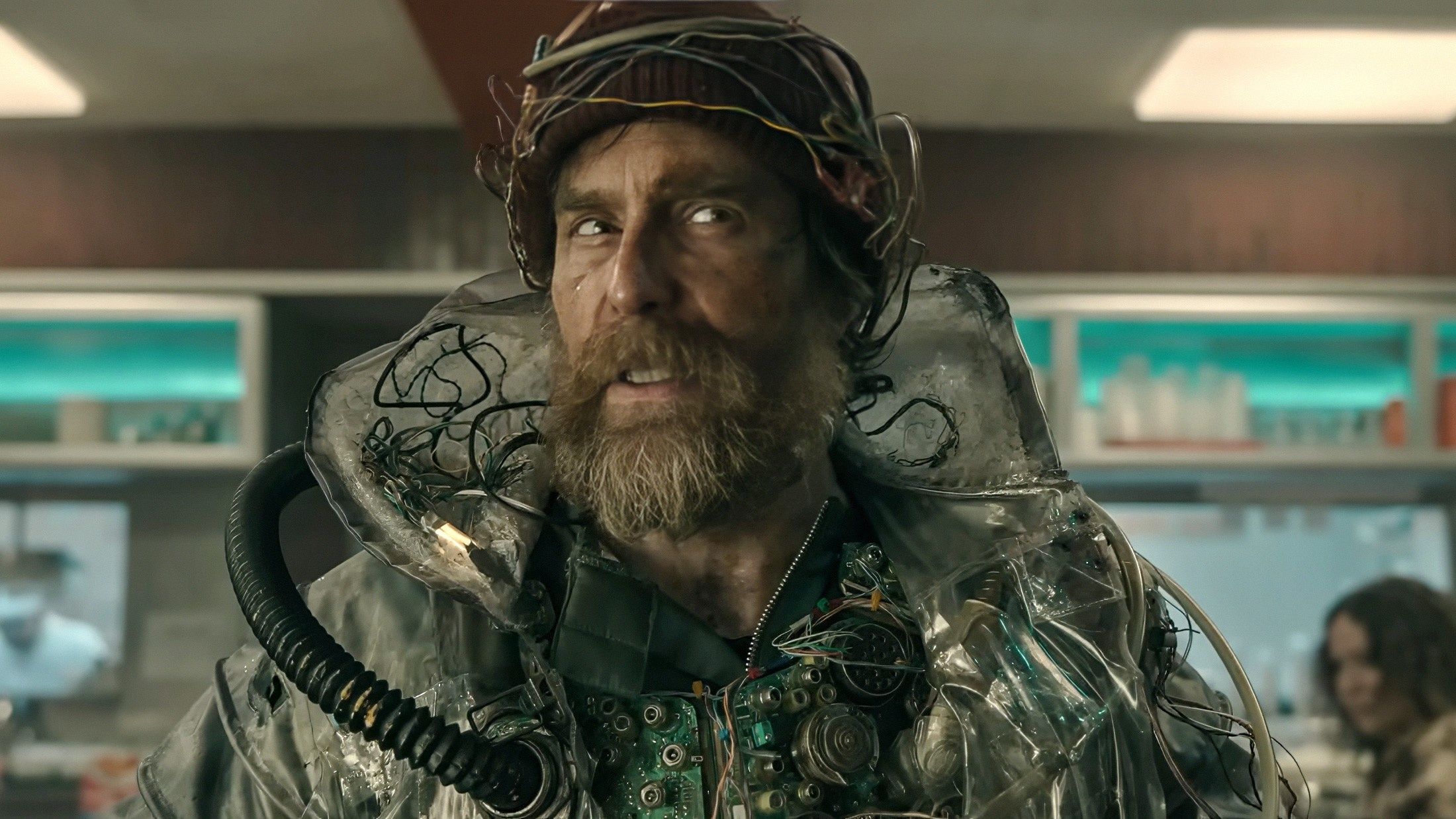
When Rockwell, a man claiming to be from the future, appears – wearing a grimy, clear plastic poncho covered in wires and a ticking clock – he immediately starts complaining about the world’s issues. Director Verbinski confirms this by showing a crowded diner where almost everyone is lost in endless scrolling on TikTok or Instagram.
The man’s message paints a bleak picture of the future: technology has essentially numbed humanity to the point where half the population has perished due to a chain of unfortunate events. The environment is ruined, and the survivors are too absorbed in their phones to notice the severity of the situation. While Rockwell’s initial antics – like eating strange foods and tossing phones into pitchers – are amusing, his underlying message is filled with the pessimism often associated with older generations, making it difficult to fully accept his warnings.
Despite the challenges, he manages to get his message across. This is his 117th attempt to return to present-day Los Angeles, and he believes a specific group of people will finally be able to prevent a nine-year-old boy from triggering a devastating technological singularity. This boy is building an artificial intelligence system that threatens to destroy civilization.
The man gathers a quirky group of people for his scheme, including Ingrid (Richardson), a children’s party performer whose makeup is smeared; Mark and Janet (Michael Peña and Zazie Beetz), a bickering pair of high school teachers; Susan (Juno Temple), a heartbroken single mom; and Scott (Asim Chaudhry), a frustrated Uber driver. Their involvement comes about through a series of somewhat amusing mishaps.
Each character has a clear reason for joining the man on his hopeless journey, and they all bring some mystery to the story. However, the film’s fragmented, *Magnoliastyle structure slows the pace and prevents it from building enough momentum. It’s much too long, and the final act is particularly weak, ultimately undoing any positive feelings the movie had created.
Susan’s story feels particularly off-track. After experiencing the tragedy of losing her son in a school shooting, she ends up at a secret lab that brings people back to life through cloning. The story rightly criticizes the gun industry and policies that fail to protect children. However, the writers sometimes seem to blame Susan for her suffering instead of focusing on the systems that allowed it to happen.
The film feels unfocused and leaves you feeling unsatisfied. It also misinterprets our relationship with social media. While we might use it too much, the film blames kids instead of recognizing the deliberate marketing strategies designed to make us addicted. Plus, it doesn’t explore why children are so eager to escape from reality – what underlying issues might be at play?
Okay, so this movie definitely tries to poke fun at how messed up the world is and where we seem to be heading with all this tech, but honestly, it feels a little off the mark. Instead of sharp satire, it’s just… really, really sweet and silly, and it goes on and on. It’s like there were seven different cool ideas floating around, but none of them were really developed. Still, if you’re in the mood for something weird and darkly funny, Verbinski delivers! Just be prepared for a bit of a strange ride.
Good Luck, Have Fun, Don’t Die releases theatrically on February 13th, 2026.
2026-02-09 17:00