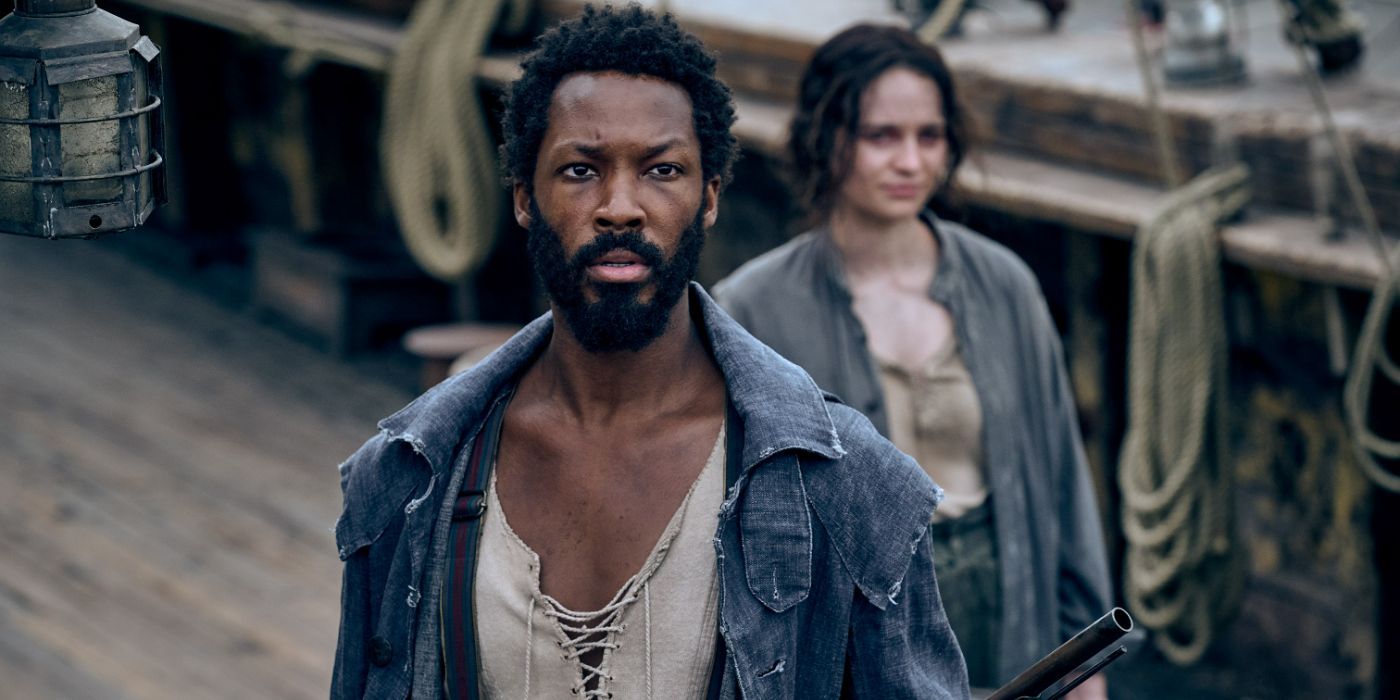
Bram Stoker’s Dracula, published in 1897, is one of the most frequently adapted horror novels ever, appearing in over 80 films and television shows. This month sees the release of Luc Besson’s new Dracula movie, and it’s safe to say many more adaptations will follow. A particularly well-received recent version focused on just one chapter of Stoker’s original story.
Most adaptations of Dracula fall into one of two traps: they prioritize action over the book’s deeper social messages, or they simply retell the same familiar story. The Last Voyage of the Demeter is different. It offers a new take on a lesser-known part of the Dracula story and cleverly highlights a key theme from Stoker’s novel: the impact of modernity.
Modernity Is One of the Biggest Themes in Bram Stoker’s Dracula
The novel explores several key ideas, like female sexuality, wealth, mental illness, and the possibility of religious redemption – all of which resonated with the issues of its era. A major theme, often difficult to capture in film adaptations, is the impact of modern life and its consequences.
The late 1800s were a time of rapid change. Cities grew, new technologies like department stores and telephones emerged, and ways of thinking about the world began to shift. Darwin’s ideas about evolution challenged traditional religious beliefs. Although religion remained important, scientific explanations became increasingly popular.
As people began to rely more on facts and research instead of traditions and superstitions, a tension arose. Harker points out early in the story that even with the rise of modern thinking, older beliefs and forces still held significant power – a power that couldn’t simply be dismissed.
Although Bram Stoker starts his novel in Dracula’s castle, the story quickly moves to London. Surprisingly, modern advancements actually help Dracula hunt, because people there don’t believe he exists.
When Dracula attacks Lucy, both Dr. Seward and Mina are unaware of what’s happening. Only Professor Abraham Van Helsing, a Dutch scholar who believes in old stories and legends, realizes the danger. He believes, as stated earlier in the story, that science often tries to explain everything, and dismisses anything it can’t understand.
Relying solely on current scientific thinking can actually leave us unprepared for the future. If we don’t learn from the past or remain open to different perspectives, we become susceptible to repeating old mistakes. Essentially, believing progress will always protect us is a dangerous assumption.
This Last Voyage of the Demeter Quote Perfectly Conveys the Theme of Modernity
Modernity in Gothic literature goes beyond just new technology and city life. While novels set in London, like Bram Stoker’s Dracula, hint at it through vulnerable characters, The Last Voyage of the Demeter directly addresses these themes.
The film, directed by and inspired by a single chapter from the novel, tells the story of the crew aboard the merchant ship Demeter as they journey from Carpathia to London, unknowingly carrying Dracula with them. Because the original chapter leaves much to the imagination, the movie offers one possible version of what happened during the voyage.
Early in the movie, when asked what he plans to do with his money, the character explains that it can’t buy what he truly wants: to understand the world. He feels that the more he experiences, the more confusing things become, and he’s driven to find the core meaning of it all.
If someone hasn’t read Bram Stoker’s book, this quote probably won’t seem important. However, when you consider the time it was written, it actually highlights the very innocence and lack of awareness that Stoker was trying to point out and criticize.
Dr. Clemens is a scientist at heart. He embraces progress and is fascinated by breakthroughs in science, medicine, and city planning. He’s driven by a strong conviction that everything has a scientific explanation, and he rejects the idea of accepting things without understanding them.
Clemens believes he has a rational understanding of the world, much like Van Helsing. When sailors start vanishing and a young woman, Anna (Aisling Franciosi), is discovered hidden on the ship with bite marks, he quickly assumes a common disease like the plague or rabies is to blame. He repeatedly insists that superstition and old stories have no basis in reality.
Whenever strange things happen on the ship, he immediately looks for a rational or scientific explanation. He might blame it on someone drinking too much and falling, an outbreak of illness, or even shared hallucinations causing fear and suspicion.
Because he dismisses anything unexplainable by science, he doesn’t realize the danger until it’s too late. As the ship’s only doctor, the crew trusts his logical explanations. It’s only when faced with undeniable proof that Clemens accepts there are things science can’t explain.
Clemens Is one of the Best Character Representations of Modernity in Dracula
Clemens, a character in The Last Voyage of the Demeter, blends traits from Dr. Seward and Van Helsing. Initially, he’s a skeptic like Seward, prioritizing logical explanations over the supernatural. But as the story progresses, he evolves, combining his scientific background with a more open mind to fight the Count, much like Van Helsing.
To defeat Dracula, a combination of both traditional beliefs and modern science was essential. This reflected the concerns of the era – Van Helsing used religious items like crosses and holy water, while Seward relied on new technologies such as the phonograph. Neither science nor religion could have succeeded on its own.
The moment when Clemens challenges Dracula in London perfectly illustrates this point. The doctor boldly declares that the vampire isn’t a god, but a creature just like any other. He points out that Dracula bleeds, rests in the earth, and, most importantly, needs to feed to survive. Ultimately, Clemens argues that Dracula’s need for blood simply makes him a living being—no different from any other predator.
What really struck me about Clemens’ explanation is how he pieced everything together. He’s clearly acknowledging that whatever this creature is, it doesn’t fit into the natural world as we know it. But, interestingly, he also points out that on a basic level, it’s not so different from us – it needs to sleep and eat, and it’s afraid of dying, just like anyone else.
Clemens embodied the spirit of his era, a time of great division. The story demonstrated that thriving in a modern world requires bringing different ideas together, rather than rejecting the past. Clemens’ ability to blend science and the supernatural mirrored Stoker’s belief that societal advancement shouldn’t erase traditional knowledge, but instead learn to live alongside it.
While The Last Voyage of the Demeter isn’t the most exciting or powerful Dracula adaptation, it’s one of the few that truly captures the ideas in Bram Stoker’s novel. The film thoughtfully examines how modern life was changing society at the time, and it does so in a unique way, all based on a very short section of the original book – just under five pages.
Found an error? Send it so it can be corrected.
2026-02-05 19:38