As a movie reviewer, I’ve always heard the saying ‘the book is better,’ and honestly, most of the time it’s true. But there are exceptions, and a couple of films really stand out. Take Jaws and Blade Runner, for example. Both started as novels, but in my opinion, the movies actually improved on the original stories. They’re proof that sometimes, a film can truly surpass its source material – and they’re fantastic examples of when that happens.
It’s important to remember this is just a limited example. Hollywood has made countless adaptations over the years, and many – likely dozens, if not hundreds – are actually superior to the books they’re based on.
Each of these adaptations offers a significant improvement over the original story, and it’s worth examining how they achieve this.
5. “Jaws”
Peter Benchley’s Novel Published In 1974; Steven Spielberg’s Movie Released In 1975
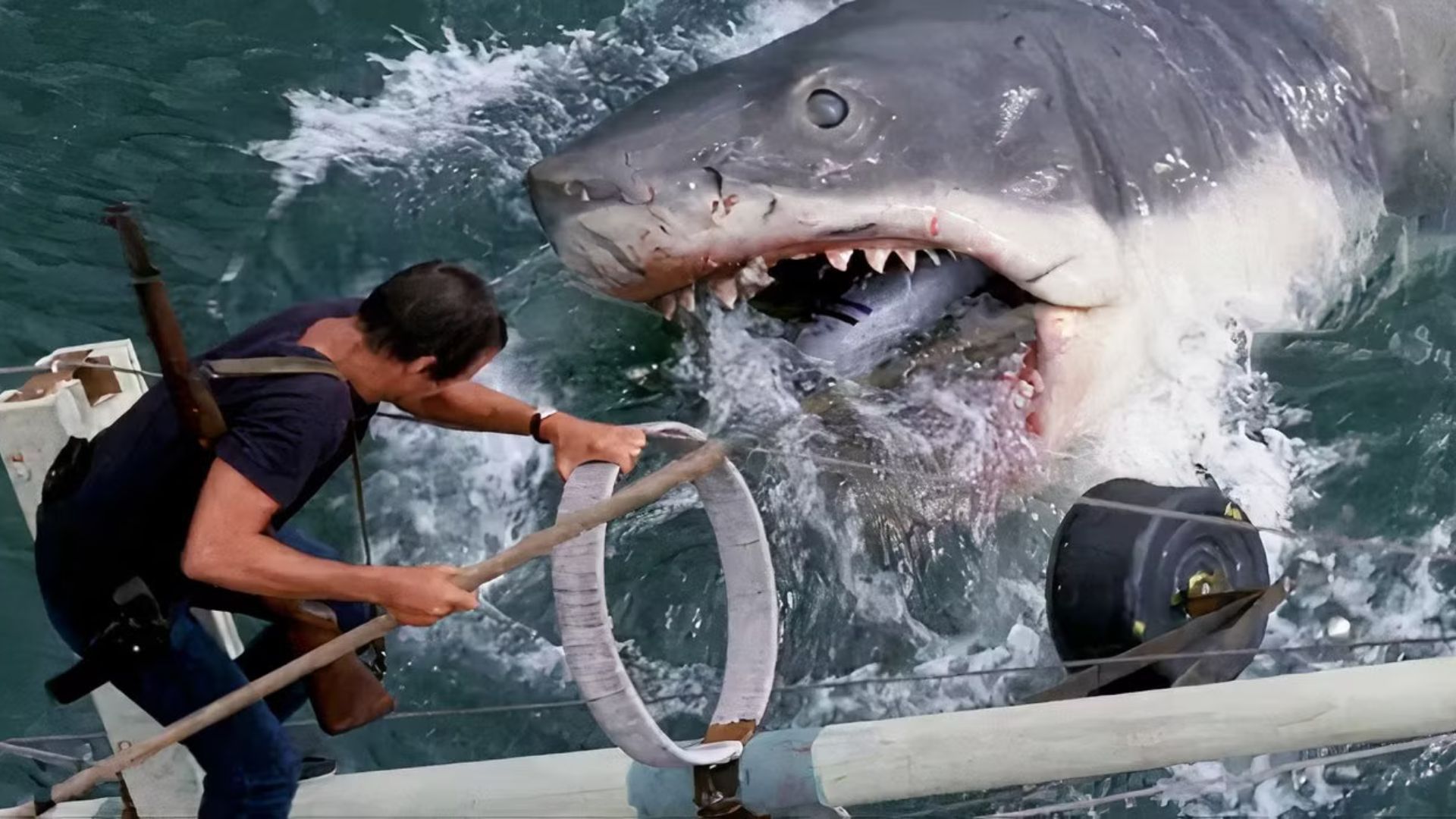
Even though making Jaws was famously difficult, Steven Spielberg created the strongest possible film. It’s a perfect example of a story that works even better as a movie than it did as the original paperback thriller. The film brilliantly builds suspense by hinting at the shark before it appears, and the music expertly foreshadows its arrival, resulting in a truly exceptional adaptation.
The film simplifies the story from the book, but it really shines in building suspense throughout. While the novel Jaws keeps you turning pages quickly to get to the exciting parts, the movie takes its time and lets you fully experience each memorable scene.
As a fan, I think what really makes the Jaws movie so great, like all the best adaptations, is the incredible acting. Seriously, everyone in the cast was fantastic, from Roy Scheider, Robert Shaw, and Richard Dreyfuss – they totally brought their characters to life and turned them into legends! The book was good, but they took it to a whole new level on screen.
4. “Fight Club”
Chuck Palahniuk’s Novel Published In 1996; David Fincher’s Film Released In 1999
 Original SR Image by Yailin Chacon.
Similar to the movie Jaws, Fight Club benefits from strong lead performances by Ed Norton and Brad Pitt, elevating the source novel into a fantastic film. However, the biggest distinction lies in how each version reveals its major twist. Both the book and the movie keep the surprise hidden, but they use the unique strengths of their respective mediums – writing versus film – to do so.
Chuck Palahniuk’s novel is narrated by the main character. The film adaptation, directed by David Fincher, keeps some of this with voiceover, but mostly shows events from an outside perspective. This clever choice actually makes the big reveal about Tyler Durden easier to miss, as it’s presented right in front of you. It also allows the filmmakers to include subtle visual clues throughout the movie, making it incredibly rewarding to watch again and again.
While the book offers clues to the big reveal, the twist is much more powerful when you watch the movie. In the novel Fight Club, the reveal feels like everything suddenly makes sense. But in the film, it’s a shocking moment that really catches you off guard, making for an unforgettable ending – arguably one of the best ever.
3. “Apocalypse Now”
Joseph Conrad’s Novella Heart Of Darkness Published In 1899; Francis Ford Coppola’s Film Released In 1979
While both Jaws and Fight Club significantly adapt their source novels, they still follow the main storylines. Apocalypse Now, however, is more loosely based on its inspiration, Joseph Conrad’s Heart of Darkness. It borrows ideas from the novella but reimagines the story to reflect issues of the 20th century.
Francis Ford Coppola became one of Hollywood’s most celebrated directors with his faithful adaptations of The Godfather and its sequel. These groundbreaking films earned him complete creative freedom, and he used it on a project that nearly destroyed him – a situation that ironically echoed the story and ideas within the films themselves.
As a huge film buff, I’ve always been blown away by Apocalypse Now. It’s this massive, sweeping movie about the Vietnam War that came out not long after everything ended. It’s not just a war film, though – it’s almost a dark comedy, and really feels like it captures everything that was going on in America during that whole turbulent decade. And the craziest part? It’s loosely based on a novel from way back in the 19th century!
2. Forrest Gump
Winston Groom’s Novel Published In 1986; Robert Zemeckis’ Film Released In 1994

Surprisingly, the movie Forrest Gump left out some pretty wild parts of the original book. The book featured Forrest traveling to space and even having a short career as an actor—events that didn’t make it into the Tom Hanks film. But the biggest difference isn’t what happened in the story, it’s how the story felt. The movie toned down the book’s overall mood.
The book is primarily a comedy, though it gains tragic undertones as the story unfolds. The film version changes this balance. While Forrest Gump keeps the book’s funny moments, often making audiences genuinely laugh, it also adds a pervasive sense of sadness and longing that ultimately defines the movie’s feel.
Despite its popularity, the film Forrest Gump is actually a remarkably well-done adaptation of the novel. It takes the strengths of the book—like its touching portrayal of loss and the unique rhythm of the storytelling—and enhances them for the screen, ultimately overshadowing the original source material.
1. “Blade Runner”
Phillip K. Dick’s “Do Androids Dream Of Electric Sheep?” Published In 1968; Ridley Scott’s Film Released In 1982
The famous sci-fi film Blade Runner, directed by Ridley Scott, borrowed its title from a different science fiction story, but its plot is largely based on Philip K. Dick’s novel Do Androids Dream of Electric Sheep? While the film does make some changes to the story, it successfully captures the atmosphere and themes of Dick’s original work.
Philip K. Dick’s novel, Electric Sheep, is a unique and twisted science fiction story. Ridley Scott perfectly captured the book’s dark and energetic mood in his film, Blade Runner. While the movie’s meaning has become somewhat complicated with different versions being released, it still brilliantly brings Dick’s distinctive writing to life.
Philip K. Dick’s novel, Do Androids Dream of Electric Sheep?, is a classic, largely due to his unique writing style. While the film adaptation, Blade Runner, doesn’t quite capture that same voice, it benefits from Ridley Scott’s distinctive vision of a dystopian future, resulting in a remarkably successful transformation from book to film.
2026-01-27 15:00