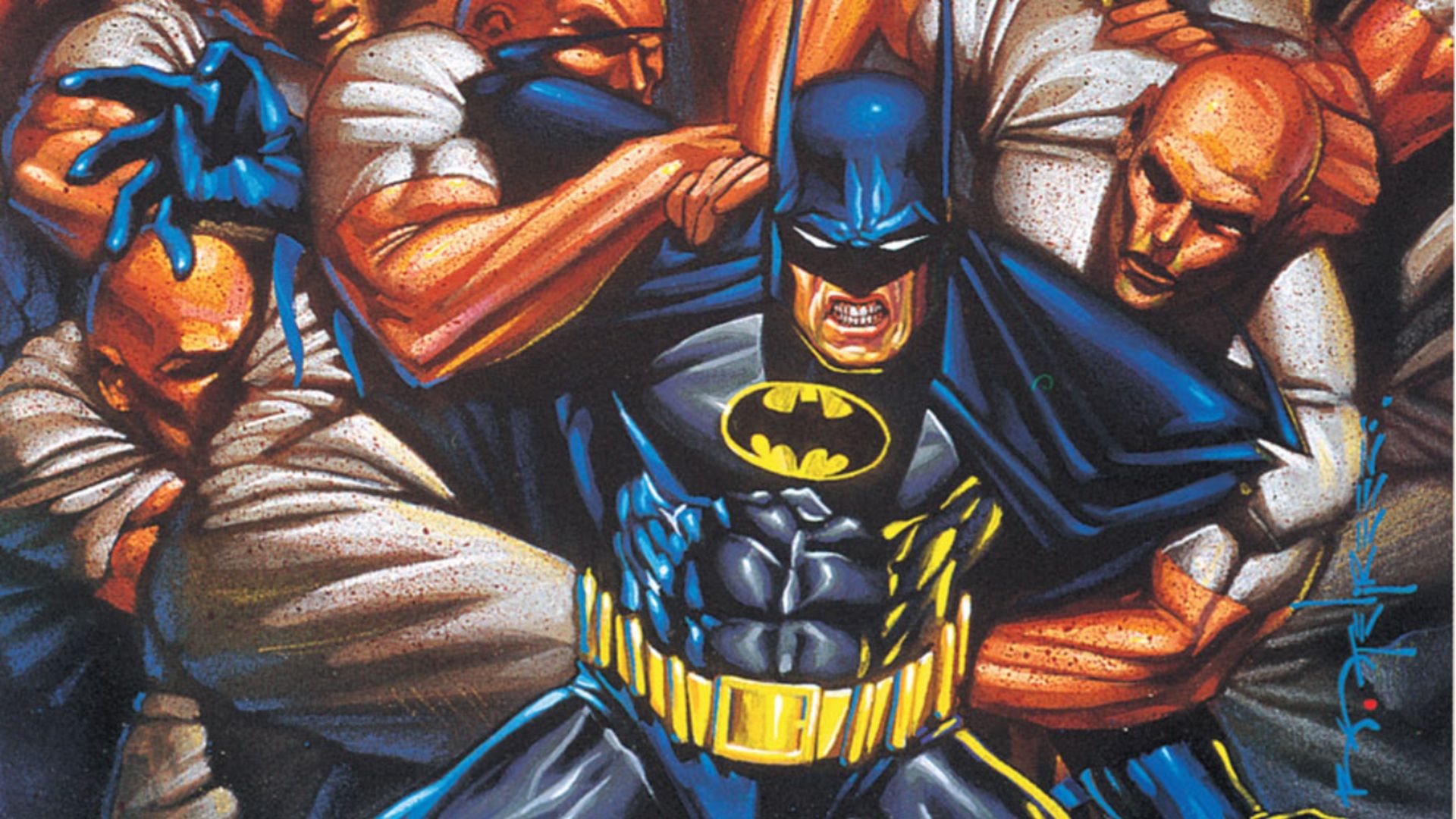
Few superheroes have a history as long and well-known as Batman. Since first appearing in Detective Comics #27 in 1939, Bruce Wayne’s dark and serious crime fighter has been reimagined countless times in comic books.
It’s true that not all versions of The Dark Knight have aged well. Even some famous and highly-regarded Batman comics aren’t viewed as positively today, for various reasons.
The 1988 Batman story arc “A Death in the Family,” created by Jim Starlin and Jim Aparo, is still famous for its shocking ending, especially because fans actually voted for it to happen. Readers were given a phone number to call and decide whether Robin, Jason Todd, would live or die in Batman #428. Most voters chose for Robin to be killed in an explosion.
Resurrecting characters isn’t uncommon in comic books, and Jason Todd’s story is a prime example. Though his death was a huge event, he later returned as the complex anti-hero Red Hood in the critically acclaimed 2005 storyline “Under the Red Hood,” eventually becoming a full member of the Batman Family. Knowing he has a future beyond this tragic tale makes revisiting this story feel essential for any Batman fan.
A new animated trilogy, set in the early 1990s, was announced for release starting in late 2025. However, Warner Bros. Animation might face challenges with the second part, as it will likely center around Jean-Paul Valley, aka Azrael, who temporarily took over as Batman after Bruce Wayne. This could be a risky move, potentially leading to fan disappointment.
The story Knightfall is famous for the shocking image of Bane breaking Batman’s back – an image that heavily influenced the movie The Dark Knight Rises. While the character Azrael has appeared in a few video games, he hasn’t been widely used in other media. This is likely because Azrael and his extreme approach to fighting crime now seem overly familiar and cliché.
As a long-time Batman fan, I’ve always admired how dedicated he is to staying in peak condition – totally clean, no drugs, no alcohol, nothing that could slow him down. That’s why when I first read Dennis O’Neill’s “Venom” storyline from 1993, I – and a lot of other fans, I think – were pretty shocked. It definitely raised some eyebrows and sparked a lot of debate!
This story, originally published as part of the Legends of the Dark Knight series, features Bruce Wayne searching for ways to become a better crime fighter after a devastating loss. This leads him to try an experimental drug. While it’s intriguing to see Batman exposed to Venom – the substance famously used by Bane – and tempted by its power, some readers find it upsetting to see him deliberately use it and become dependent on it.
So, it’s wild to think that just a couple of years after Batman first showed up, Commissioner Gordon actually made him and Robin official members of the Gotham City Police Department – it happened way back in Batman #7! Back in 1941, that probably seemed like the perfect way to show Batman, you know, working with the police. And honestly, that’s kind of how things stayed for a long time, even all the way through the Adam West TV show. It was a pretty idealistic take on the character, and it stuck around for years.
Today’s audiences prefer a Batman who fights not just criminals, but also the corrupt institutions that allow crime to thrive. Because of this, the idea of Batman easily working with the police – beyond his established partnership with Jim Gordon – feels out of character and doesn’t quite ring true.
Jeph Loeb, a celebrated comic book writer, is well-known for his work on Batman, especially the 2002-2003 comic Batman: Hush. This story forces Bruce Wayne to deal with secrets from his past as a new villain appears in Gotham City. With stunning artwork by Jim Lee and Scott Williams, it’s clear why this comic is so popular with fans.
Despite some truly memorable moments, particularly in Batman’s relationship with Catwoman, the Hush storyline doesn’t quite live up to its reputation as a perfect story. Re-reading it reveals that the plot feels crowded with too many villains, and the big reveal of who Hush really is isn’t surprising at all.
Batwoman (Kate Kane) and Batgirl (most notably Barbara Gordon) are two key figures in the Batman universe. However, they likely wouldn’t be as well-known today if their original versions hadn’t been updated and reimagined over time.
Batwoman and Bat-Girl first appeared together in a DC Comic in 1956, in Detective Comics #233. They were introduced as potential love interests for Batman and Robin following the publication of Seduction of the Innocent, which caused public concern about comics supposedly promoting homosexuality. However, these early versions of the characters are far removed from the strong, well-defined heroes they’ve become. Instead, they were portrayed as stereotypical, helpless women who needed rescuing and romantic attention from Batman and Robin.
This list doesn’t require every Batman comic to be a classic – the main thing is that they’re known for being difficult to read. This is particularly true of All-Star Batman & Robin, The Boy Wonder by Frank Miller, which many consider a prime example.
Frank Miller, the celebrated writer behind iconic Batman stories like The Dark Knight Returns and Batman: Year One, also created a controversial take on the character. This version portrays Bruce Wayne as a cruel and violent man who doesn’t rescue Dick Grayson after his parents’ death, but instead kidnaps him to become his partner. This reimagining, part of DC’s All-Star Imprint (2005-2008), was so unpopular with fans and critics that the series was cancelled after just ten issues.
As a huge Batman fan, I have to say the 2016 animated movie, Batman: The Killing Joke, really disappointed me. A lot of critics slammed the added prologue, focusing on the developing relationship between Batgirl and Batman, and honestly, I kind of agreed. But it got me thinking… maybe the core story itself just wasn’t as strong as people remember? It makes you wonder if the problems were always there, and the movie just highlighted them.
Alan Moore and Brian Bolland’s influential 1988 Batman story takes a dark turn when the Joker kidnaps Commissioner Gordon and severely injures his daughter, Barbara. However, the story has faced criticism for its depiction of violence against women, with some critics arguing that it unfortunately set a precedent for using such violence to motivate heroes in comics.
It’s unusual for a superhero to immediately make a strong impression, particularly those who first appeared during the early days of comics. Back then, writers and artists were still learning how to create these kinds of stories. Even dedicated Batman fans acknowledge that Bill Finger and Bob Kane didn’t get the character exactly right from the beginning.
It’s easy to forget that early in his career, Batman didn’t have the strict rules against guns and killing that he’s known for today. Many readers first encountered a much more violent version of the character. Thankfully, Dan Jurgens’ recent reimagining of Batman’s origins in DC’s 2024 Black Label series, The Bat-Man: First Knight (where he initially considers using lethal force) and its sequel, The Bat-Man: Second Knight, offers a more grounded and nuanced take on those early days.
2026-01-18 00:14