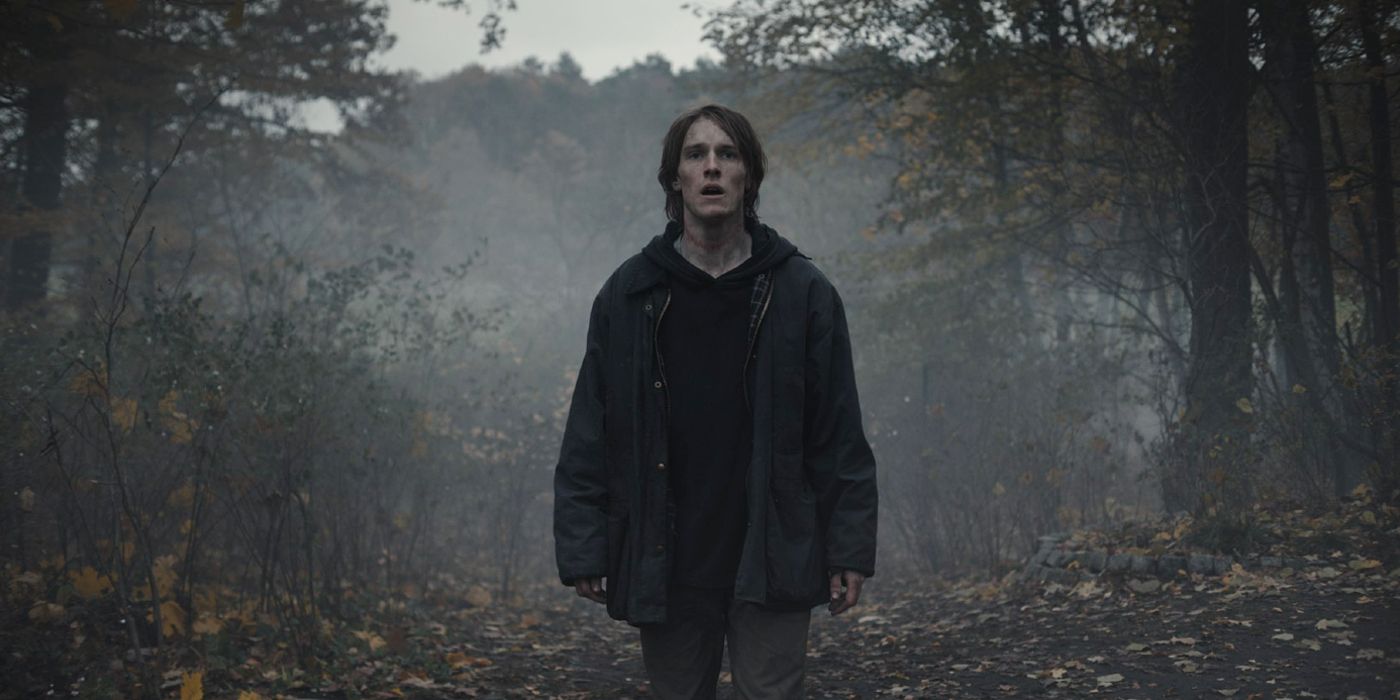
The finale of Game of Thrones is still talked about as one of the most disappointing television endings ever. It serves as a cautionary tale for writers, highlighting the fear of creating a conclusion that upsets fans and damages a show’s reputation. Even almost seven years later, its impact is still felt. However, unlike many other shows that struggled with their final seasons, the ending of Netflix’s sci-fi hit continues to be highly regarded.
Despite receiving a 95% score on Rotten Tomatoes, the final episode of Dark, titled “Das Paradies” (The Paradise), is considered one of the best TV show finales ever, earning a 9.6 rating on IMDb. Unlike shows like Stranger Things that focused on familiar, comforting themes, Dark embraced a complex, cyclical narrative. The show’s three seasons weren’t a buildup to an unresolved ending, but rather a complete and unsettling circle. Even five years later, the finale is praised for being a remarkably thoughtful and genuine conclusion within the science fiction genre.
Dark Knew Its Ending Before It Knew Its Audience
The show’s successful and satisfying conclusion is largely due to the creators having a well-defined plan from the beginning. They already knew how the story and characters would end, which allowed them to stay true to their vision and avoid being swayed by fan expectations or outside influences.
The creators, Jantje Friese and Baran bo Odar, planned the series as a complete story with a clear beginning, middle, and end. Unlike some shows that evolve without a fixed plan, they had a complete vision from the start, even knowing the very last line of dialogue before filming began.
The show’s careful construction meant subtle clues were woven throughout, often unnoticed on a first viewing. Things established in Season 1 – like details about the Kahnwald house or how characters described feeling déjà vu – weren’t just added for atmosphere. They were essential building blocks that directly supported the events of Season 3’s finale.
Director Baran bo Odar has said he finds straightforward, linear stories uninteresting. He and his generation were inspired by shows like Twin Peaks, which presented complex, layered mysteries. However, while Twin Peaks embraced the strange and unexplained, Dark approached its puzzles as if they had a logical solution. Every twist, complicated family connection, and time loop was intentionally created to be resolved by the end of the series.
The show smartly avoided getting bogged down in complicated backstory by focusing on one core idea: the bootstrap paradox. Essentially, the story argues that the start and finish of events are actually the same, creating a self-contained loop.
Characters weren’t able to easily correct their errors because trying to fix them actually created the problems in the first place. This dedication to a fixed storyline allowed the writers to ignore popular trends or what fans wanted. They refused to alter the established rules to save a character; the character suffered the consequences of those rules, as the story’s overall structure required.
Dark Took Its Sci-Fi Concept and Characters Very Seriously
What made Dark truly exceptional was its portrayal of time travel as a cause of problems, not a way to fix them. This choice created a more captivating, suspenseful, and enigmatic story, and it significantly strengthened the show overall. Dark built a believable world by consistently showing that time travel always had damaging consequences for both the person traveling and the world around them.
Ulrich Nielsen, portrayed by Oliver Masucci, perfectly embodies the show’s tragic themes. He starts as a detective desperately searching for his son, but instead of finding redemption or a heroic outcome, time travel only exacerbates his problems. It results in his imprisonment, a lonely old age in a mental institution, and ultimately, his death without ever reconnecting with his loved ones.
Masucci found playing the character Ulrich increasingly difficult, calling it “horrifying” as the series progressed. He explained that Ulrich was constantly facing terrible circumstances and that each scene presented a new, worsening challenge. The show’s creators didn’t allow Ulrich to find happiness or success because his own rash decisions consistently led him into trouble. This wasn’t intentional punishment from the writers, but rather a natural consequence of his personality within the show’s complex world.
Hannah Kahnwald was a complex character who seemed to unravel as the time loop continued. She was already struggling with heartbreak, the loss of her husband, and the mysterious appearance of her son from the future, yet she remained focused on herself. Even when given a second chance by traveling back in time, she repeated the same errors. This realistic portrayal of flaws also applied to the main characters, Jonas and Martha.
The show didn’t shy away from the disturbing truth about their family history—that they were aunt and nephew, and their son was the terrifying figure responsible for continuing the suffering. By acknowledging the incestuous nature of the time loop, Dark made viewers confront the horrifying reality of the situation. It wasn’t a puzzle to be solved, but a deeply disturbing genetic and time-based problem that demanded complete destruction, not just a simple fix.
The series’ central ideas are deeply rooted in the philosophy of Arthur Schopenhauer, specifically his concept of “Will.” The show suggests that characters remain stuck as long as they’re motivated by their wants and needs – whether it’s love, sadness, or simply staying alive. For example, Jonas’s determination to rescue Mikkel ironically leads to the events that keep Mikkel trapped in the first place.
True freedom comes from letting go of all desires and the will to live. That’s why the character of Adam, in its earliest form, isn’t evil – he simply understands that the only way to end suffering is to cease to be.
Why Dark’s Ending Feels Bold Where Others Choose Safety
The ending of Dark is effective because it untangles the show’s complicated plot without making it feel easy. For two seasons, the series relied on tightly connected cause-and-effect loops. Then, Season 3 brought in the idea of quantum superposition – that reality could split into different paths. However, instead of using this to create a chaotic, anything-goes scenario, the show cleverly used it to solve the core mystery.
Okay, so the big reveal in this film centers around something called the ‘Origin World,’ and it totally reframes everything. The protagonist, Claudia, figures out that the worlds of Adam and Eva aren’t natural – they’re actually growths, like tumors, stemming from a single error in a third, original world. It’s a really clever concept they call the ‘Triquetra’ solution – essentially, the truth lies in a knot with three connected points, not just the two we’ve been focusing on. It’s a mind-bending idea that changes how you see the whole story!
The story reveals that H.G. Tannhaus, a clockmaker from the original world, created a device hoping to save his family from a fatal car accident.
The world’s destruction, constant rain, and overall strangeness all point to a broken reality. Saving the characters doesn’t mean giving them a good life within this broken world; it means making them cease to exist. The story culminates with Jonas and Martha going back to the beginning to stop the car accident that started everything. When they succeed, the result isn’t dramatic or explosive; instead, it’s a sad and beautiful fading away, as they slowly turn into golden dust.
Okay, so the finale… it’s pretty powerful. We see all the key players – Adam, Eva, Claudia, everyone – just… disappear. The dialogue is incredibly stripped down. Martha asks if anything will be left of them, and Jonas responds with that line we’ve heard throughout the series – “We are a perfect match. Never believe anything else.” It’s a really moving moment, as they hold hands and fade away completely. It leaves you with a lot to think about, honestly.
The ending isn’t cheerful, but it’s more of a philosophical one. It represents a victory over pain by choosing non-existence – a concept heavily inspired by Schopenhauer. By denying their own will to live, the characters have saved a world they won’t be around to see. The final dinner scene in the restored world visually emphasizes this: half the seats are empty, showing that the Nielsens and Dopplers were only able to exist because of the time loop.
Despite the events of the show, a feeling of loss and vanished possibilities remains. Hannah, looking at a yellow raincoat, feels a strange sense of familiarity, recalling a dream about the end of the world – a dark, but strangely peaceful, ending. When considering names for her baby, she chooses “Jonas,” hinting that even though the original Jonas is gone, something of his spirit, or the idea he represented, still exists.
One reason Dark‘s ending is so impactful is that it wasn’t designed to be feel-good, open-ended, or something you could revisit endlessly. Instead, it aimed for a definitive conclusion, respecting the carefully crafted structure of the show. While the ending was filled with sadness, regret, and heartbreak, it ultimately delivered on the promises made by the story and its core concepts.
Read More
- ЭсЭфАй акции прогноз. Цена акций SFIN
- CBS Retcons NCIS’s 18-Year History By Breaking 1 Trend
- ДВМП акции прогноз. Цена акций FESH
- HBO’s The Penguin: A Stellar Cast Powers This Gotham Crime Drama
- Mel Gibson’s $610M Epic Becomes Global Streaming Hit As 2027 Sequel Draws Closer
- 12 Famous Actors Who Played Batman (That Everyone Forgot About)
- New Star Wars Series Debuts With Rare Perfect Rotten Tomatoes Score After Early Season 2 Renewal
- Marvel Studios Confirms 12 Teams Facing Doctor Doom In Avengers: Doomsday
- Avengers: Doomsday Finally Has An Out To Its Dune 3 Showdown
- The Umbrella Academy Almost Made Time Travel Shows Look Easy
2026-01-11 02:10