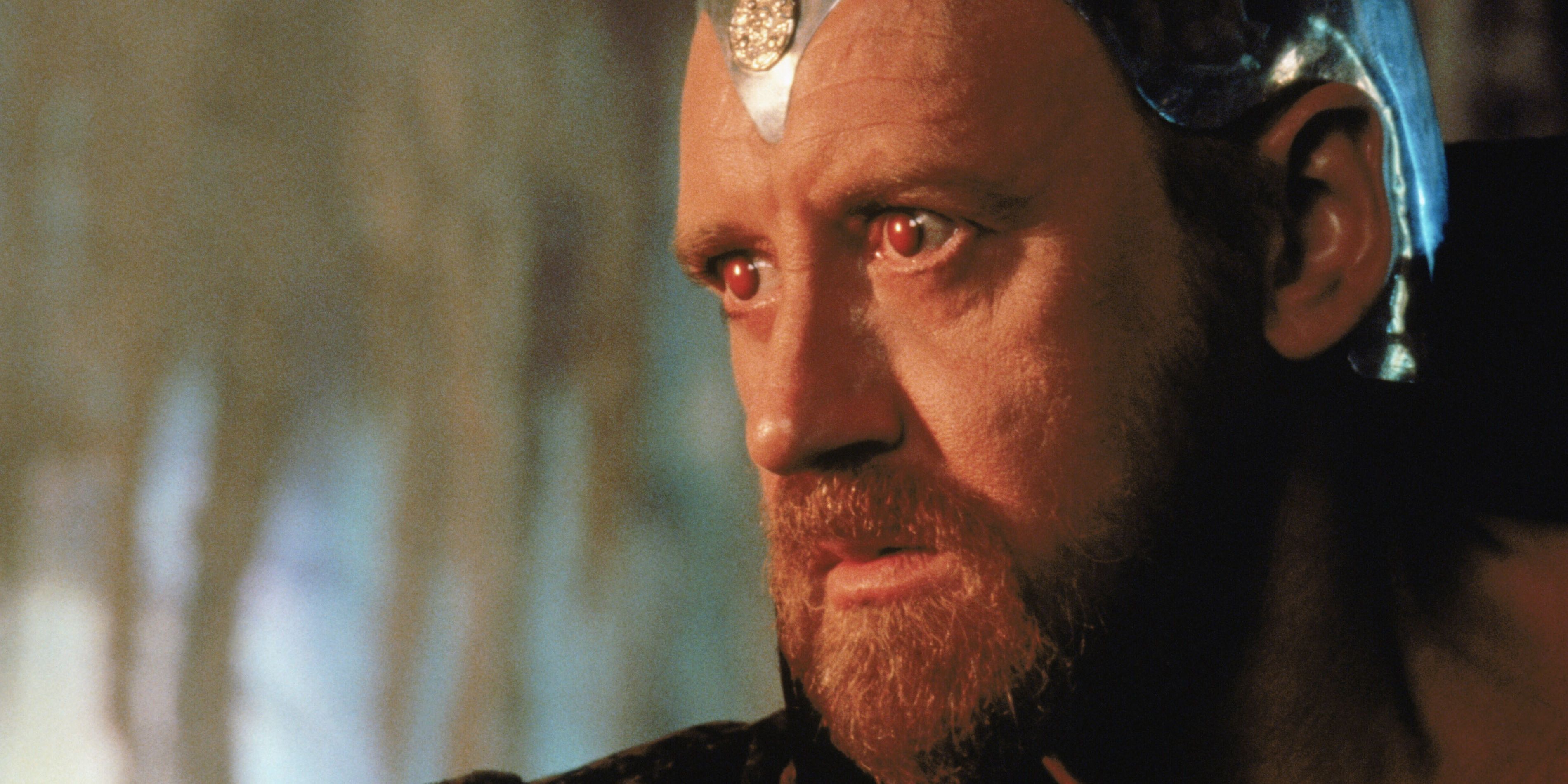
Released in 1981, Excalibur came out at a time when filmmakers weren’t focused on building huge, interconnected franchises. John Boorman’s version of the Arthurian legend didn’t try to update the story for modern audiences or make it easier to understand. Instead, it sought to truly bring the legend to life. Unlike many modern blockbusters that often explain every detail of magic and ancestry, Excalibur immerses you in a world that feels both magical and genuinely threatening.
John Boorman’s Excalibur continues to be a major inspiration for fantasy films and series, impacting everything from Batman v Superman to The Lord of the Rings. Even today, while many fantasy worlds lack depth, Excalibur – featuring a remarkable cast including Helen Mirren, Nigel Terry, and Liam Neeson – remains powerfully immersive and surprisingly modern. The film uniquely conveys the gravity, artistry, and harshness of ancient legends, recreating the emotional impact these myths originally had on audiences.
Excalibur Tells the Entire Saga Without Diluting Its Power
What’s most striking about the film Excalibur is how boldly it approaches the Arthurian legend. Modern movies about King Arthur tend to focus on one specific part of the story – like how Arthur became king, a love affair, or a battle. They aim for a straightforward, understandable narrative. But director John Boorman deliberately went in the opposite direction.
The movie tells the complete story, beginning with the passionate and violent early life of Uther Pendragon. It follows Arthur’s journey from youth to becoming a powerful king, depicts the glorious era of the Round Table, then shows the dark and failing search for the Holy Grail, and ultimately culminates in a catastrophic final battle where the gods themselves perish.
As Boorman put it, this film feels like a complete retelling of the Arthurian legend, even though it covers a huge amount of material – essentially all of Thomas Malory’s Le Morte d’Arthur – in just over two hours. It’s surprising that it works so well, avoiding the feeling of being hurried or fragmented. The key is that Boorman approaches the story as if it were a traditional tale passed down through generations, rather than a typical, structured movie script.
As a film lover, what really struck me about this director’s style is how he just bypasses all the usual constraints. He doesn’t bother with tedious details of time or place, and can jump forward years—even decades—with a single edit. He doesn’t present shocking events like betrayal or family drama as surprises, but rather as just… how things always happen. It’s almost like watching the story unfold through the seasons – starting with a raw, energetic beginning, moving into a golden age, then a decline, and finally, an inevitable ending. It feels less like a plot and more like a natural cycle.
According to director John Boorman, the film prioritizes conveying universal, symbolic truths over strict historical accuracy. This choice gives the movie a dreamlike quality, setting it apart from many contemporary fantasy films which often feel visually and narratively stiff and overly serious.
This issue arises because creators frequently focus too much on the political and turbulent aspects, overshadowing the rich storytelling and attempting to ground fantasy in historical accuracy. They emphasize things like how Excalibur intentionally blends different time periods – for example, the knights are depicted wearing the gleaming, advanced plate armor of the 1500s, even though the story is set in the much earlier Dark Ages of the 6th century.
Traditionally, knights were depicted in leather and chainmail, but director Boorman prioritized a powerful image over historical accuracy. He believed that people picture knights as gleaming and bright, not as gritty, realistic soldiers. By intentionally using clothing from a different time period, the film taps into our idealized vision of a knight.
The armor worn by Uther Pendragon (Gabriel Byrne) is dark, rough, and animalistic, mirroring a world filled with desire and brutality. As Arthur grows and the kingdom enters a peaceful era, the armor transforms – becoming sleek, silver, and more streamlined. Finally, as the land decays and the knights fall, the armor appears heavy and tarnished, weighing them down and symbolizing their decline. These costumes don’t just show changes in the characters themselves, but also reflect the moral state of the kingdom.
Excalibur Feels Like a Myth That Has Trapped the Audience
Excalibur creates a dreamlike, hallucinatory atmosphere, similar to films like Francis Coppola’s Dracula or Ridley Scott’s Legend. This feeling comes from a combination of things: dramatic music, powerful wind effects, dark nighttime scenes, and prominent moonlight. The film has a unique, soft, and glistening visual quality that’s hard to achieve with today’s digital cameras.
Alex Thomson, the Oscar-nominated cinematographer, used a striking, otherworldly green light for the forest scenes. This wasn’t just a visual effect; it hinted at something deeper – the magical energy of the world, which the character Merlin refers to as “The Dragon,” seems to rise directly from the land itself.
As the knights travel through the forest, it feels less like a journey and more like being immersed in the land’s enchantment. The filmmaker, Thomson, used special filters to soften the picture, creating a dreamy, glowing effect. This gives the film the look of a beautiful, animated painting from the Pre-Raphaelite era, blending the characters seamlessly with their surroundings.
The film’s visual design enhances its fantastical feel. The knights’ armor, created by Bob Ringwood and Terry English from polished aluminum, was designed to reflect light like a mirror. Director Boorman asked the cinematographer to light the armor so it would create bright flares and starbursts in the camera lens, transforming the knights into shining figures in a shadowy world.
While Excalibur is visually stunning, it also depicts intense violence. Filmed entirely in Ireland, the production is famous for how difficult it was. It rained nearly every day, and director Boorman used the weather to his advantage. Many scenes show characters drenched and covered in freezing mud, which helped create the film’s harsh and realistic feel.
Excalibur Approaches the Dark Side of Fantasy With Boldness
Excalibur feels more substantial than many modern fantasy films because it wasn’t afraid to tackle darker themes. Instead of softening the story of Arthur’s birth, it presents it frankly – even depicting Uther Pendragon’s seduction of Igrayne as a forceful act, not a romantic one.
Arthur’s birth wasn’t a result of love, but a calculated plan fueled by magic and wrongdoing. Uther, consumed by desire and endangering his kingdom, makes a dark deal with Merlin to be with the Duke’s wife. This leads to a powerfully disturbing scene. Uther travels across the “Dragon’s Breath”—a magical mist connecting his army to the castle—appearing as a demonic figure against a crimson sky.
The scene is truly horrifying because of the small details. When he enters Igrayne’s room pretending to be her husband, he remains fully armored. The sound design is key – instead of a romantic melody, we hear the jarring, repetitive scrape of metal against skin. It’s a deeply unsettling, mechanical, and aggressive sound.
Igrayne isn’t experiencing love; she’s being overwhelmed by the king’s desire. Director Boorman didn’t shy away from depicting this, believing it represented a primal, unfiltered view of humanity. He explained that this early part of the story, focusing on Uther Pendragon, shows humanity still connected to magic and nature in a fundamental way.
What really struck me about this film is how nuanced even the villains are – something you don’t often see these days. One character, in particular, is just a powerhouse, almost a reflection of this raw, untamed energy we see in another character. Helen Mirren actually talked about this in an interview, and she hit the nail on the head. She explained that this villain wasn’t just some emotionless stereotype; she was incredibly passionate and driven, and because she was the queen, she was allowed to express those intense feelings. It’s a fascinating take that really adds depth to the story.
Fans often say Excalibur is still the best because it doesn’t try to be everything to everyone. It doesn’t simplify its story to attract a wider audience, and it doesn’t worry about making its characters universally loved. Instead, it insists on being appreciated for its strength and complexity.
With so much modern fantasy geared towards being family-friendly and easily marketed, watching Excalibur now feels like discovering a raw and forgotten piece of magical storytelling. It’s chaotic, intense, and often genuinely frightening. Director Terry Gilliam, known for his own visually striking films, once described it as “the perfect meeting of movies and mythology.”
Snyder is spot-on. While movies and TV often offer a simplified, more straightforward take on these stories, Excalibur stands out for its realistic portrayal of the medieval era – not just the magic and adventure, but also the harsh realities and darkness of the time.
Read More
- ЭсЭфАй акции прогноз. Цена акций SFIN
- ДВМП акции прогноз. Цена акций FESH
- When Abbott Elementary Will Finally Reveal Mr. Johnson’s Mysterious First Name Teased By Star
- CBS Retcons NCIS’s 18-Year History By Breaking 1 Trend
- Bryan Cranston’s Highly-Anticipated Comedy Revival Becomes American Streaming Sensation 20 Years After Original Series Ended
- 20 Years Later, Twilight’s Robert Pattinson Just Noticed A “Strange” Acting Choice For One Edward Cullen’s “Vampiric Thing”
- 3 Best Netflix Shows To Binge-Watch This Weekend – #1 Is A Surprise Hit Crime Thriller Trending Worldwide
- Южуралзолото ГК акции прогноз. Цена акций UGLD
- Мосэнерго акции прогноз. Цена акций MSNG
- One Big Pro To Bringing Brandon Sklenar Back Into The Yellowstone Universe, According To Sklenar Himself
2026-01-03 02:11