
It’s incredibly frustrating to invest years in a fantastic TV series only to be let down by the finale. Sadly, this happens a lot – truly great series endings are rare. While it’s difficult to wrap up a long, complicated show in a way that pleases everyone, it’s even harder when the show is popular. Unfortunately, many beloved shows have ended with universally disliked final episodes.
We decided to revisit some famously disliked TV series finales and see if they truly deserved their bad reputation. Surprisingly, many of them weren’t as terrible as we remembered – or at least, they made sense given the show’s overall themes. Perhaps our low expectations helped, or maybe some endings only resonate when you already know how the story concludes. It’s also possible we were simply too critical at the time and didn’t appreciate them fully.
As a big TV fan, I’ve always felt some finales get way more hate than they deserve. So, I’ve put together ten series endings that I think are worth revisiting. Now, I’ll admit some aren’t perfect episodes, but they often do fit with what the show was trying to achieve overall. Sometimes, an ending that leaves you feeling a little unsatisfied actually works thematically. There are truly awful finales out there – the St. Elsewhere snow globe still haunts me – but these ten deserve another chance to be appreciated.
10 Famously Hated TV Series Finales That Are Better Than You Remember

ALF, “Consider Me Gone”
It’s never satisfying when a show ends on a cliffhanger and doesn’t get renewed. This happened with the 80s sitcom ALF, about a family who took in a funny, friendly alien. The final episode of its fourth season seemed like a proper goodbye – ALF was about to join other members of his species – but then, in the last moments, he was kidnapped by government agents. A “To Be Continued” screen appeared, leading viewers (and the show’s creator) to believe a fifth season was coming. Instead, the show was canceled, leaving ALF in indefinite government custody. While a frustrating ending, it unexpectedly works as a commentary on secretive government agencies that would rather abduct an alien from a caring home than allow it to return to its people. The cliffhanger was eventually resolved six years later in a TV movie called Project ALF.

Dinosaurs, “Changing Nature”
The last episode of Dinosaurs, a children’s show featuring realistic dinosaur puppets, was surprisingly dark. It shocked viewers with a strong message about environmental responsibility, depicting a company whose pollution leads to the dinosaurs’ extinction through poisoned plants and a harsh, volcanic winter. The episode is overwhelmingly gloomy, with very few moments of humor, and ends with the TV weatherman delivering a final, uncertain forecast. While Dinosaurs was known for being lighthearted, the creators wanted the finale to be both educational and a fitting end to the story, mirroring the real-life fate of dinosaurs.

Seinfeld, “The Finale”
The finale of Seinfeld is infamous for leaving viewers underwhelmed. After an episode revisiting classic moments, the final episode saw Jerry, George, Elaine, and Kramer put on trial for a petty offense – making fun of someone who was carjacked instead of helping. The courtroom was filled with faces from the show’s past, as everyone they’d ever bothered testified against them. Ultimately, the whole group ended up in jail. While many fans and critics disliked the ending, it actually fits the show’s cynical nature: what better fate for a group of self-absorbed characters than a prison sentence?

The X-Files, “The Truth”
For those who remember watching it live, the end of The X-Files felt definitive after its initial cancellation following season nine. Though the show was later revived for two more seasons, the original series finale tried to tie up loose ends while hinting at potential movies – plans that ultimately didn’t pan out. Ratings had dropped significantly after David Duchovny left after season eight, and even his return for the finale couldn’t restore the show’s former popularity. Despite this, the ambiguous ending, with both an apocalypse and alien invasion looming, fittingly captured the show’s central theme of unanswered questions. It finally allowed the audience to experience the same uncertainty Mulder and Scully had faced throughout the series. The finale reinforced the idea that ‘the truth is still out there.’

The Sopranos, “Made in America”
The finale of The Sopranos initially received a lot of criticism, but over time, it’s become surprisingly popular with many viewers. The episode focuses on Tony Soprano trying to end a dangerous rivalry and secure his family’s future, but his past actions create a tense and unsettling atmosphere. Throughout the hour, a feeling of things unraveling builds, mirroring Tony’s own anxiety as the episode nears its conclusion. The scene culminates with Tony, his wife, and son sitting in a diner, Tony glancing nervously at the other customers. When the diner door opens, he looks up—and the screen suddenly goes black. The ending deliberately leaves Tony’s fate ambiguous: is he safe, or will he forever be looking over his shoulder? Like many stories about the mafia, the finale doesn’t offer a neat and tidy resolution.

Battlestar Galactica, “Daybreak”
The ending of Battlestar Galactica either thrilled or frustrated viewers, and the three-part finale, “Daybreak,” sparked a lot of debate. Some fans were baffled by the revelations – Starbuck being an angel, the fleet landing on our Earth via seemingly random coordinates, the events taking place in the distant past, and the surprising connection to the Cylons. After building up so many mysteries, it felt like a surprising twist to some. However, this unexpected ending actually tied everything together beautifully, delivering a complete surprise to those who had spent hours trying to figure out the show’s secrets. The phrase “All of this has happened before” hinted at the truth, though it took a while for viewers to understand what it meant.

Lost, “The End”
When it first aired, the ending of Lost was widely disliked, and it frequently appeared on lists of the worst series finales ever. However, as people began revisiting the show, opinions started to change. The frustration with the ending wasn’t necessarily because it was poorly done, but because it didn’t provide the clear answers to the mysteries viewers had spent years trying to unravel. Despite a rushed final season, the finale – which revealed the characters had been in a sort of afterlife – actually felt like a natural conclusion, building on themes present from the very beginning. While it included confusing storylines and fantastical elements, these were consistent with the show’s overall nature: a story about faith presented as a classic adventure mystery. Lost was ambitious enough to be both, and that’s what made it special.

House, “Everybody Dies”
The series finale of House was certainly dramatic – and divisive. It ended with House seemingly sacrificing himself in a fire after being unable to save a patient. However, the twist was that he hadn’t actually died, but switched identities with the patient using falsified dental records. Meanwhile, his friend Wilson, who was dying of cancer, delivered a surprisingly harsh eulogy. The two then decided to spend Wilson’s remaining months doing whatever they pleased. While some found the ending cheesy, it felt fitting for a show that, despite being a medical drama, was ultimately about the bond between two friends.

Mad Men, “Person to Person”
The final episode of Mad Men is often praised as one of the greatest series finales ever, though it still has its critics. The last season felt like it was ending several times, making the actual finale somewhat disruptive. Many viewers were puzzled by Don Draper’s presence in the meditation circle, questioning whether he’d truly found peace or was simply adopting a new persona. This ambiguity is a hallmark of the show’s brilliance, perfectly balancing genuine emotion with a cynical outlook. The episode’s final moments, featuring the iconic “I’d Like to Buy the World a Coke” commercial, encapsulates the show’s central theme: the complicated relationship between affection and materialism. Ultimately, Mad Men reminds us that everyone is always trying to sell something.

Game of Thrones, “The Iron Throne”
Let’s be honest: the series finale of Game of Thrones, “The Iron Throne,” wasn’t good. It was actually quite disappointing. However, looking back, it’s hard to imagine the show ending any other way. After defeating the White Walkers halfway through the season, something major had to happen, and unfortunately, it did. Daenerys fell into madness, and Jon Snow was forced to kill her to save everyone. While most characters didn’t get the ending they deserved, it felt fitting for a show like Game of Thrones, which was known for its unexpected twists and unhappy endings. Arya was perhaps the only one who escaped the drama, quickly setting sail for a new life.
The Most Intense Medical TV Shows Ever Made

Casualty (1986- )
It’s a well-known joke in the acting world that many famous British actors got their start with small roles on the medical drama Casualty. As the longest-running primetime medical drama globally—with over 1,300 episodes—Casualty has a long history of memorable storylines. Over nearly four decades, the show has featured everything from drones colliding with helicopters to unusual medical procedures, like an amputation performed underwater. Even stars like Tom Hiddleston have been involved in the show’s more chaotic moments, like accidentally causing a fall during a rappelling scene. The staff at Holby City Hospital’s emergency room certainly deal with a lot!

ER (1994-2009)
Everyone remembers ER as the show that made George Clooney a star, but honestly, it’s one of the most over-the-top medical dramas I’ve ever seen. The entire show takes place within the walls of Cook County General’s emergency room, so you know these doctors are dealing with the absolute worst cases. And it wasn’t afraid to go big – one week there’d be a train accident, the next a shootout in the waiting room! Seriously, this show would have no problem chopping off a character’s arm with a helicopter blade, and then, just for good measure, kill him with another helicopter a season later. It was completely bonkers, and I loved it.

The Kingdom (1994-1997, 2022)
For fans of Lars von Trier, the Danish director known for dark and disturbing films like Antichrist and Melancholia, he also created a TV series called The Kingdom (originally titled Riget). The show centers on the unusual happenings and staff within the neurosurgery department of Copenhagen’s Rigshospitalet, blending strange medical mysteries with supernatural events. Riget ran for three seasons, with the latest airing in 2022 and featuring Alexander Skarsgård. Interestingly, an American adaptation called Kingdom Hospital was briefly made in 2004, developed by horror master Stephen King.

Nip/Tuck (2003-2010)
Ryan Murphy became well-known thanks to shows like Glee and American Horror Story, but his early success came with Nip/Tuck. This series centers on the founders of a plastic surgery practice that pushes boundaries, and they’ll do almost anything to satisfy their clients’ extreme requests. The show is known for its shocking storylines – one patient performs self-surgery with an electric knife, another asks for different procedures to reflect her multiple personalities, and a dangerous criminal is targeting women with implants. Bradley Cooper gained early recognition for his role as a man injured while attempting a risky act.

House (2004-2012)
Any list of great medical dramas has to include House, and it’s been popular again lately thanks to the “out of context house m.d.” account on X (formerly Twitter). Each episode featured a mysterious medical case that stumped everyone except the brilliant, but often unpleasant, Dr. Gregory House. He might not have been the most polite doctor, frequently committing social blunders, but he always seemed to get to the bottom of things – and he famously knew a lot about lupus.

Grey’s Anatomy (2005- )
We definitely had to include Grey’s Anatomy, the popular medical drama known for its intense personal relationships and shocking medical cases. Fans are constantly hooked, whether they’re following the romantic lives of the characters or watching the doctors at Grey Sloan Memorial tackle unbelievable emergencies – like a man attacked by a lion, a couple impaled by a pole, or a patient with dangerously toxic blood. Seriously, what’s going on in Seattle?!

Call the Midwife (2012- )
Don’t let the quaint British setting fool you – Call the Midwife is a surprisingly intense medical drama. Set in a time before modern medicine, the show depicts the very real dangers of pregnancy and childbirth. The midwives and nuns of Nonnatus House deal with a wide range of serious illnesses, from polio and leprosy to the effects of thalidomide and even schizophrenia. Adding to the challenge, they work in one of London’s poorest neighborhoods, where even basic medical care can be a matter of life or death for the community.

The Knick (2014-2015)
Steven Soderbergh’s series The Knick also offers a fascinating look at early medicine, but it’s set decades before Call the Midwife, at the very beginning of the 20th century. Back then, medical and surgical practices were drastically different from what we know today. The show follows Dr. John “Thack” Thackery, played by Clive Owen, as he tackles one incredibly challenging and often gruesome medical case after another. It highlights just how much skill, creativity, and sheer luck doctors needed to treat patients when they lacked the advanced knowledge and tools available now. And be warned: it’s a very graphic show with a lot of blood.

Doctor Odyssey (2024- )
Doctor Odyssey isn’t just a medical drama; it’s a unique one set on a cruise ship that travels to a different destination each week. While cruises are usually about relaxation, the passengers on the Odyssey seem to attract every kind of medical emergency imaginable – from minor issues like food poisoning to serious trauma like shark attacks requiring amputations. The show’s lead, Dr. Max Bankman (played by Joshua Jackson), starts the series by revealing a shocking secret: he was the first confirmed Covid-19 patient in America. It’s safe to say we’d be looking for a long-term stay on solid ground after that reveal!
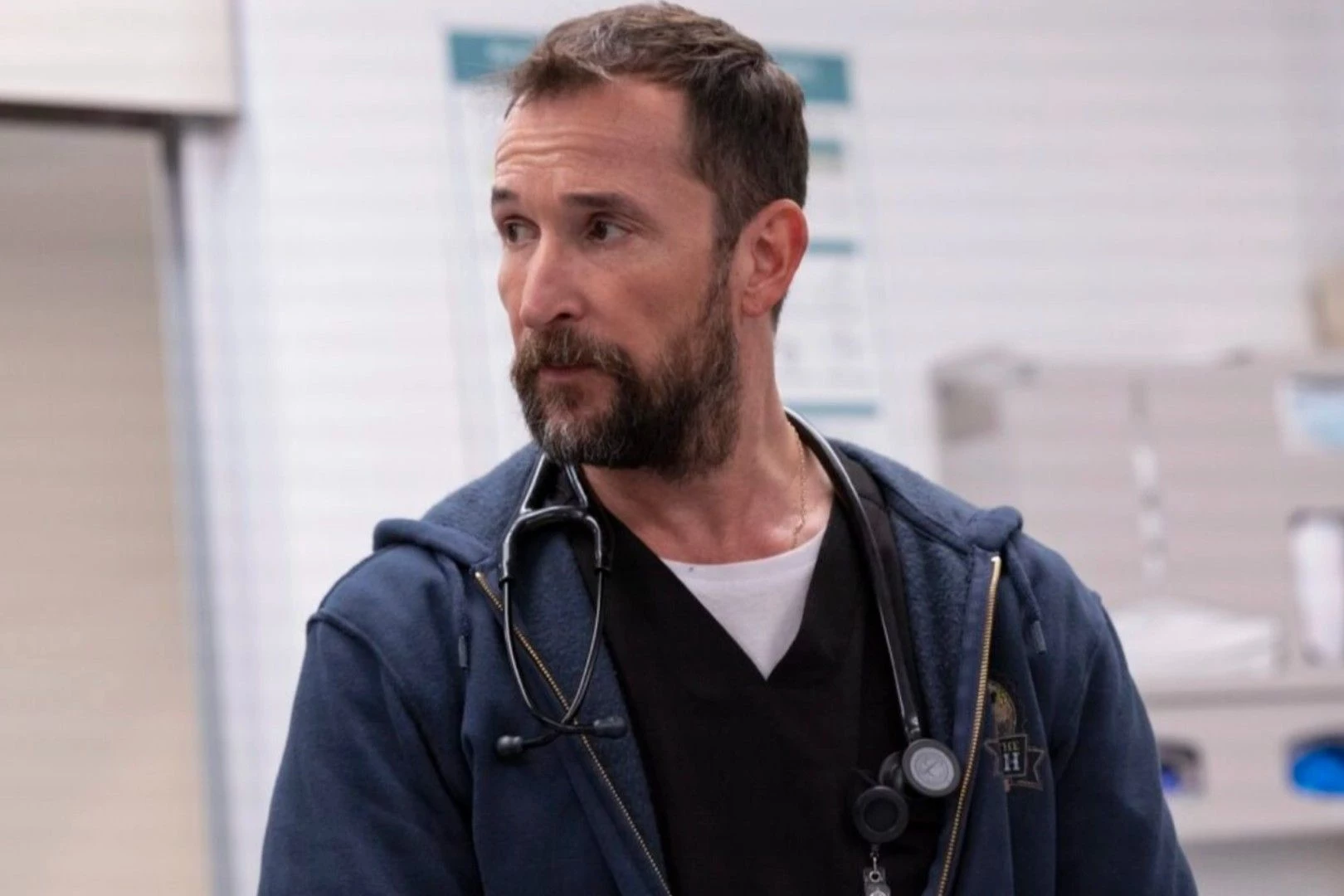
The Pitt (2025- )
In just a few hours, a hospital can see a remarkable range of medical emergencies – that’s the premise of the new medical drama, The Pitt. The show features Noah Wyle, known for his role as Dr. Carter on ER, as Dr. Michael “Robby” Robinavitch, a seasoned doctor at Pittsburgh Trauma Medical Hospital. Each episode follows one hour of a typical day, from 7 AM to 9 PM, showcasing the intense and varied cases that come through the emergency room. From severe injuries like degloved feet and nail gun wounds, to critical illnesses like testicular torsion and even mercury poisoning, Dr. Robby and his team tackle it all.
2026-01-02 17:59