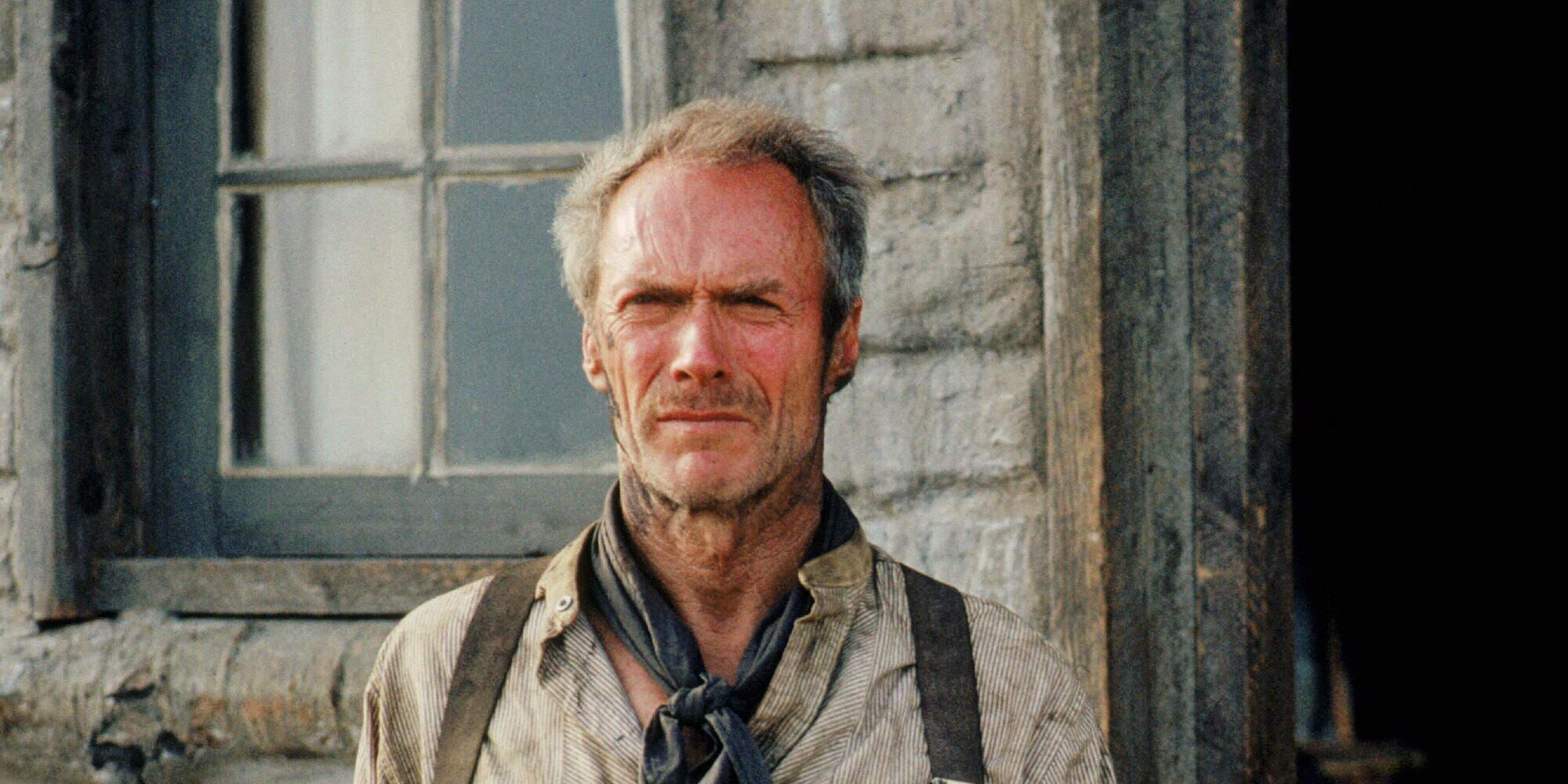
A famous line from Clint Eastwood’s 1992 film, Unforgiven, continues to capture the movie’s lasting impact. It perfectly represents how the film offered a new, realistic take on the Old West, making it a hugely influential Western. Eastwood both directed and starred as William Munny, an older outlaw and former killer who is now trying to make a living as a pig farmer and raising his children after the death of his wife.
Clint Eastwood delivers a haunting performance as William Munny, a retired gunslinger pulled back into his violent past by a young man, The Schofield Kid. The film, set in the harsh landscape of 1880s Wyoming, follows Munny and his old partner, Ned Logan (Morgan Freeman), as they pursue a bounty – a quest born from an act of violence against a woman. What starts as a simple job quickly spirals into a tense showdown with the formidable Sheriff “Little Bill” Daggett (Gene Hackman), revealing a truly ruthless side to law and order.
Unforgiven Revised The Traditional Western Story
The film Unforgiven deliberately breaks from traditional Westerns, offering a new take on the genre. It’s considered a revisionist Western because it challenges the common myths surrounding the Old West, especially the ideas of heroic cowboys and simple good-versus-evil stories. Instead of glorifying these old tropes, the film examines them critically, asking viewers to rethink their expectations of Westerns.
The film breaks from traditional Westerns by avoiding the classic heroic gunslinger. Instead, it features a flawed and aging main character. It portrays violence as brutal, awkward, and deeply damaging, highlighting the complex morality of the story. The film implies that the protagonist’s violent actions aren’t driven by strong beliefs, but by a need to survive and the situations he faces, which challenges the simple ideas of justice often seen in Western movies.
Unforgiven reveals the constructed nature of heroic legends while also questioning traditional notions of justice and morality in the American West. By portraying the sheriff as an adversary and the main character as flawed, the film dismantles common Western tropes. It directly addresses the complex ethics of justice, violence, and destiny, offering a nuanced perspective on these themes.
William Munny’s Quote To Little Bill Helped Revise The Traditional Western
William Munny’s famous line, “Deserve’s got nothing to do with it,” challenges the typical way Westerns portray violence. Traditionally, these films suggest violence is justified – good guys punish bad guys. But Munny’s statement dismisses this idea, implying that things like luck, chance, and sheer cruelty often play a role, regardless of whether someone ‘deserves’ it.
The film challenges the traditional link between violence and justice, arguing that death in the American West wasn’t glorious or meaningful, but simply a tragic end. It shows that the idea of gunfighters as moral heroes is a myth. Instead, the film suggests that so-called “justice” in the West was often about dominance and control, not about what was right.
Munny delivers his famous line right before shooting Daggett, and Little Bill protests, “I don’t deserve this… to die like this. I was building a house.” Eastwood’s character then responds with the iconic line, “Deserve’s got nothing to do with it,” highlighting the harsh and unpredictable nature of life in the American West where survival was often a matter of luck, not merit.
Unforgiven Has Largely Impacted The Modern Western
As a huge Western fan, I remember when Unforgiven came out and it felt like a real shake-up. Sure, some filmmakers had been playing with the classic Western tropes for a while, but Unforgiven hit at a time when those old myths of heroes and glory were still what most people expected. It brought this really gritty, realistic take—basically dismantling the whole idea of the noble cowboy—right into the spotlight. Honestly, I think a lot of the more complex characters we see in Westerns today, and that willingness to show the brutal side of violence in films like those neo-Westerns that came after, all owe a debt to Unforgiven.
Unforgiven challenged the traditional Western by showing that gunfights and revenge are brutal and leave lasting emotional damage. It offered a more realistic and morally gray take on the genre, moving away from simple heroes and villains. This helped redefine Westerns and continues to influence the genre today.
The film Unforgiven marked a shift towards more realistic storytelling in Westerns, focusing on the psychological impact of violence on characters and driving more intricate plots. It paved the way for future films to explore the true costs of violence – like trauma and regret – rather than simply celebrating heroic action.
Clint Eastwood’s Unforgiven revolutionized the Western genre and is considered a landmark film. In 1993, it received nine Academy Award nominations and won four, including Best Director for Eastwood, Best Supporting Actor for Gene Hackman, and the prestigious Best Picture award.
2026-01-01 04:08