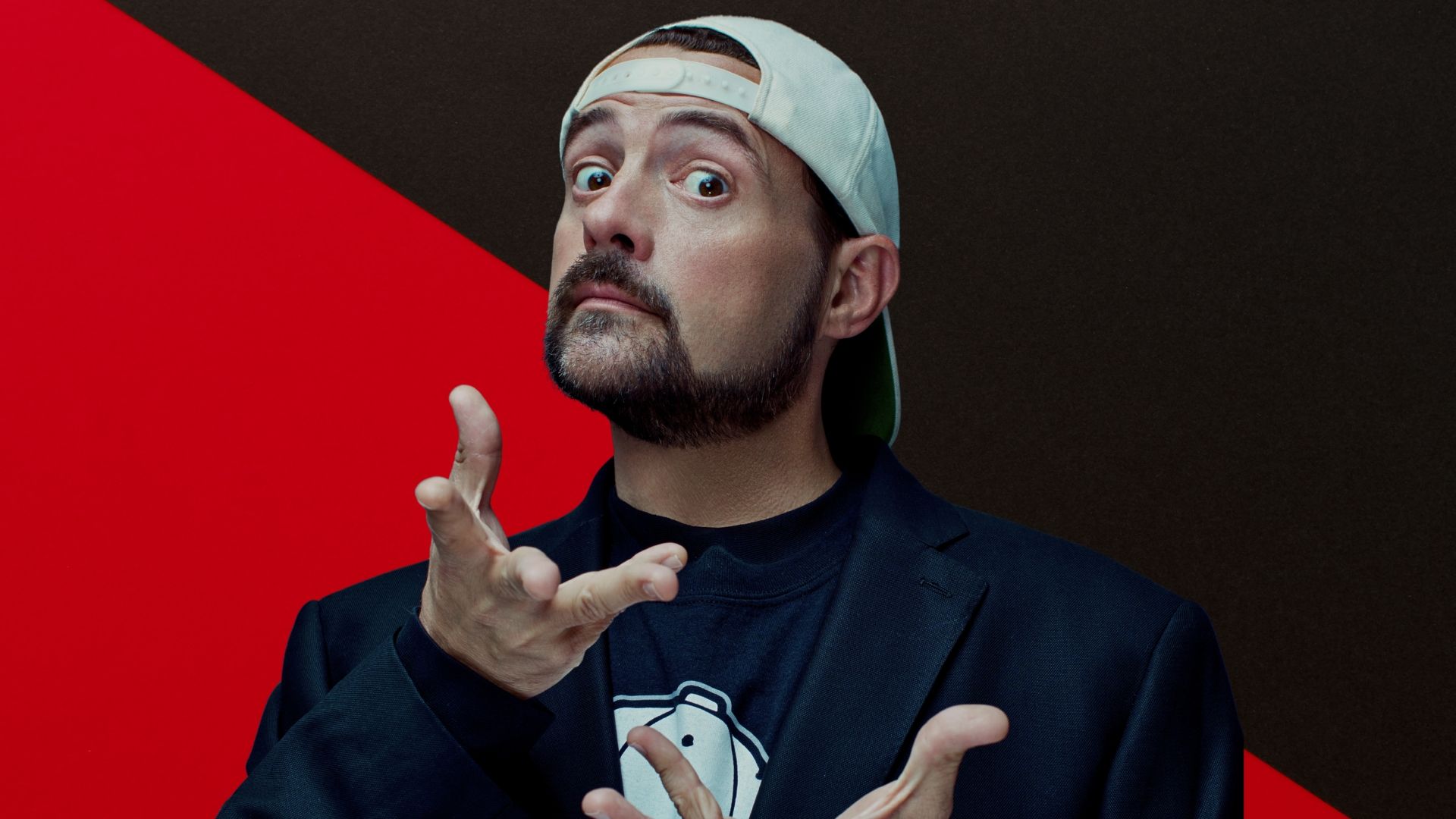
For the past year, Kevin Smith has been celebrating the 25th anniversary of his film Dogma, a sharp and funny look at religion and the Catholic Church. While a lot has changed since the movie came out, his original fans – those Gen X and millennial viewers who first discovered his work on VHS – will be glad to hear he hasn’t changed much. When we spoke over Zoom, as part of a series of interviews for the new 4K Blu-ray release, I asked if he was tired of discussing the film. He laughed and said he could talk about himself for hours! Our scheduled 20-minute conversation actually lasted nearly an hour.
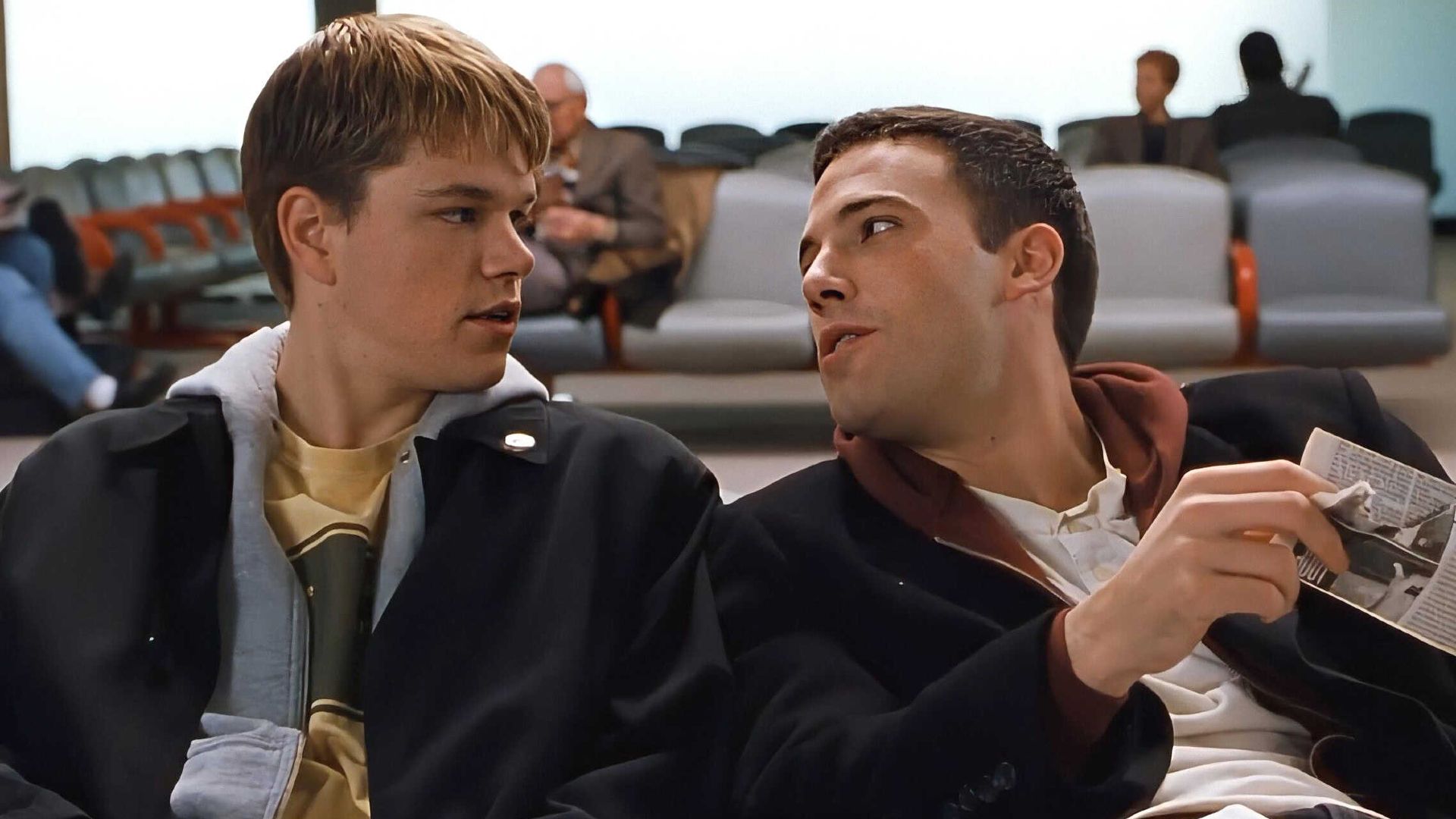
After gaining a following with popular comedies like Clerks, Mallrats, and Chasing Amy in the 1990s, Kevin Smith took on his most challenging project yet in 1999. This new film skillfully combined his signature observational humor with surprisingly thoughtful themes, creating a unique and often funny mix. That same blend of high and low culture was reflected in the cast, which included both frequent collaborators like Jason Lee and Jason Mewes, and established stars like Chris Rock and Alan Rickman. To play two rebellious angels determined to prove God wrong, Smith cast his friends and fellow actors Ben Affleck and Matt Damon.
Lionsgate
It’s been 25 years since Dogma came out, and honestly, revisiting it has been amazing – almost as nostalgic for Kevin Smith as it is for us fans! We packed theaters across the country for these screenings, and Kevin says this year has been different. He’s been able to really enjoy the movie, something he didn’t get to do when it first came out. There was so much controversy back then – protests, the Church calling it blasphemous – and he was also worried about whether it would even be successful. But none of that mattered this time around. He finally got to see Dogma for what it is, and he said it feels like ‘a child’s prayer’ – a really special, heartfelt thing.
Before I could even ask him to explain, Smith launched into a story. He compared his film, Dogma, to a couple who have a baby as a last-ditch effort to save a failing marriage. He explained, “Dogma was my attempt to reconcile with the Catholic Church, to save our relationship. But it didn’t work out. Ultimately, I lost my faith – it just didn’t resonate with me the way it did when I was younger.”
Dogma is the baby I tried to have with the Catholic Church to save my marriage.
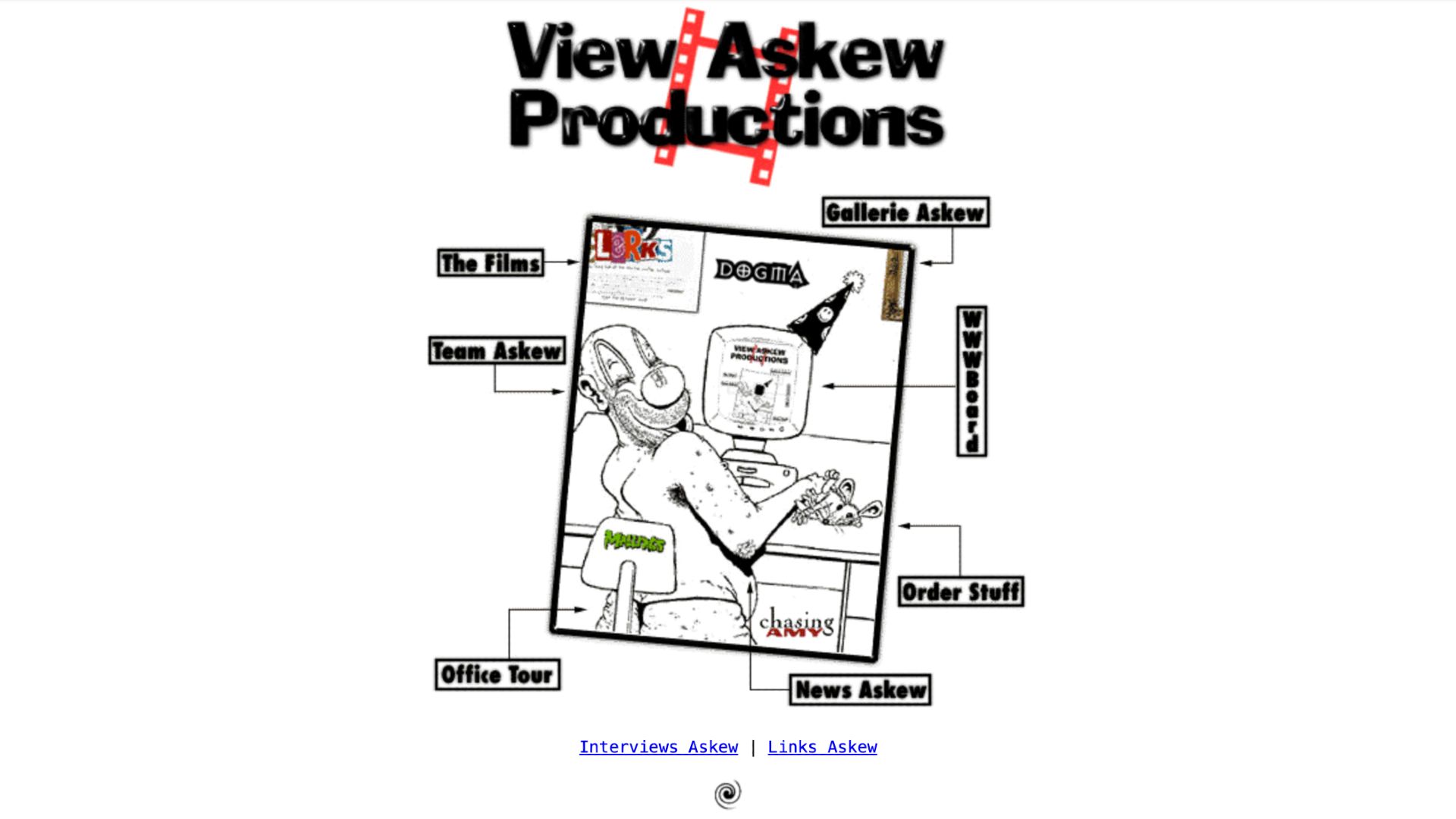
The film boosted Smith’s career, demonstrating that despite his previously edgy humor, he could create a genuinely funny and well-made comedy for adults. Though not a blockbuster, Dogma was a financial success, earning $45 million on a $10 million budget. It remains his most popular film within the ‘ViewAskewniverse’ – a series of comedies that unexpectedly fostered one of the internet’s first large fan communities. Smith recalls a time before widespread internet access, remembering his initial surprise at discovering online fan support. After the disappointing release of Mallrats, a friend suggested he check out online shrines dedicated to Clerks. Unfamiliar with the internet, Smith visited a café in Red Bank, New Jersey, and for a few dollars, witnessed his first-ever internet search, leading him to a fan page created by Ming Chen.
Screenshot, The Wayback Machine
Smith contacted Chen, who was a student at Amherst College at the time, and asked him to create a website for his production company, ViewAskew.com. Before the site went live, Smith asked if Chen could include a section where fans could submit questions. Smith was already familiar with this format, having done Q&A sessions after screenings of his film Clerks. He explains that he wasn’t an expert on filmmaking, admitting his first movie looked “like it was shot through a glass of milk,” so he used humor instead to connect with audiences.
Kevin Smith remembers a fan, Chen, setting up an early online message board on Smith’s website, ViewAskew.com – Smith jokingly compared it to Reddit, but before Reddit even existed. Chen explained it would allow fans to ask Smith anything, and Smith could respond whenever he had time. Smith recalls being thrilled at the thought of always having someone to connect with. He was amazed that people would spend their money to see his films, and even more excited that he could now communicate with them directly. Smith, who attributes his gratitude to his upbringing, says he’s always valued his connection with his audience.
Smith experienced online harassment early on, even before many other actors in Hollywood. He tried to combat it by requiring users to donate $2 to the RAINN charity to access his message board. While this helped, some people still paid just to leave hateful comments.
Gramercy Pictures
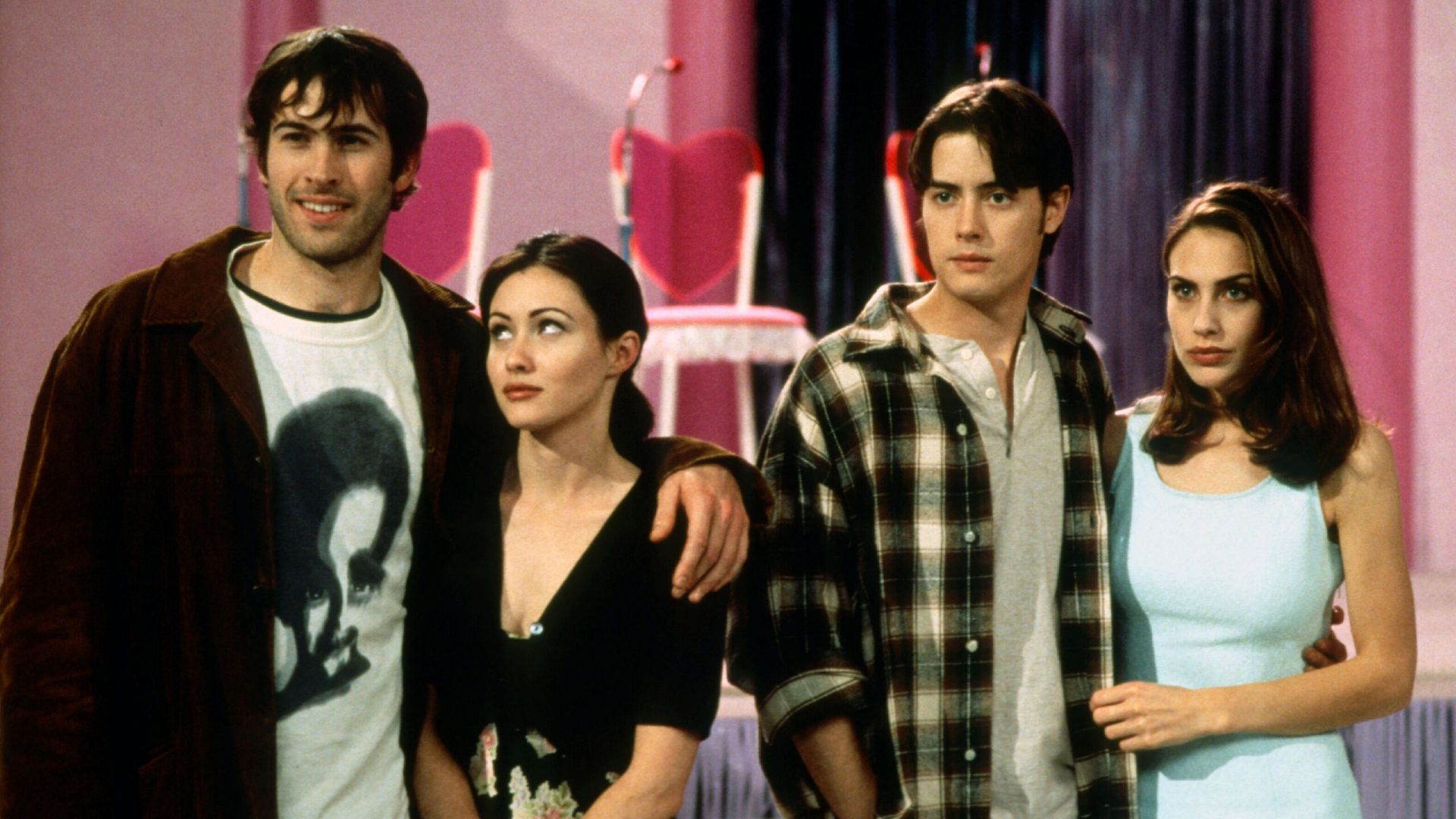
Smith says he’s long been aware of the negative side of fandom, noticing criticism after his film Mallrats. He initially assumed fans thought like him, but he’s since realized that’s not true. He points out the irony of being labeled ‘woke’ recently, especially considering themes in his earlier films. He argues that the same elements some now criticize were present in movies like Mallrats, Clerks, and Chasing Amy from the mid-90s. He finds it inconsistent for people to claim they enjoyed his work before he supposedly ‘went woke,’ because those themes were always there. He essentially says his style hasn’t changed; he’s always been making the same kind of movies.
You can’t be like, ‘I used to like his s**t till he went woke. It’s like, I hit the scene woke.
What bothers Smith isn’t fans simply losing interest, but the feeling of losing them permanently, as if their support has naturally faded over time. He explains, “It’s always a little heartbreaking when people simply grow out of liking my work.” He compares it to a Pixar character being forgotten – like fading into irrelevance when someone realizes they’ve moved on to something else. He says it’s like becoming the character Bing Bong, who is lovingly remembered but no longer needed. However, he adds that if you’re fortunate enough to have a lasting career, some fans may return, though perhaps not in the same way as before, because nostalgia can be incredibly powerful.
Kevin Smith has built a hugely successful brand around himself, expanding from films into comics, podcasts, merchandise, and even a movie theater. He recognizes this is a business and that staying successful means constantly connecting with what people care about. As he puts it, simply creating content isn’t enough; to reach a wider audience, you need to offer something meaningful and relevant to the broader culture.
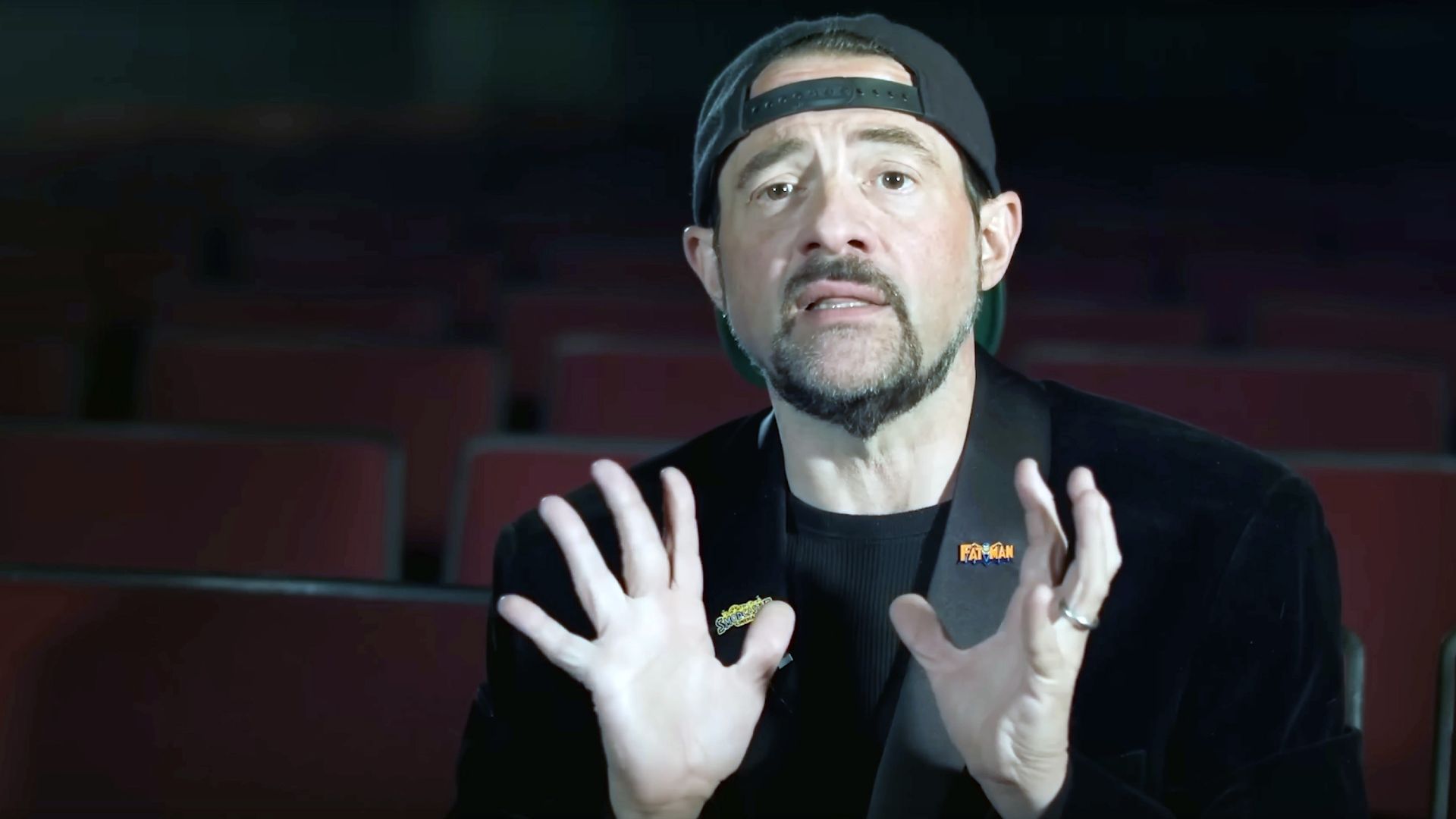
Giant Pictures
I started asking about his experiences with negative fan reactions, which led to this conversation. I was surprised it took him nearly half an hour to mention Star Wars, and not in the way I anticipated. He explained, “For years, people have been saying Disney’s Star Wars is terrible, that they messed things up. I understand the pattern, because I’ve seen it happen on a smaller scale. Star Wars is obviously much larger, but I’ve witnessed fans go from being passionate to indifferent, then resentful and abandoning the thing they loved. Then, later, they sometimes return – not because anything new has changed, but because that familiar thing offers comfort as they get older and grapple with their own mortality.”
The rise of AI, especially tools like ChatGPT, is changing how we think about what’s important and meaningful. Just as some people have never known a world without the internet, a new generation is growing up with AI as a constant presence. It’s now possible to ask an AI to create something completely customized – imagine requesting a movie with a bizarre, specific plot like Fast and Furious characters battling Marvel heroes in space with Jesus as a comedic sidekick – and have it instantly generated for your personal entertainment. This ability to get exactly what you want, tailored for an audience of one, is a completely new phenomenon.
So, we were talking about the Pope, and it just reminded me that he recently met with people in the film industry at the Vatican. He gave a speech about how important art and movies are, which I thought was fantastic. It got me wondering… do you think he’d be a fan of Dogma? I’m really curious what he’d think!
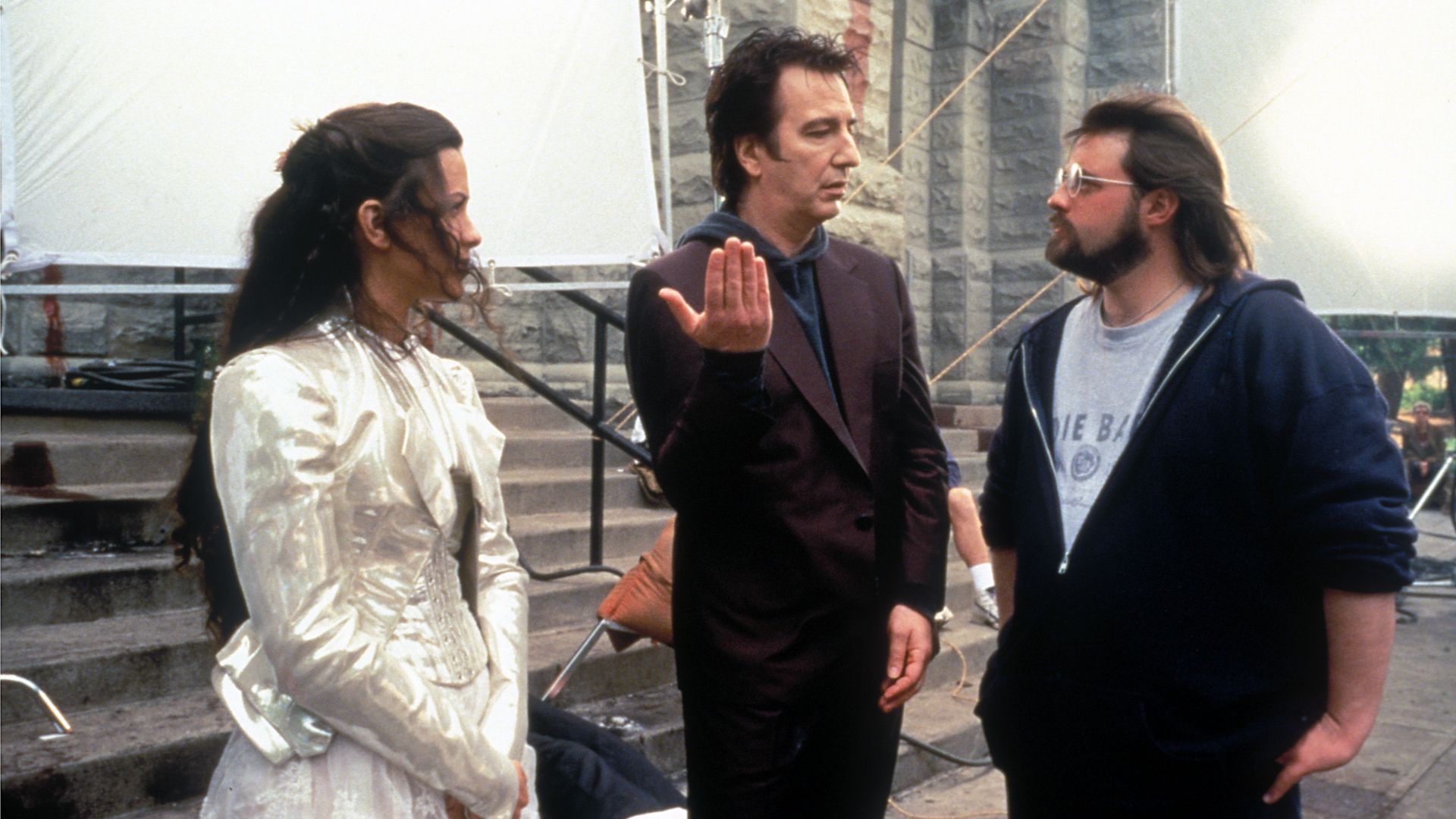
Lionsgate
Kevin Smith jokingly wonders if Pope Leo, being from Chicago, might appreciate his film Dogma. He notes that, from what he’s gathered, the Pope seems to focus more on condemning actions done to people, rather than judging their personal choices – a perspective Smith believes aligns with the original spirit of the faith. Smith isn’t saying the Pope would approve of Dogma, but he imagines the Pope, being a film enthusiast, would understand it. He adds that he’d gladly accept an invitation to meet the Pope at the Vatican in a moment.
For 25 years, Kevin Smith has been unsure about making a sequel to his film Dogma. He once said a sequel would need to tackle the end of the world and explore Islamic theology, which he felt was too sensitive. Another obstacle was that Smith didn’t own the rights to the movie; they belonged to Bob and Harvey Weinstein. With Harvey Weinstein now in prison for sexual assault, Bob Weinstein agreed to sell the rights to Smith in 2024. This allowed Smith to re-release Dogma in theaters this year and prepare a 4K Blu-ray version, which comes out on December 9th.
It sounds like [Pope Leo] is really into film and would see Dogma for what it is.
Kevin Smith is once again mentioning the possibility of a Dogma sequel. He initially brought it up without seriously expecting it to happen, but now he’s been tasked with writing it. While Dogma 2 (or whatever the title becomes) doesn’t have a fully developed story yet, Smith has begun brainstorming. He envisions it as a standalone film that complements the original, though he admits achieving true independence from the first movie will be extremely difficult.
He explained that because his first film explored a loss of faith, and he’s now at a completely different point in his own beliefs, he thought it would be interesting to approach a new movie from the opposite perspective. While his previous film focused on the idea of Heaven, this one won’t, meaning he’ll be working with an entirely new group of actors. He added that anyone who appeared in the original film is welcome to return and they’ll be given a place in the new project.
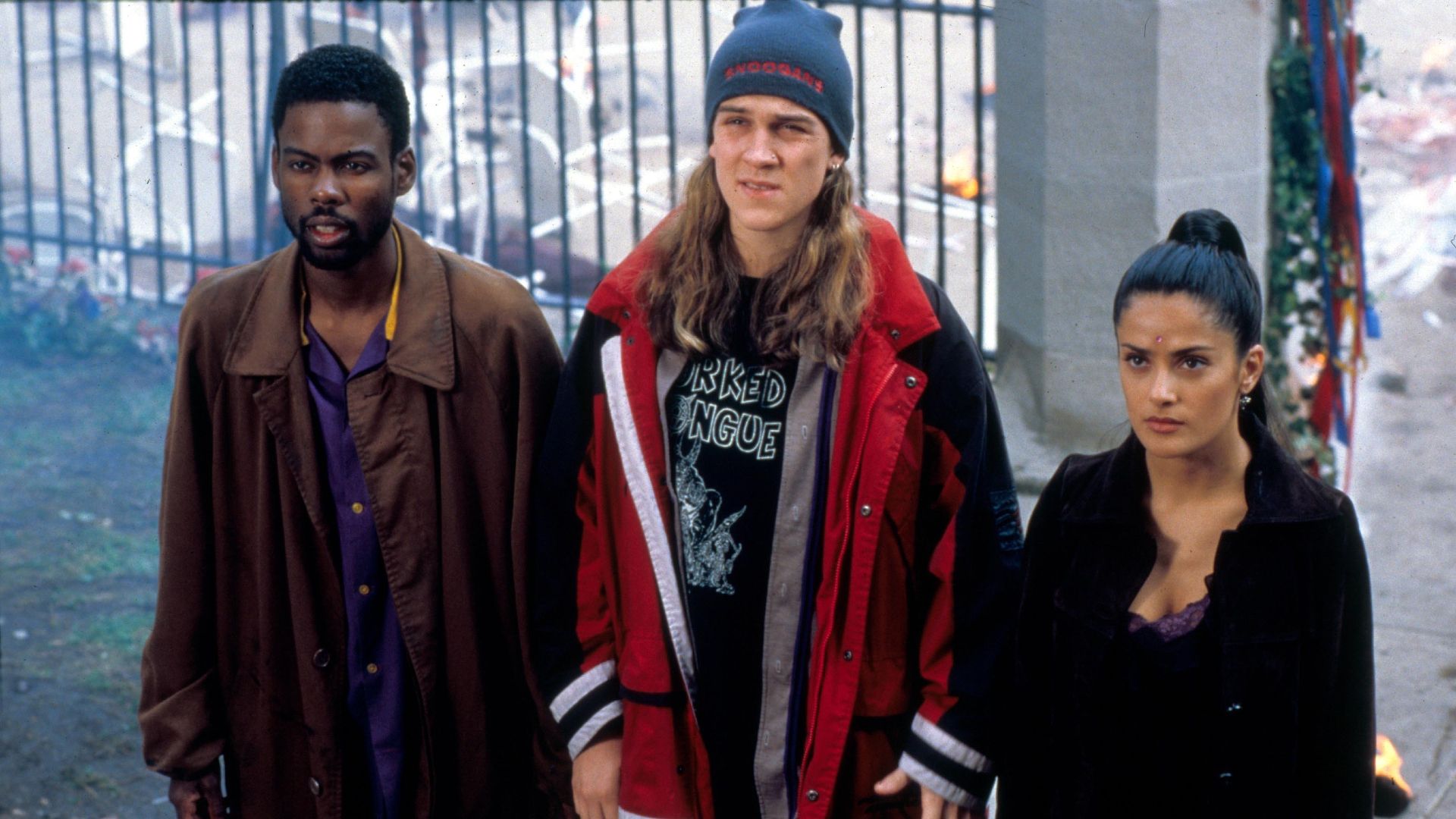
Lionsgate
Director Kevin Smith says the decision to use a largely new cast for Dogma 2 serves the story, but he also acknowledges it’s realistic. Ben Affleck and Matt Damon have become much bigger stars with families and businesses in the past 25 years. Smith admits he can’t simply ask them to dedicate a month to filming in Pittsburgh like he could in 1998. They now run their own studio, and he knows they’d likely refuse. As a result, Affleck and Damon’s roles will be significantly smaller this time around. Smith is taking a careful approach to the script, and he’s pleased with the first 30 pages he’s written.
Currently, Kevin Smith has paused work on Dogma 2 to focus on a different project. He described an internal struggle where a part of him resisted making a sequel, but ultimately decided to listen to that instinct and explore a new idea. This new project feels more sophisticated to him, a departure from revisiting the world of Dogma – which he sees as building upon an already stylized original. He felt compelled to start writing this new screenplay, something he hasn’t done before, and is prioritizing it before returning to the Dogma sequel when he’s ready.
I kept asking him for more information, and though he wouldn’t reveal the specifics on the record, even his vague responses felt significant – it is Kevin Smith, after all. He described it as a historical piece, quite different from his 2024 comedy, The 4:30 Movie, which was set in the 1980s. His main concern is the budget. As he put it, building an entire world is incredibly costly, and he really dislikes projects that seem destined to be expensive.
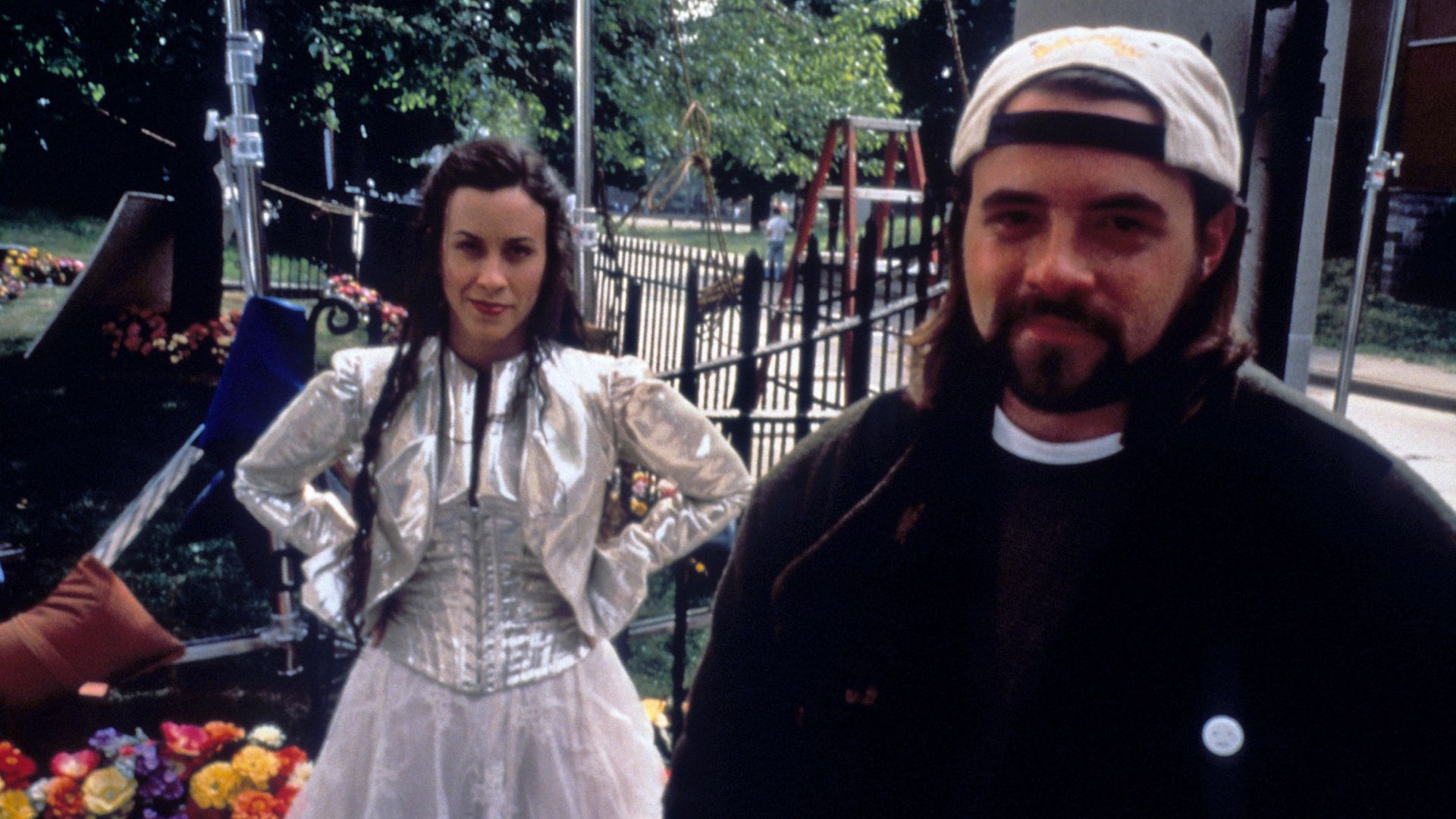
Lionsgate
Making independent films requires resourcefulness, and Smith is benefiting from the location of his new project. Set in Berkeley and Hollywood, the existing architecture is proving budget-friendly. Because many of the original buildings have been preserved, filming can easily evoke the 1950s and early 1960s – the period his movie depicts.
Smith admits the film takes place in a time before he was born and isn’t based on his own life story, but he’s using his personal feelings to shape it. He finds this a little ironic, because he actually dislikes the 1950s. As a child, he struggled to watch shows like Happy Days and couldn’t stand the music or culture of the era. He jokes that this movie, which he hopes will be seen as a mature and well-made work, happens to be set in a period he doesn’t care for.
Smith reports being about halfway done with the script and is now looking for a studio to help produce it. While he doesn’t typically make big-budget films, he believes this project deserves a standard movie production process, assuming it gets the green light.
2025-12-09 20:06