
Welcome to Memory Holed, a new MovieWeb column by film critic Britt Hayes (that’s me!). Each week, I’ll be looking back at movies (and sometimes TV shows) that briefly captured the public’s attention before fading into obscurity. These films often featured famous actors, received awards buzz, were based on well-known stories, caused controversy, or sparked conversations – but for whatever reason, they’ve largely been forgotten. Essentially, they’ve been deliberately erased from our collective memory – or, as I call it, ‘memory-holed’.
Released in 2015, Tomorrowland initially seemed promising. It boasted a strong cast including George Clooney, a script from Lost’s Damon Lindelof, and a story drawing on Disney’s classic, optimistic vision of the future. The film also had an exciting director in Brad Bird, known for animated hits like The Iron Giant and The Incredibles, who had recently moved into live-action films with Mission: Impossible – Ghost Protocol. However, by the time it reached theaters, much of that early enthusiasm had faded. Extensive rewrites, starting before filming and continuing through numerous reshoots, created doubts about the film. This was compounded by Disney’s marketing strategy, which relied heavily on secrecy – even including a physical mystery box unveiled at a Disney event – and the studio’s tendency to heavily exploit its existing properties.
The movie Tomorrowland didn’t do well in theaters, only making back its estimated $180-190 million production cost (not including marketing) and quickly fading from public attention.
It’s a shame Tomorrowland didn’t get more appreciation when it came out, because looking back after ten years, it’s actually a really good movie. Despite some story issues, it’s a fun, nostalgic adventure that reminds you of classic ’80s and ’90s sci-fi films for kids – the ones that treated audiences with respect and captured a sense of wonder that’s rare today, like Explorers, E.T., The Neverending Story, and The Iron Giant. The movie’s problems stemmed from its own story about negativity becoming reality, and from the studio being unwilling to let the filmmakers have full creative control – a situation that unfortunately got worse in the following years.
Walt Disney Studios Motion Pictures
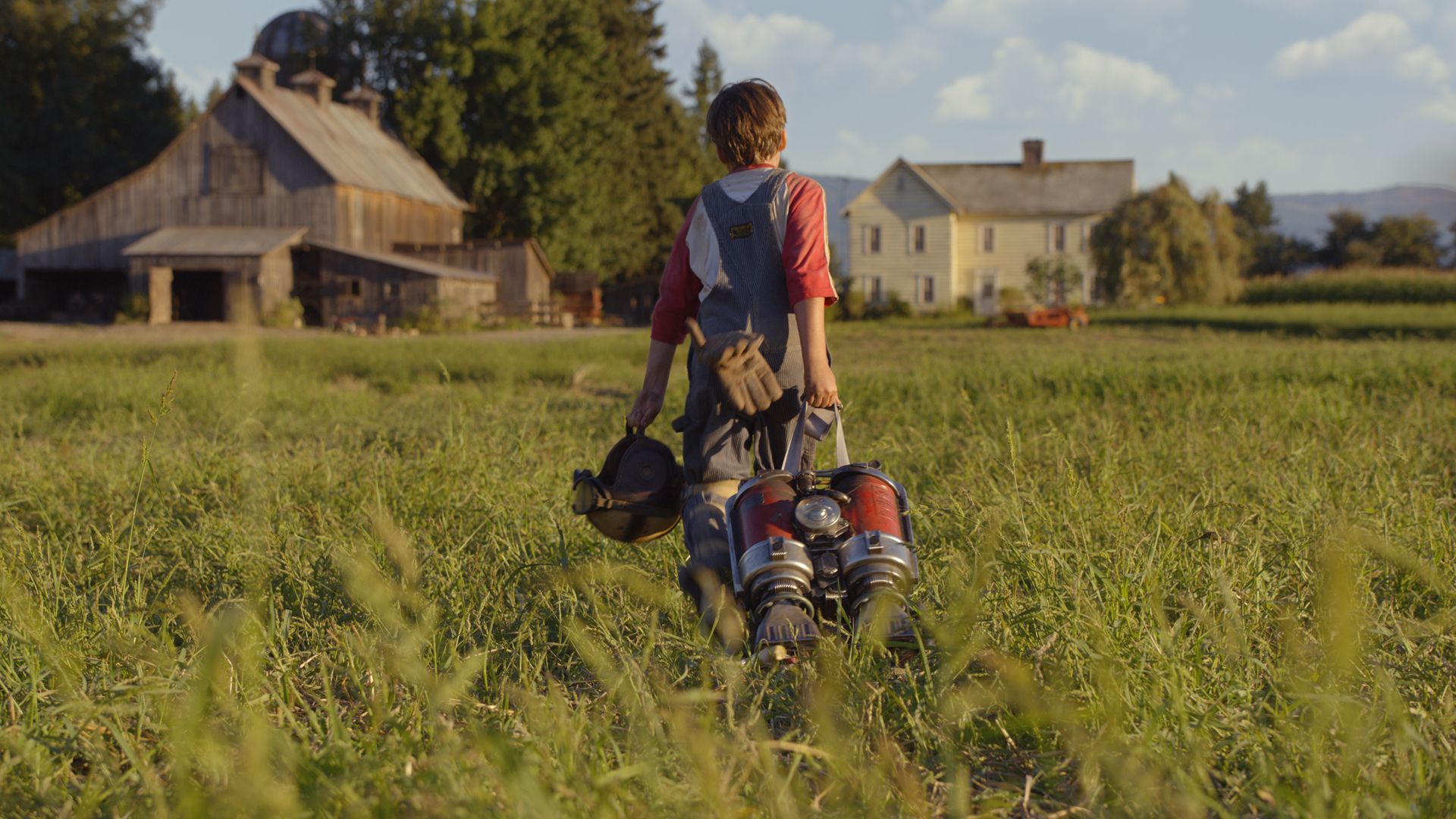
The movie Tomorrowland opens at the 1964 New York World’s Fair. Young inventor Frank Walker has his jetpack idea rejected, but he meets a girl named Athena who gives him a mysterious pin shaped like a “T”. This pin unlocks a hidden entrance beneath the “It’s a Small World” ride, and suddenly, Frank finds himself in Tomorrowland – a stunning, futuristic world that looks like it came straight out of the past, where a large robot repairs his jetpack.
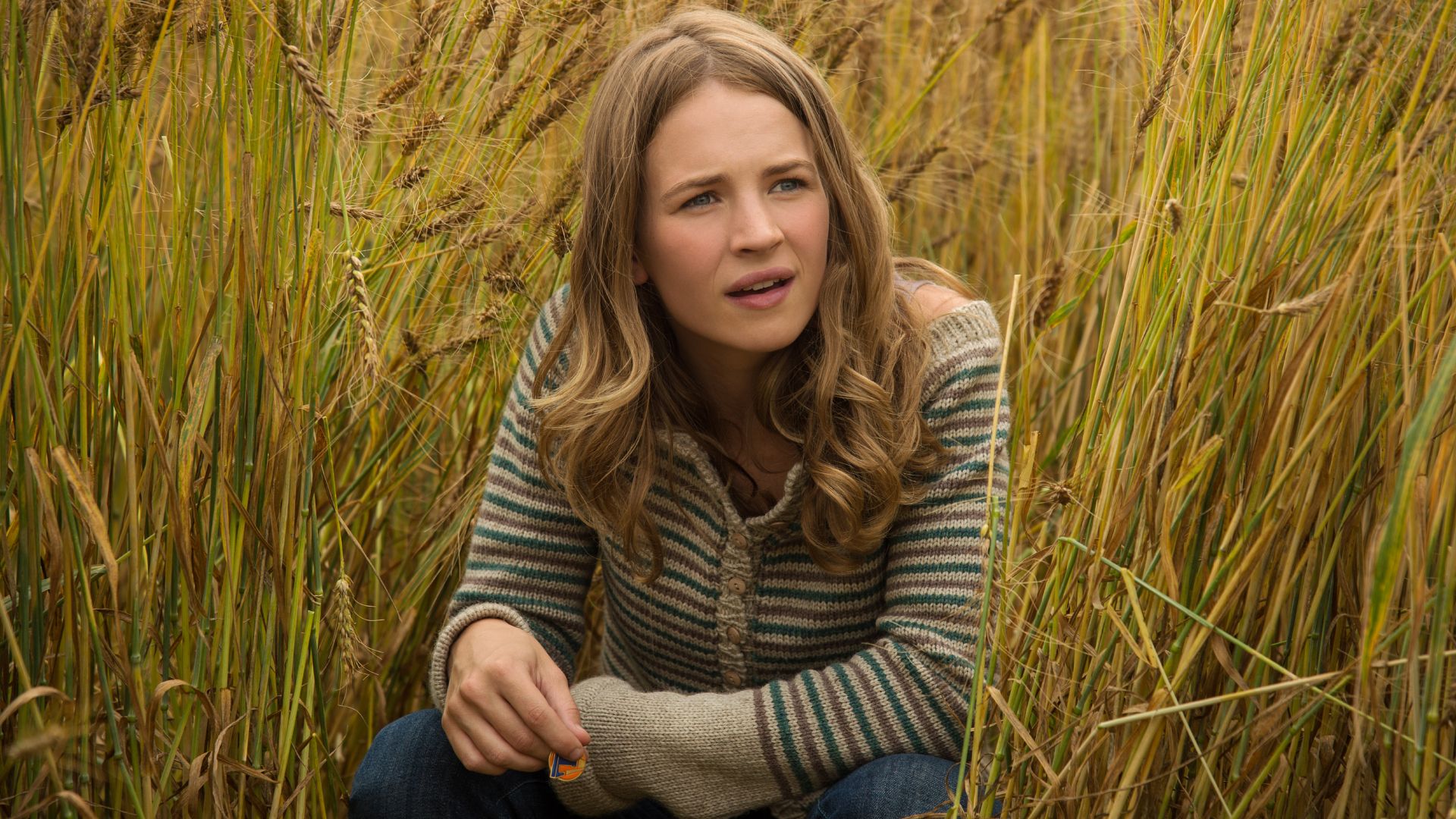
Today, Casey Newton (Britt Robertson) is a hopeful teenager who gets arrested while trying to save a NASA launch site from being shut down. While picking up her things after being released, she finds a strange pin with a “T” on it. The pin unexpectedly sends her to a place called Tomorrowland. Initially, it appears to be another world, and there’s a lengthy scene where Casey struggles to navigate the city, often bumping into things or tripping as she seems to exist in both worlds at once.
Okay, so the story really kicks in when this woman, Athena, shows up – and she doesn’t seem to age! Turns out she’s a super-advanced robot designed to find people with potential, these ‘Dreamers,’ to help save Tomorrowland. She basically delivers this girl, Casey, to a grown-up Frank Walker – played by Clooney, and he’s been living off the grid. Then things get wild! They’re chased by these incredibly creepy, robotic enforcers while trying to get back to the actual Tomorrowland. Frank explains that the glimpse Casey got when she touched the pin wasn’t the real place – it was just a preview, a ‘party’ that never happened. The real Tomorrowland has become a pretty messed-up, dystopian world, and they need to fix it.

Walt Disney Studios Motion Pictures
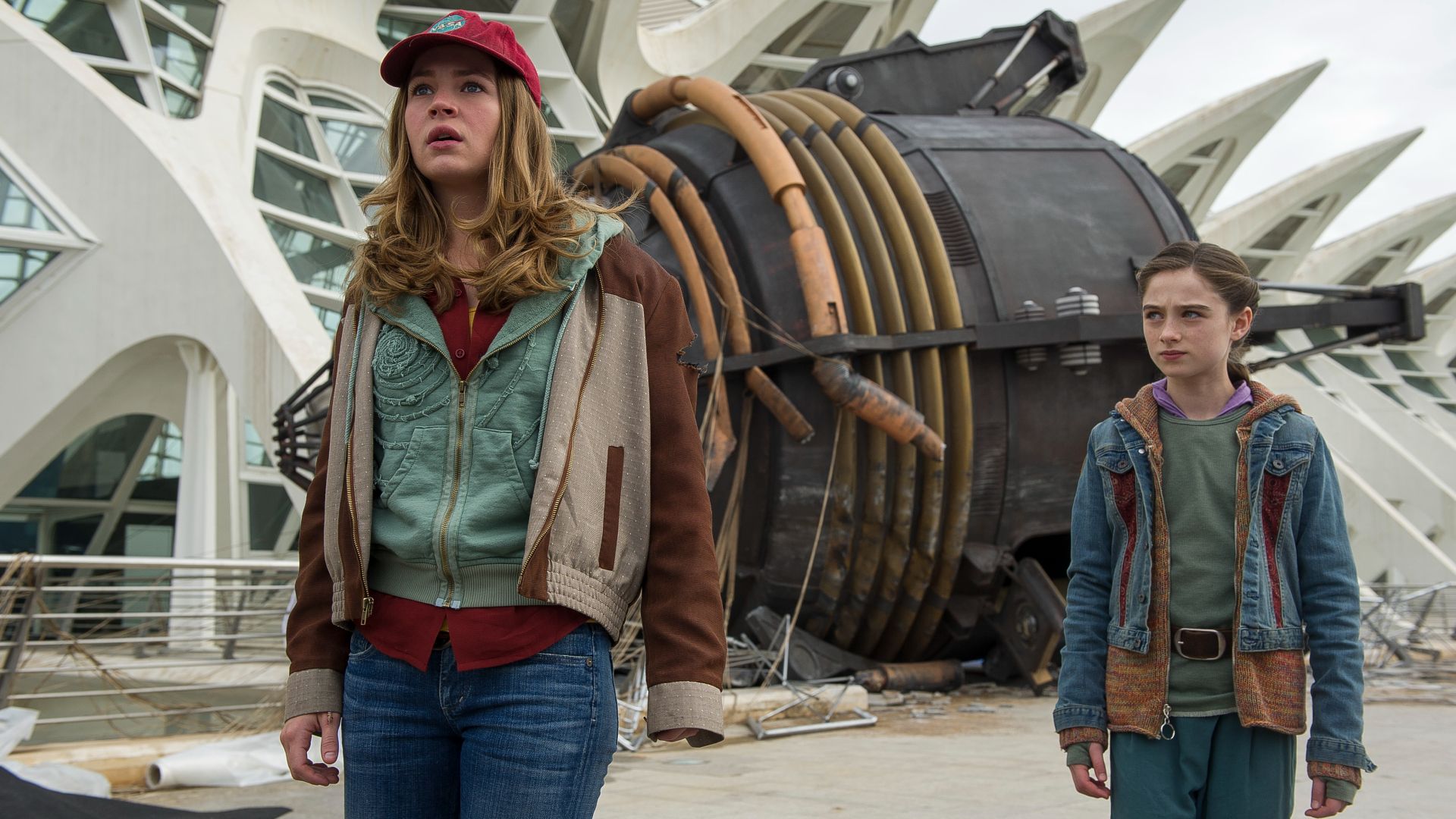
One of the most exciting parts of the film shows Casey, Frank, and Athena teleporting to the Eiffel Tower. There, the original creators of Tomorrowland – Nikola Tesla, Thomas Edison, Jules Verne, and Gustave Eiffel – secretly kept a rocket called The Spectacle. This rocket could take them to the futuristic paradise they built in another world. As the rocket launches, the Eiffel Tower itself seems to break apart, sending the three travelers speeding through space and time. They arrive in a Tomorrowland that’s very different from what they expected – the once-gleaming city is now rundown, covered in plants, and mostly deserted.
Brad Bird skillfully shows the difference between the polished, futuristic world of Tomorrowland in the beginning and its darker, broken version, where imperfections make everything feel more real. However, his directing is at its best during the action sequences, which are full of energy and use unique camera angles, almost as if he wasn’t limited by filming with real actors. A confrontation with two over-the-top robotic villains (played with exaggerated humor by Kathryn Hahn and Keegan-Michael Key) leads to an explosion that stops time, freezing everyone inside a bubble with their arms and legs stuck in funny positions.
It’s clear this film was made by an animator, and I kept thinking Disney should have hired him for Star Wars (they did consider him for Episode VII). The movie has some genuinely funny scenes, though nothing beats the moment Athena gets run over by a truck. Even though she’s played by a child actor, Athena is actually a robot, which gives the director some creative leeway.
Walt Disney Studios Motion Pictures
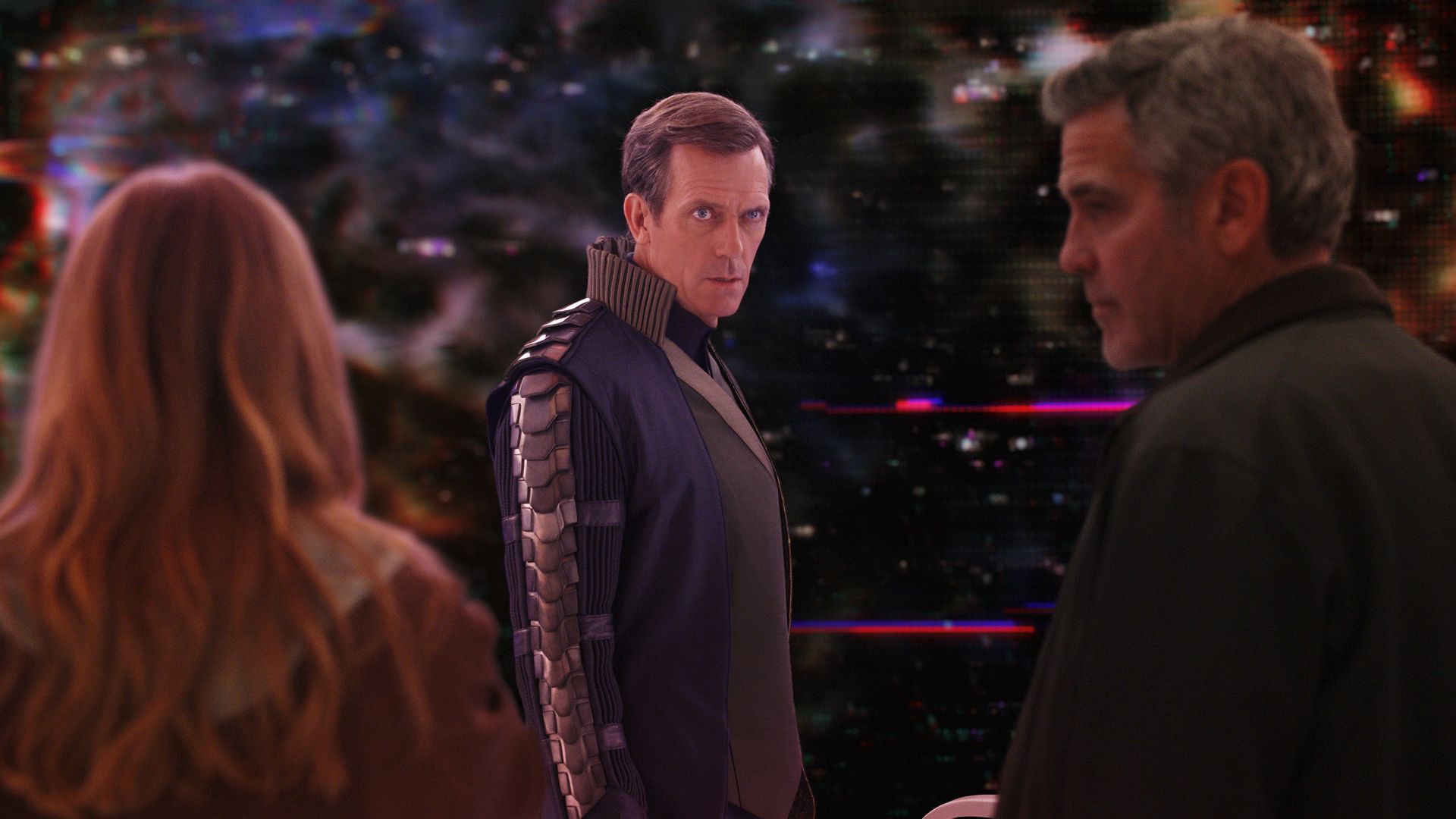
It turns out Frank created a device that could predict the exact date of the world’s end. Meanwhile, the governor of Tomorrowland, David Nix, deliberately highlighted potential disasters – like environmental catastrophes and war – hoping to motivate people to prevent them. However, his plan backfired. Instead of inspiring action, it led to widespread resignation and a sense of helplessness, as people became desensitized to the idea of the world ending and felt powerless to change anything.
It’s hard to picture a movie like Tomorrowland getting made by a big studio today. There aren’t as many live-action films aimed at teens and young adults, and family movies have become less common, often needing to be action-packed with muscular heroes. Even comedic actors are now expected to be in good shape. Beyond that, it’s difficult to envision a genuinely hopeful story with a straightforward message succeeding in the current climate. Tomorrowland came out in May 2015, before the political shift that followed the 2016 election. For a short time during the Biden administration, many people felt a renewed sense of optimism, a reaction to both the pandemic and the rise of isolation and individualism in our country – issues that are far too complex to fully explore here.
During his second term, Trump quickly reversed progress on fighting climate change and strained relationships with international allies. He cut funding for programs that addressed global hunger and health crises, leading to many preventable deaths. He also aggressively pursued policies harmful to the environment, such as allowing oil drilling in protected areas, reducing incentives for renewable energy, and dismissing or ignoring established scientific research while hindering future studies in both environmental and medical fields.
Instead of opposing these harmful policies, our elected leaders appear to have given up, acting as if nothing can be done to improve the situation.
Walt Disney Studios Motion Pictures
Early in the movie Tomorrowland, we see Casey in class after class, listening to depressing lessons about the world’s problems – things like climate change, war, and the dangers of weapons. These lessons also cover how past fictional warnings went unheeded. Casey repeatedly raises her hand, wanting to offer solutions, but her teachers consistently ignore her. Finally, one teacher calls on her, and she asks a simple, yet powerful question: “What are we doing to fix it?” The question feels almost childlike in its sincerity, but it’s a genuinely good one.
According to the film Tomorrowland, the key to a better future lies in finding those who still believe in possibility. It’s not about relying on tech experts who isolate themselves and their advancements, potentially leading to a lonely end in a manufactured world they could have helped preserve. Instead, we need to connect with people who, even amidst hardship, remain curious, hopeful, and committed to supporting their communities, both through grand gestures and everyday actions.
While Tomorrowland has some notable problems, the biggest is a clunky framing story that was clearly added late in the production process. It’s been revealed that scenes and characters were cut, including more background on Tomorrowland itself, and Judy Greer’s role was significantly reduced. The film struggles to balance its big story with smaller, character-focused moments, sometimes feeling both disjointed and overly explanatory. Damon Lindelof generally excels at longer, serialized stories, as seen in The Leftovers and Watchmen, where he effectively combines genre elements with character development. However, films like Star Trek Into Darkness and The Hunt show he sometimes has trouble developing multiple characters within the time limits of a movie.
Walt Disney Studios Motion Pictures
Looking back, Tomorrowland faced an uphill battle before it even hit theaters. Audiences were burned out on the whole ‘mystery box’ marketing tactic – you know, the kind J.J. Abrams made famous – and Disney’s attempt to use a real one actually hurt the film. Nothing they could put in the box could have lived up to the excitement of people guessing what was inside. Plus, thanks to all the behind-the-scenes chatter online, viewers had started to see normal things like script changes and re-shoots as red flags. It was like the audience had already decided the movie was going to be bad before they even saw a trailer. Honestly, Disney didn’t help matters; instead of selling us Tomorrowland for what it was, they focused on teasing what it could be, and that just set it up for disappointment.
Honestly, despite its flaws, Tomorrowland really stuck with me. The movie’s sheer optimism, those moments where it made you feel like anything was possible, and just how visually creative it was… they totally outweigh any issues with the story. I’ve been thinking lately about films that people have unfairly forgotten, and I can’t believe I stumbled upon one so quickly! It feels great to rediscover a movie like this.
2025-12-05 18:41