Crime and mystery films have consistently delivered compelling entertainment, offering everything from chilling thrillers like the Hannibal Lecter series to iconic franchises such as Dirty Harry and numerous adaptations of Agatha Christie’s work. Whether focusing on serial killers or the fight against organized crime, these films consistently attract and satisfy audiences. While the genre boasts many excellent movies, a select few truly stand out as cinematic masterpieces.
Thrillers are designed to keep you on the edge of your seat with fear, mystery, and unexpected twists. Some focus on characters desperately trying to survive, while others explore the complex investigations of serious crimes. It’s hard for any movie to become a classic, but it’s especially noteworthy when a thriller manages to stand out in such a crowded field.
The Conversation Is a Chilling Tale of Paranoia
The film The Conversation centers around Harry Caul, a surveillance expert who is hired by a powerful executive, known only as ‘The Director,’ to record a young couple. When Harry overhears the couple hinting at a potential murder, he begins to suspect his client has dangerous intentions and hesitates to deliver the recordings. Troubled by a previous assignment that resulted in tragedy, he attempts to uncover the truth about the case before submitting his work.
I was completely gripped by this film – it really puts you inside the main character’s head, and you feel their paranoia building with every scene. Honestly, it left me on the edge of my seat the whole time! And the ending? It’s one of the most unsettling I’ve ever seen. Coppola brilliantly used sound and close-up shots to create this incredible, suffocating sense of tension. It’s a masterpiece of atmosphere.
It’s rare to find a movie as gripping as the one telling Harry Caul’s story, and you’ll likely discover new details with a second viewing – it truly deserves to be watched more than once.
Chinatown Is a Bleak, Hardboiled Detective Masterpiece
Roman Polanski’s Chinatown transports viewers to 1920s Los Angeles and follows private investigator Jake Gittes, who usually handles infidelity cases. When a client ends up dead, Gittes begins to investigate, quickly discovering that the woman claiming to be the man’s wife isn’t who she says she is. Teaming up with the actual widow, he delves into the city’s underbelly, inching closer to the shocking truth.
The film Chinatown is widely credited with launching the neo-noir movement in Hollywood, and it did so brilliantly. As viewers follow Gittes’ investigation into a murder, they find themselves increasingly unsettled, and the film’s ending is still considered one of the most shockingly pessimistic in movie history.
Featuring incredible acting from and Faye Dunaway, this is one of the most captivating crime stories ever filmed.
The French Connection Made Gene Hackman’s Career
The film The French Connection centers on New York detective Jimmy “Popeye” Doyle, who learns about a major heroin shipment headed for the city. He believes a French businessman named Alan Charnier is the one responsible. Lacking solid evidence, Doyle begins a relentless investigation, tracking Charnier and his associates throughout New York in hopes of building a case.
Winning multiple Oscars in 1971, The French Connection was a groundbreaking crime film that helped pave the way for the fast-paced thrillers we see today. Gene Hackman’s portrayal of detective Popeye Doyle created a truly memorable and tough character, and the movie was known for its shocking and realistic depiction of crime.
From its compelling story to the way the film made even simple scenes feel dramatic and focused on the characters, it deserved all the awards it received.
The Fugitive Is the Ultimate Game of Cat and Mouse
The movie The Fugitive centers on Dr. Richard Kimble, who is wrongly convicted of his wife’s murder. After a prison bus crash, he escapes and travels the country, determined to prove his innocence and find the real killer. Hot on his trail is Deputy U.S. Marshal Sam Gerard, who relentlessly pursues all escaped convicts, and won’t stop until Kimble is captured.
Considered one of the best cat-and-mouse thrillers ever filmed, The Fugitive truly shines because of the compelling interplay between the characters of Kimble and Gerard. It was so well-executed that even a four-hour version focused on Tommy Lee Jones’s performance could have been brilliant, and the underlying murder mystery only enhanced the experience. Remarkably, despite initial concerns from the studio, it remains the benchmark for adaptations from television to film, even after thirty-two years.
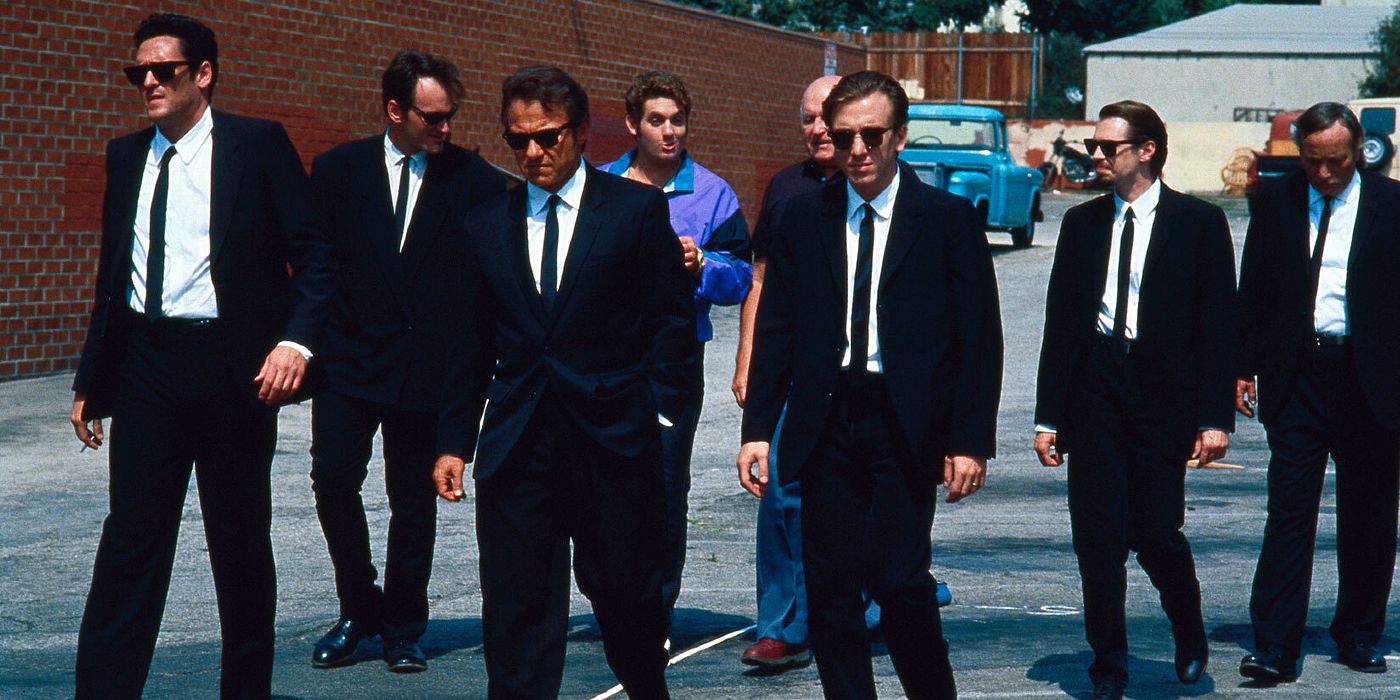
Reservoir Dogs Built Quentin Tarantino’s Career
Reservoir Dogs follows a group of criminals after a disastrous bank robbery leaves several of them dead and the rest trying to escape. They retreat to their hideout, desperately trying to uncover who among them informed the police. Throughout the film, we learn about each character’s past, eventually leading to the reveal of the informant.
This film is a standout of its decade, remarkably made on a very limited budget. Its strong script builds suspense, reminiscent of John Carpenter’s The Thing, and cleverly puts the audience on edge as they try to figure out who among a group of criminals is the informant.
Tarantino masterfully demonstrated the power of non-chronological storytelling, captivating viewers from start to finish with a remarkably tight and engaging film.
Dirty Harry Created the Serial Killer Thriller Sub-Genre
In 1971, Clint Eastwood transitioned from his iconic Western roles to become the quintessential Hollywood detective with his performance in Don Siegel’s Dirty Harry. The film opens with a spree killer named Scorpio terrorizing San Francisco, and follows Inspector Harry Callahan as he investigates the case.
Teaming up with a new partner, Harry races against time to catch a killer and save the latest person they’ve targeted. But when the murderer escapes justice, it’s up to Harry to finally stop them.
Even though some critics saw troubling, authoritarian elements in the film, it became highly respected within its genre, praised for its visuals, directing, acting, and thrilling suspense. The film essentially takes the successful elements of Clint Eastwood’s Westerns – its themes and familiar story patterns – and applies them to a contemporary crime setting, effectively launching a fresh wave of action movies.
Witness Should Have Earned Harrison Ford an Oscar
The movie Witness starts when a young Amish boy, Samuel Lapp, sees a police officer get killed by other officers. Detective John Book, a man dedicated to his work, is put on the case and teams up with Samuel to find the murderers. Discovering corruption within his own police department, Book seeks refuge with Samuel and his mother, Rachel, in their Amish community. While living among them, he struggles to adapt to their way of life, often finding conflict between their beliefs and his own.
Released in 1985, Witness is a moving film that blends romance, social commentary, and crime thriller elements. It’s become a classic of the genre, captivating viewers with the unexpected love story between John and Rachel. The film cleverly plays with what audiences expect, and director Peter Weir expertly portrays the ‘outsider in a new world’ scenario.
Sorcerer Combines Crime and Jungle Adventure
The movie Sorcerer follows four men who each commit crimes and become fugitives. They end up hiding in a remote village in Central America, where they’re given a dangerous job with a big reward: if they can drive two trucks loaded with nitroglycerin through the jungle to extinguish an oil well fire, they’ll receive new identities. The catch? They have to navigate incredibly difficult terrain without triggering the highly explosive cargo.
This film is a classic, loved by both directors and those who enjoy 1970s cinema. It’s known for being incredibly gripping and is a perfect example of how to create tension without relying on a traditional bad guy.
The Silence of the Lambs Set the Stage for ’90s Thrillers
Jonathan Demme’s 1991 film, The Silence of the Lambs, kicked off a trend of suspenseful, dark thrillers. The story centers on Clarice Starling, a new FBI trainee, who is tasked with interviewing the imprisoned cannibal, Hannibal Lecter. The FBI hopes Lecter’s understanding of the criminal mind will help them catch another serial killer, nicknamed Buffalo Bill. Clarice tries to gain Lecter’s trust, and he subtly offers hints that could lead her to the killer’s identity.
With The Silence of the Lambs, Hollywood quickly returned to the suspenseful thrillers popular in the 1970s, moving away from the lighter, family-focused movies of the 1980s. Anthony Hopkins’ portrayal of Hannibal Lecter immediately establishes him as an iconic villain, and he captivates audiences throughout the entire film.
The film has been brilliantly updated for modern audiences, expertly combining horror and mystery. It doesn’t shy away from frightening viewers as they join Jodie Foster’s Clarice Starling on a gripping investigation.
Rear Window Shaped Its Own Brand of Murder Mystery
The film Rear Window centers around Jeff Jeffries, a photographer who is confined to a wheelchair after a work accident. Bored and stuck at home, he begins watching his neighbors, becoming fascinated by their lives. When he sees something suspicious in one apartment, he becomes convinced a man has murdered his wife, and he dedicates himself to uncovering the truth.
This film is a landmark achievement – practically the originator of the claustrophobic, paranoid mystery genre. It’s remained incredibly influential since its release, inspiring many copycats. It arguably earns the title of greatest murder mystery thriller, masterfully building tension and suspense throughout, not just at the end.
2025-12-01 06:13