Time travel is a common science fiction idea, but it’s surprisingly difficult to do well. It requires careful planning and clear storytelling to avoid confusing viewers. Despite this challenge, a particular show managed to deliver one of the most intelligent and well-executed time travel stories in television history decades ago.
Known for its innovative storytelling, Star Trek: The Next Generation really hit its peak in season 5. The episode “Cause and Effect” is a great example of the writers letting the characters lead the narrative, and trusting viewers to piece together a complex and ultimately rewarding story.
This Episode of Star Trek: The Next Generation Is a Perfect Time Travel Story
The fifth season of Star Trek: The Next Generation begins with the “Cause and Effect” episode, which starts with a shocking and dramatic opening scene. This immediately creates a sense of tension and unease for the viewer. With no explanation given at the beginning, the episode leads you to believe that the events unfolding will inevitably lead to a devastating conclusion.
The usual way stories unfold is quickly disrupted. As the story restarts, viewers start to realize something isn’t right, similar to the movie Groundhog Day. Though time loop stories are well-known, the science fiction setting offers a playful base to explore and experiment with this kind of storytelling.
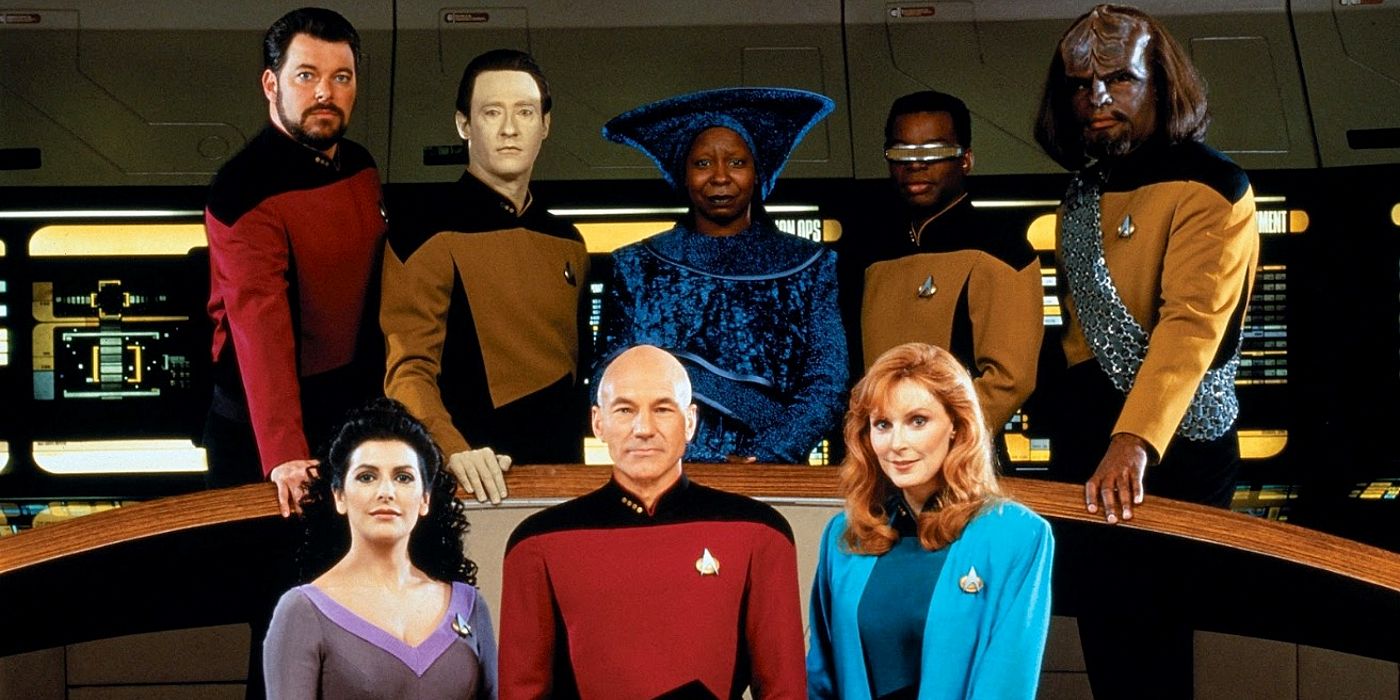
In the “Cause and Effect” episode, actress Gates McFadden, as Dr. Beverly Crusher, plays a key role in the storyline. Though earlier episodes sometimes struggled to feature the entire crew, by season 5, the show had become more consistent. The actors were all comfortable in their roles, and the production was running smoothly.
The show starts with hints that strange events have already occurred. We meet the crew as they begin to experience a feeling of déjà vu, particularly Crusher, who notices conversations repeating and hears unexplained voices. When she shares her concerns with Picard and the others, they don’t take them seriously.
Okay, so it starts all over again – the Enterprise just blew up, and we’re back at the beginning. This time, the poker game with Crusher, Data, Worf, and Riker is really central to what’s happening. Everyone starts noticing these weird coincidences, and it’s not just a feeling of déjà vu anymore. They actually start predicting the cards being dealt, and that’s when you realize something seriously strange is going on.
The Enterprise is caught in a time loop after entering uncharted space. This loop seems to be caused by a collision with the USS Bozeman near a temporal distortion, resulting in an explosion and a paradox. Every day, the Enterprise repeatedly crashes into the Bozeman.
The story truly shifts when Dr. Crusher realizes the voices she’s hearing are actually from the crew, echoing from previous time loops. This breakthrough allows the officers to start working together, recognizing shared feelings of déjà vu. They begin to rely on their gut feelings and, more importantly, on each other.
What makes this so captivating is the gradual build-up and increasing suspense with each cycle. They consistently make small improvements, keeping the story moving and subtly altering the situation. These minor changes accumulate over time, and the eventual payoff is incredibly satisfying for viewers.
Star Trek: TNG Was a Masterclass in Acting and Storytelling
What really grabbed me about “Cause and Effect” was the acting – it was phenomenal. Even though the story essentially repeats itself with each time loop, it never felt stale. That was my biggest worry going in, but the writers avoided that pitfall beautifully. They made small changes each time, slowly building the tension and letting the characters gradually figure out that something wasn’t right. It was so well done!
The actors faced a delicate challenge. With each time loop, their characters begin anew, but are subtly altered by a growing feeling of having lived it all before. These changes start small, but become increasingly noticeable, and the performances need to show this mounting sense of unease. Each actor portrays this dawning awareness in a unique way.
At first, the subtle details were hard to catch. Filming this episode was challenging and required careful attention to detail. Because many scenes were filmed repeatedly with minor adjustments, the crew had to plan everything meticulously to ensure everything still made sense. The actors also needed the flexibility to try different approaches while maintaining consistency.
While often overlooked when discussing episode quality, editing was especially important for “Cause and Effect” because of its use of repetition. The way the episode was cut and filmed effectively created a sense of a tightening loop, mirroring the characters’ feeling of being stuck in a time loop and highlighting the significance of even minor details.
“Cause and Effect” is a great episode to start with for anyone getting into Star Trek: The Next Generation. You don’t need to have watched any previous episodes or know anything about the Star Trek universe to understand and enjoy it. The story stands on its own, driven by an interesting science fiction idea, without relying on complicated backstory or existing storylines.
The story doesn’t follow a straightforward timeline and intentionally avoids spelling everything out for the viewer. Instead, it draws you into the characters’ confusion, creating a shared and immersive experience. This makes the central time loop feel like more than just a story trick – it feels like something you’re experiencing alongside them.
This is another excellent episode of Star Trek: The Next Generation. Director Jonathan Frakes clearly understands the actors and allowed them to explore subtle changes that had a big impact on the story’s time loop. Many fans consider this to be one of his strongest directing efforts on the show.
Brannon Braga, a highly influential writer, penned this episode. He became a key figure in the show’s writing team during its later seasons, eventually rising to co-executive producer. This episode really showcased his talent for crafting compelling time travel and thought-provoking science fiction stories.
“Cause and Effect” Has one of the Coolest Sci-Fi Endings and Cameos
In the Star Trek: The Next Generation episode, it’s discovered that the USS Enterprise wasn’t the only ship affected by the time loop. The ship they crashed into had been stuck in it for much longer – over 90 years, as evidenced by the crew’s old-fashioned uniforms. The Enterprise had only been looping for 17 days, while the USS Bozeman had been trapped for decades.
In a welcome and unexpected moment, Captain Morgan Bateson from the Boseman is shown to be connected to the character of Cheers and Kelsey Grammer. Their brief conversation with Picard is respectful and highlights the emotional impact of recent events. The episode concludes effectively, building tension and earning its resolution without relying on grand displays.
The episode ends on a thoughtful note, carefully revealing information instead of overwhelming the audience with explanations. The Enterprise crew is relieved they were only stuck in the time loop for a short 17 days, especially when compared to the Bozeman’s fate. This ending makes us wonder how Bateson will cope with the realization that he experienced almost a century of repeating the same events.
Star Trek: The Next Generation Set the Standard for the Time Travel Trope in Television
What truly makes the Star Trek: The Next Generation episode “Cause and Effect” stand out is its respect for the audience and its confidence in their ability to figure things out. The episode doesn’t spoon-feed information; it introduces a unique scenario and lets viewers piece together the puzzle along with the characters, making them feel like part of the story.
Using time travel in storytelling can be tricky and lead to confusing plots. Star Trek: The Next Generation cleverly sidesteps these problems by building suspense and letting its actors carry the emotional weight, rather than just depending on the time travel itself. This is a major reason why the episode “Cause and Effect” remains so popular and well-regarded.
2025-12-01 05:08