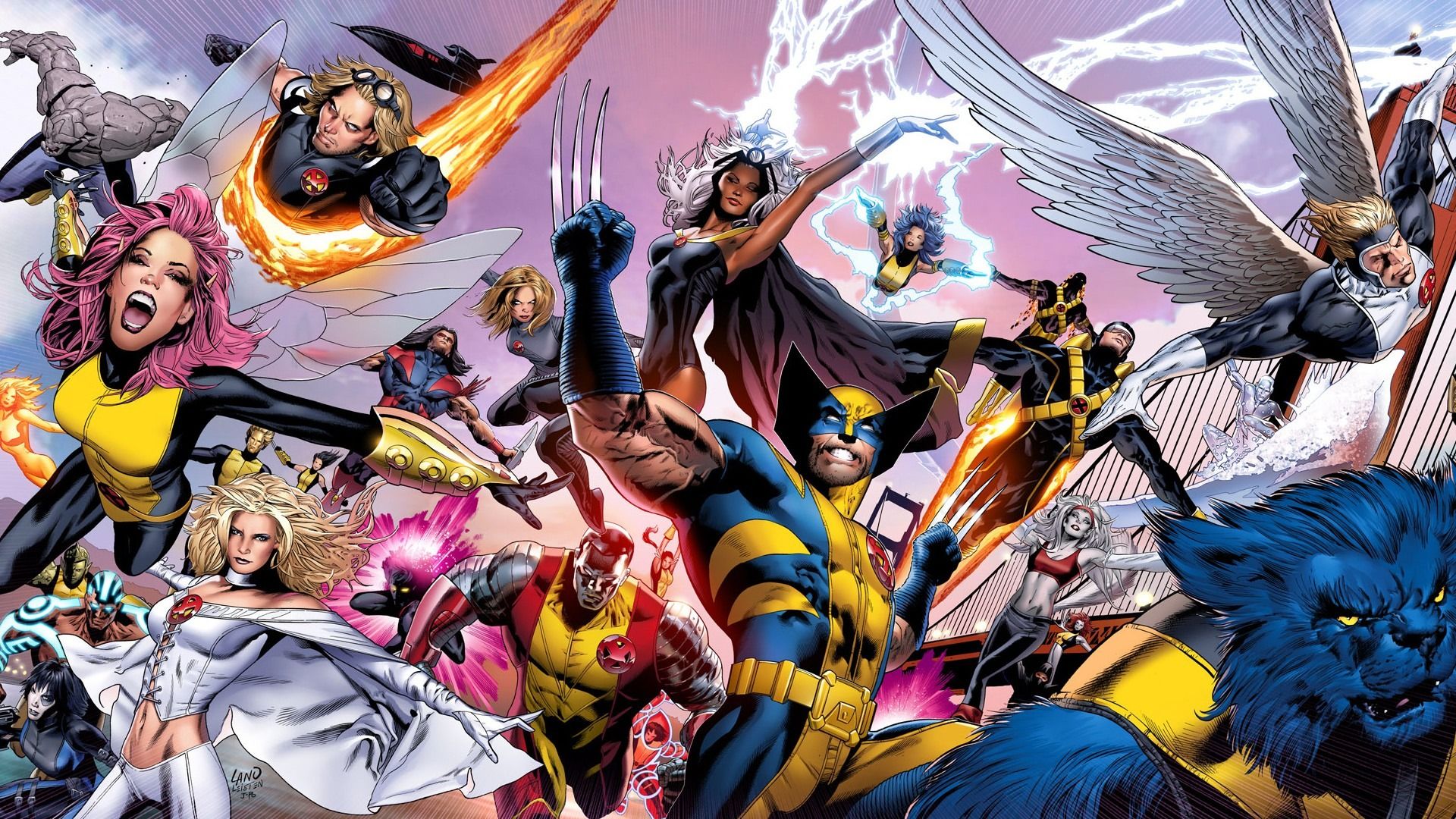
The X-Men are considered one of the greatest superhero teams ever created, and definitely among Marvel’s finest. Their comic book stories are consistently captivating and have been some of the most compelling in the history of the medium. Though they may not be as widely recognized as the Avengers today, many fans believe the X-Men consistently deliver stronger narratives.
The best X-Men stories always stick the landing, and many of Marvel’s most memorable mutant adventures finish with a powerful and satisfying conclusion. Whether it’s a short story wrapping up quickly, a long plotline reaching its climax, or a major event coming to an end, truly great X-Men comics deliver incredible finales.
Giant-Size Astonishing X-Men Wrapped Up An Iconic Run
Joss Whedon and John Cassaday’s run on Astonishing X-Men was one of the most popular and exciting X-Men comics in recent years, and they finished their work on the title with a spectacular finale. The oversized Giant-Size Astonishing X-Men #1 brought their epic story arc, centered around the alien world Breakworld, to a satisfying conclusion.
The entire Astonishing X-Men series is fantastic, but the ending is particularly memorable. It’s packed with incredible action and features a truly powerful and emotional sacrifice: Kitty Pryde saves the entire world by phasing through a bullet the size of a planet before it can hit Earth. It’s an epic conclusion that really highlights what makes Kitty Pryde one of the best X-Men characters ever.
24 Seconds Is An Underrated X-Men One-Shot With A Heartbreaking Conclusion
Rachel Summers is a consistently overlooked but deeply tragic character in X-Men comics. Her story, particularly the one-shot tale “24 Seconds” from Uncanny X-Men #467, is incredibly moving and memorable.
A Shi’ar hit squad descends on Earth with orders to eliminate all members of the Grey family who could potentially become hosts for the Phoenix Force. Rachel Summers can only watch in horror as her entire family is killed during a gathering. The entire tragedy unfolds in just twenty-four seconds, ending with Rachel being marked by the squad amidst the wreckage of her home, surrounded by the bodies of her loved ones. It’s a truly frightening and unforgettable scene, considered one of the most impactful moments in X-Men comics of the last quarter-century.
Cable Battled Bishop At The End of Time in Cable’s Solo Run’s Finale
The Cable comic series (2008–2011) is a surprisingly great solo adventure for a mutant hero. It follows Cable as he travels through the future, protecting his adopted daughter, Hope Summers. They’re constantly hunted by Bishop, a former hero who has become determined to kill Hope.
The entire Cable comic series centers on a conflict between Cable and Bishop. The story culminates in Cable #24, where Cable defeats the corrupted version of Bishop, who was once a celebrated X-Man. Their fight is a brutal, time-traveling struggle, ultimately ending with Cable banishing Bishop to a distant future, leaving him stranded and destined to die alone.
Uncanny X-Men’s Original Sin Tie-In Ended With A Time-Travel Bang
Writer Brian Michael Bendis brought his unique and often surprising storytelling style to the X-Men comics. His run on Uncanny X-Men began after a major event – Cyclops accidentally killed Charles Xavier during the Avengers vs X-Men storyline. But one of the most shocking stories he told wasn’t directly related to that event; it was a different crossover.
Wow, after the Original Sin storyline revealed Charles Xavier had wiped the mind of a super-powerful mutant – Matthew Malloy – because he was too dangerous, the X-Men did something crazy! They decided the only way to deal with him was to go back in time and prevent him from ever being born. Seriously, it was a huge shock and honestly, one of the most daring things Brian Bendis did while writing the X-Men. It really threw me for a loop!
Uncanny X-Force’s First Arc Ended On A Devastating Note
Rick Remender’s Uncanny X-Force is widely considered one of the best X-Men comics of the last few decades, with every issue being exceptionally well-done. The standout story arc is arguably the first one, The Apocalypse Solution. This arc follows a team of covert mutant heroes sent to eliminate a clone of Apocalypse before he becomes a threat. However, they’re surprised to discover the clone is actually a young child.
The story arc, “The Apocalypse Solution,” challenges the team with a difficult moral dilemma: whether to kill a child with immense power. When they struggle to make that choice, the mercenary Fantomex decisively takes action, killing the child himself and immediately resolving the debate. The arc concludes with the team leaving in stunned silence, highlighting the weight of their experience.
Grant Morrison’s Second X-Men Issue Brought Genocide To Mutantkind
Grant Morrison is a highly respected and popular writer in the world of comic books. Many fans consider the early issues of their work to be the strongest, with New X-Men #115 often highlighted as a standout. This issue dramatically depicted the destruction of Genosha, a haven for mutants.
The story reaches a devastating climax with the arrival of a massive Sentinel robot on Genosha’s shores. It immediately causes widespread destruction, killing millions. This shocking moment is considered one of the most impactful in X-Men history and cemented Grant Morrison’s work as a defining era for the modern X-Men comics.
The Phoenix Saga Ended In Tragedy
Chris Claremont’s work on Uncanny X-Men is widely considered one of the best comic book runs ever. During this period, some of the most memorable X-Men stories were created. When Jean Grey, a key member of the team, is overwhelmed by a powerful and frightening cosmic force, the X-Men face an incredible challenge to protect the universe.
Even when Jean Grey thinks she’s successfully contained the powerful Phoenix Force, it resurfaces and becomes a devastating threat to the world. To save everyone, Jean makes the heartbreaking decision to sacrifice herself, deeply upsetting Scott Summers and her fellow X-Men. This moment is considered one of the most impactful in Marvel Comics, and it remains a powerfully emotional conclusion to a fantastic storyline.
Second Coming’s Finale Saw The X-Men Battle Against Impossible Odds
Following the arrival of Hope Summers and the conflicts that arose from it, the storyline Second Coming brought together all the mutant heroes of the Marvel Universe to fight a massive, overwhelming force from the future: an army of advanced Nimrod Sentinels.
As the X-Men and their friends fight off waves of Nimrods emerging from a time portal, Cable leads his X-Force team on a mission to the past, aiming to defeat the enemy at its origin. The conflict culminates in what appears to be a heroic sacrifice by Cable, ending the present-day terror, and setting the stage for what happens next.
Powers of X’s Final Moments Brought About The Krakoan Age
Jonathan Hickman’s start to the Krakoan era was a remarkably daring and thrilling moment in comics over the last decade. Though the quality of X-Men stories during that time wasn’t always consistent after the initial House of X and Powers of X series, it still delivered some of the best X-Men comics fans had seen in a long time.
The storylines of House of X and Powers of X concluded with a satisfying and impactful ending in the final issue of Powers of X. The scene shows Charles Xavier and Magneto watching fireworks over Krakoa, reflecting on their achievements and the future. It’s a powerful conclusion – both hopeful and hinting at challenges to come – and stands as one of the best endings in X-Men comic history.
God Loves, Man Kills is The Best X-Men Book With The Best Ending
Written by the acclaimed Chris Claremont, X-Men: God Loves, Man Kills remains a powerful and thought-provoking story. It’s packed with social commentary, tackles important issues, and is surprisingly relevant even now. Many fans consider it the X-Men’s finest hour, capped off by one of the most memorable conclusions in comic book history.
Following attacks on mutants led by Reverend Stryker, he’s shot and killed by a police officer before he can harm the X-Men. Though this could have been a turning point for peace between humans and mutants, the story’s ending finds Charles Xavier deeply troubled and questioning his own methods, even suggesting that Magneto’s approach might be correct. Ultimately, Scott Summers and the rest of the X-Men inspire Xavier to reaffirm his commitment to fighting for respect and equality, and it’s these powerful final scenes that make God Loves, Man Kills the most important X-Men story ever told.
2025-10-24 05:45