Time travel stories on television are tricky – one wrong move can ruin the whole show. When done well, time travel can add layers to characters and create surprising plots. But if it’s not carefully planned, it can quickly make a story feel pointless. A good time travel story needs consistent rules, clear goals, and characters who grow and change, otherwise it just becomes a lazy way to fix plot holes and avoid consequences.
A really bad time travel story isn’t just confusing with its science. It relies on time-travel tricks to cover up weak writing, making viewers sit through the same events over and over, illogical do-overs, and sudden changes in mood that don’t develop the characters.
Dogulwang Used Time Travel as a Means to Overpower Its Protagonist
Based on the webtoon Tomb Raider King, this story sends its hero back fifteen years after he’s betrayed in a world filled with powerful ancient artifacts. While stories about going back in time can be exciting, especially when focused on revenge, Dogulwang uses time travel as an easy way for the main character to succeed. Joo-Heon Seo knows exactly where every artifact is, how all the traps work, and what everyone’s abilities are – because he already lived through it. This means there’s no real danger or suspense during his adventure.
The biggest issue with the time travel element in this show is that it ruins the story’s tension. Since the main character already knows how everything will play out, fights become predictable and one-sided – enemies just exist to lose badly against him. The past loses its danger because there’s no real challenge, turning what could have been a thrilling fight against powerful beings into a boring display of power.
Instead of using time travel to show how characters learn and change, fix damaged relationships, or even prevent a sad fate with real consequences, the story just lets the hero repeatedly win without effort. Because he already knows what will happen, everything is easy, and he never faces true challenges. This constant success makes it impossible to connect with the main character in Dogulwang, and the time travel element feels like a lazy way to quickly give him power instead of earning it.
Generator Gawl Confuses Its Own Plot Too Many Times
The sci-fi series Generator Gawl, from the late 1990s, combines action featuring characters who transform with mechanical parts with a story about fighting against a powerful corporation in the past. The show centers on three young warriors sent from a grim future to stop the corporation from unlocking a genetic code that ultimately turns people into terrifying creatures. While the initial idea is strong and full of potential, the show falters because it doesn’t clearly explain how its time travel works, creating confusing and illogical plot points.
Rather than being a gripping sci-fi story, the show suffers from uneven pacing and a confusing tone. The serious threat of the future disaster feels less important because of frequent, unnecessary high school comedy scenes, which destroy any feeling of suspense. The plot spends too much time on unimportant, everyday character moments instead of moving the main sci-fi story forward, making the central conflict feel less impactful.
Throughout the series, it’s never clearly explained how things done in the past impact what happens later. Characters act inconsistently, their reasons for doing things changing abruptly, and the rules of time travel appear to be made up as the story goes along to serve whatever’s happening at the moment. By the end, when Generator Gawl tries to tie up its time-related problems, the story falls apart due to too many inconsistencies, resulting in a frustrating and confusing ending.
16bit Sensation: Another Layer Became Too Complicated For Its Own Good
Initially promising as a heartfelt tribute to classic PC visual novels, 16bit Sensation: Another Layer quickly becomes complicated. The story follows Meiko, an illustrator who travels back in time to 1992 and gets the chance to collaborate with pioneering game developers during the peak of ‘bishojo’ games—games featuring beautiful girls. At first, the game offers a charming and detailed look at older computer technology, the limitations of pixel art, and the enthusiasm of the creators who shaped that era.
The story lost focus when it started jumping between timelines, introducing alternate realities, and a strange sci-fi plot about the fate of creativity. What began as a heartwarming look back at old video game development became overwhelmed with confusing time travel, illogical technology, and unpredictable consequences. Instead of exploring the craft of making games, the show turned into a series of over-the-top missions to correct an ever-changing past and future.
The show’s constant time jumps made it impossible to care about the characters or feel proud of their accomplishments. Winning in one timeline didn’t matter when everything suddenly changed, frustrating viewers who expected a realistic workplace story. By overcomplicating things with endless twists and turns, 16bit Sensation: Another Layer lost what made it special and left its audience confused.
Punch Line Can’t Be Taken Seriously Due to Nonsensical Gags
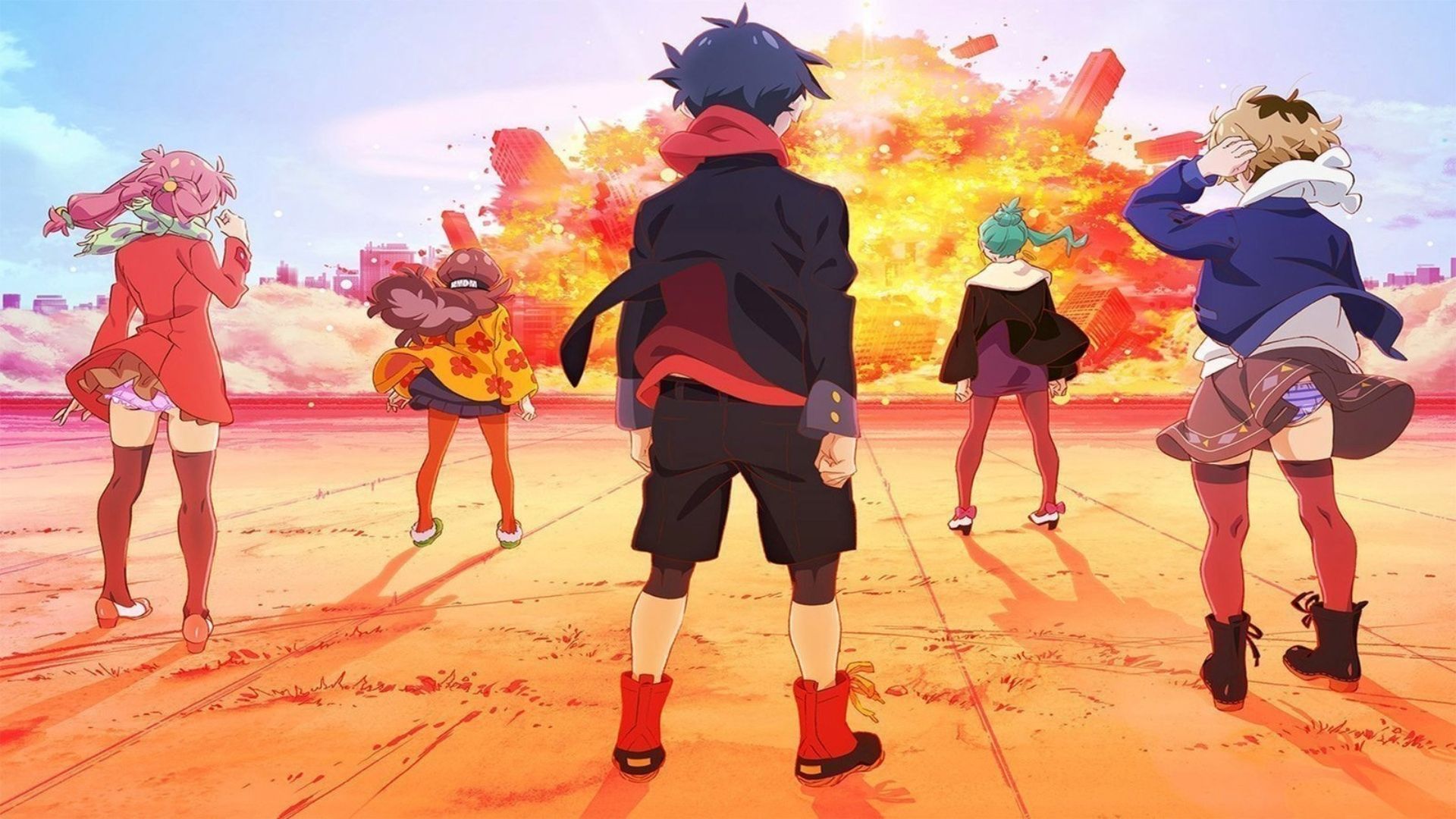
Created by Kotaro Uchikoshi, a writer known for intricate stories and puzzles in games like Zero Escape, Punch Line is a unique series that blends silly, suggestive humor with complicated time travel concepts. The story centers on a high school student whose soul leaves his body during a bus hijacking. There’s a bizarre twist: if he accidentally sees a girl’s underwear twice in a row, it causes a meteor to hit Earth! To prevent global catastrophe, he must use time travel to rewind the day and avoid the disaster.
The story has an outlandish idea and tries hard to make everything connect through complicated timelines and cause-and-effect relationships, but it ends up feeling disorganized and confusing. It awkwardly switches between silly moments meant to please fans and ambitious science fiction ideas, failing to succeed at either. Whenever the plot attempts a heartfelt scene or explains its time travel rules, it’s ruined by another joke, which prevents viewers from becoming invested in what happens.
Throughout Punch Line, the rules for how the main character travels through time and exists as a spirit are constantly changing, creating confusion. The show frequently introduces new mechanics simply to resolve plot problems, which ruins the potential for a smart, well-connected story and makes it feel draining. By the time the complicated time travel plot finally comes together, viewers are too worn out by the constant restarts and shifts in tone to be invested in how it ends.
Amatsuki Ends on a Cliffhanger That Goes Absolutely Nowhere
The anime Amatsuki blends contemporary high school life with the setting of historical Japan. It begins when Tokidoki Rikougu visits a realistic virtual reality experience designed to recreate the Edo period. However, after being attacked by a magical creature within the simulation, he finds himself unable to return to the real world and is instead physically transported to an authentic, fantastical version of feudal Japan. While the story tries to explore themes like time travel, alternate worlds, and spiritual battles, it doesn’t fully develop any of these ideas in a clear or satisfying way.
The show relies heavily on its time-related mystery, but this becomes a frustrating weakness. It’s unclear if the setting is actually the past, a computer simulation, or something else entirely. Important details are constantly held back, slowing the story down and revealing information in confusing pieces. Throughout the series, viewers are left wondering how the world even works, and instead of clear answers, they get long, abstract discussions that just stall the plot and offer no real resolution.
To make matters worse, the protagonist spends the entire story feeling helpless and complaining, never trying to take control or figure out what’s happening around him. While his constant confusion is meant to reflect how the audience feels, it doesn’t lead to any satisfying explanations or growth for the character. Ultimately, Amatsuki ends abruptly with unanswered questions, making the entire series feel pointless.
2026-07-24 05:12