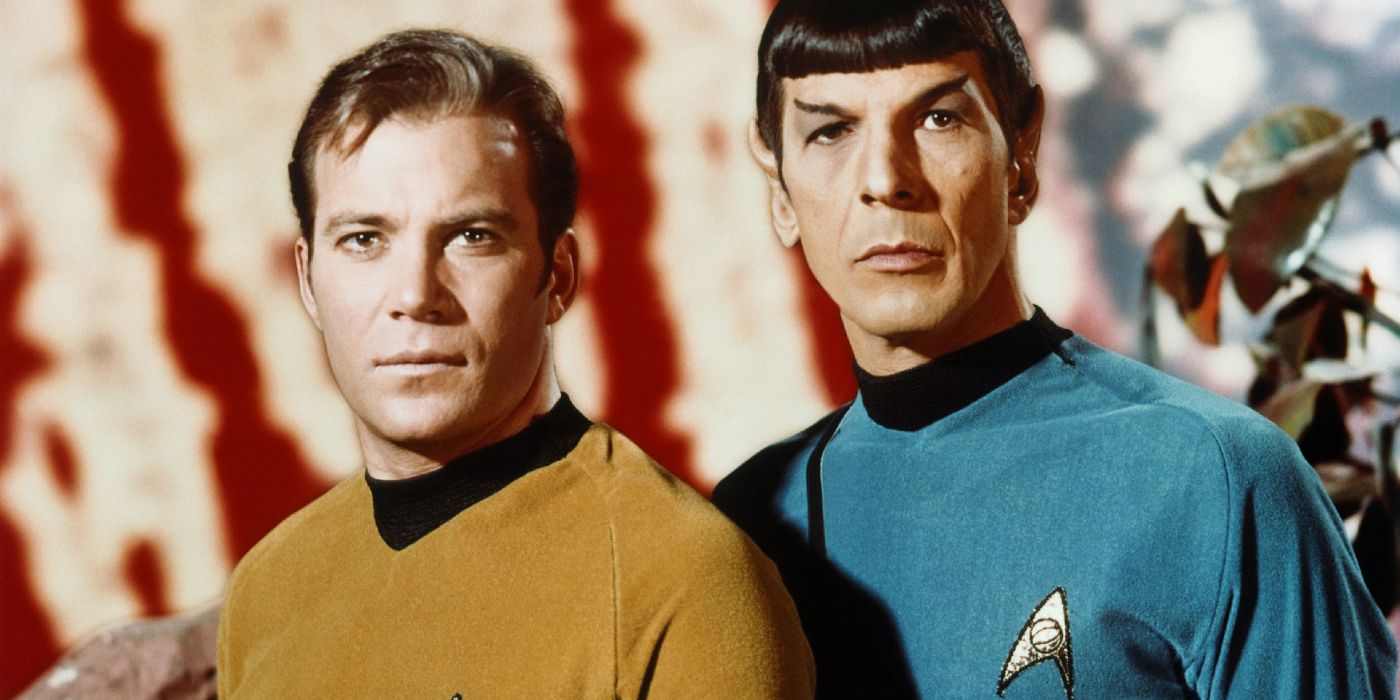
The original series, with its 79 episodes, truly launched the franchise and set the tone for everything that followed. It was known for its consistently high quality and captivated fans who closely analyzed every detail. The best episodes were particularly influential, skillfully combining forward-thinking themes with exciting science fiction stories.
Throughout the years, the actors from The Original Series have often talked about their favorite episodes. “The Devil in the Dark” is consistently a standout, with both William Shatner and Leonard Nimoy singling it out for praise. The episode is known for its strong themes and compelling mystery, and it’s had a lasting impact on Star Trek, influencing shows that came after it and reminding viewers of the importance of facing the unknown without fear.
‘The Devil in the Dark’ Is William Shatner and Leonard Nimoy’s Favorite Episode
The story starts with the Enterprise reaching a mining colony on the planet Janus VI, where fifty workers have been killed by a creature in the mines, causing widespread panic. Captain Kirk and Mr. Spock quickly learn the creature, called a Horta, is made of silicon and can tunnel through rock using acidic secretions. Kirk wounds the Horta with his phaser, but also senses it’s intelligent. Spock confirms the creature isn’t hostile after trying, and failing, to establish a mental link.
This creature is the last of its kind and is guarding a huge nest of eggs that the miners are unknowingly putting in danger. Dr. McCoy provides medical care for its injuries, and Captain Kirk negotiates peace after learning the reason for the creature’s attack. When the Enterprise leaves, the mining foreman shares good news: the remaining eggs have hatched, and the young creatures are actually assisting the miners by digging through the rock.
“The Devil in the Dark” is a genuinely exciting story. It starts like a science fiction horror film, with the Horta attacking a miner, leading the audience to believe a monster is running loose. The mystery deepens with interesting clues – like a Horta egg mistaken for a strange rock – and as more miners die and panic sets in, the suspense really builds.
The beginning of the encounter with the Horta is incredibly tense, but that tension quickly changes when audiences discover the creature isn’t what it seems. The episode also showcases the crew at their best – arguing and debating until they figure things out. Notably, this is where Dr. McCoy first says his famous line, “I’m a doctor, not a…”, finishing it with “…bricklayer” as he tries to help the Horta.
The Star Trek Episode‘s Script Had a Surprising Source of Inspiration
I read in Inside Star Trek: The Real Story that the Horta creature came about in a really interesting way! Apparently, stuntman Janos Proshaska actually built the costume and just showed up with it at Gene Coon’s office. When Coon asked what it was for, Proshaska basically said it could be used for anything they needed in an episode – talk about initiative!
Coon quickly wrote the script in just four days, building the prop as a key element. He’d actually created a similar prop a few years before, for an episode of The Outer Limits. In Season 2, Episode 17, titled “The Probe,” he’d used it to represent a giant amoeba. That episode also happened to be the last one of the original series.
Proshaska’s work resulted in incredibly convincing practical effects, and the Horta creature has become a fan favorite. Despite not being featured in new Star Trek stories, it’s remained surprisingly memorable. It almost made a return in Star Trek: The Animated Series, Season 2, Episode 5, “How Sharper Than a Serpent’s Tooth,” which showcased a collection of alien creatures. However, the Horta was ultimately cut to make room for creatures that had already been designed for the animated series.
As a lifelong Star Trek fan, I’ve always been fascinated by the Horta! They’ve almost made it into official storylines a few times, but never quite. Apparently, someone tried to include one in a scene with Federation ambassadors in The Voyage Home, but they just ran out of time during filming. And author Diane Duane really loved them – she even wrote a Horta character into several Star Trek novels from the 80s, though those stories aren’t considered part of the main canon.
I’m a huge Horta fan! You might remember Lt. Naraht – she’s one of the baby Hortas from the classic episode “The Devil in the Dark.” The Horta have popped up in some novels and comics since then, especially in The Romulan Way from 1987, but that original episode is still the only time we’ve officially seen them in Star Trek canon. It’s a shame, really; they deserve more screentime!
‘The Devil in the Dark’ Highlights the Best of Star Trek
Beyond its storytelling, “The Devil in the Dark” perfectly demonstrates how Star Trek used its plots to examine important questions about right and wrong, and what it means to be human. Leonard Nimoy, in the documentary 50 Years of Star Trek, explained why he loved this episode, saying it was a powerful story about fearing what we don’t understand, and how that fear can lead to hatred – until we take the time to learn about the ‘enemy.’
This idea has appeared throughout the Star Trek franchise, both in major storylines and smaller moments. It was prominent in The Original Series and the first set of Star Trek movies. For example, Star Trek VI: The Undiscovered Country showed the original crew overcoming their biases to achieve peace with a long-standing enemy. Later, in Star Trek: The Next Generation, Mr. Worf embodies this concept a century later.
We’ve seen this idea explored in Star Trek before, like with the Tamarians in the Next Generation episode ‘Darmok’ and Species 10-C from Star Trek: Discovery Season 4. Sometimes, even beings trying to absorb other cultures can find shared understanding. This dynamic is powerfully shown in the episode ‘The Devil in the Dark’.
Beyond what immediately meets the eye, the episode subtly critiques our obsession with possessions. The human characters are so preoccupied with exploiting the planet for resources that they overlook its real value—and miss out on a chance to form a helpful partnership—all in pursuit of financial gain.
The colony shown in this episode feels surprisingly gritty and imperfect, even though it’s set in the seemingly utopian 23rd century of The Original Series. The idea that life on the edge of explored space isn’t always easy was a key inspiration for Star Trek: Deep Space Nine. Most of the story takes place underground, with very little time spent aboard the Enterprise – which was unusual for The Original Series.
Season 4, Episode 8 of Star Trek: Lower Decks, titled “Caves,” playfully poked fun at classic episodes like “The Devil in the Dark.” It specifically targeted the common trope of using simple, easily-reused cave sets and the reveal of a scary alien that ultimately wasn’t very dangerous.
William Shatner Has a Special Connection With This Episode
This consistently places “The Devil in the Dark” among the highest-rated Star Trek episodes. William Shatner and Leonard Nimoy aren’t the only ones who feel this way. In his autobiography, Star Trek Memories, Shatner called it his favorite episode of the series, praising its thrilling story, intellectual depth, and overall quality – everything that made Star Trek great.
Shatner had a deeply personal reason for cherishing the experience, as he shared in his memoir. While filming the episode, he learned of his father’s passing. Instead of pausing to grieve, he chose to continue working, finding solace in the unwavering support of the cast and crew. This challenging time actually brought him closer to his colleagues.
Regardless of the challenges during its production, “The Devil in the Dark” is a remarkable early episode that showcases the potential of Star Trek. The show’s creator, Gene Roddenberry, aimed for something deeper than typical science fiction with ray guns and robots; he wanted more substance.
It took a lot of effort to build a following, and the original Star Trek series was fortunate to even get on television. Back then, as William Shatner put it, it was simply another show, occupying an hour each week like countless others. But even in those early days, the episode “The Devil in the Dark” demonstrates that Roddenberry’s ideas had real potential.
The series has consistently expanded on its initial success, reusing key elements in nearly everything it produces. It reliably delivers a mix of engaging stories, memorable characters, futuristic settings, and thought-provoking themes.
As a critic, I can tell you “The Devil in the Dark” isn’t the only episode that really defined what early Star Trek could be, but it’s hugely important. The fact that both Nimoy and Shatner still talk about it with such warmth says everything – it’s an episode the show simply couldn’t have done without, and one that genuinely shaped its future.
2026-07-23 23:39