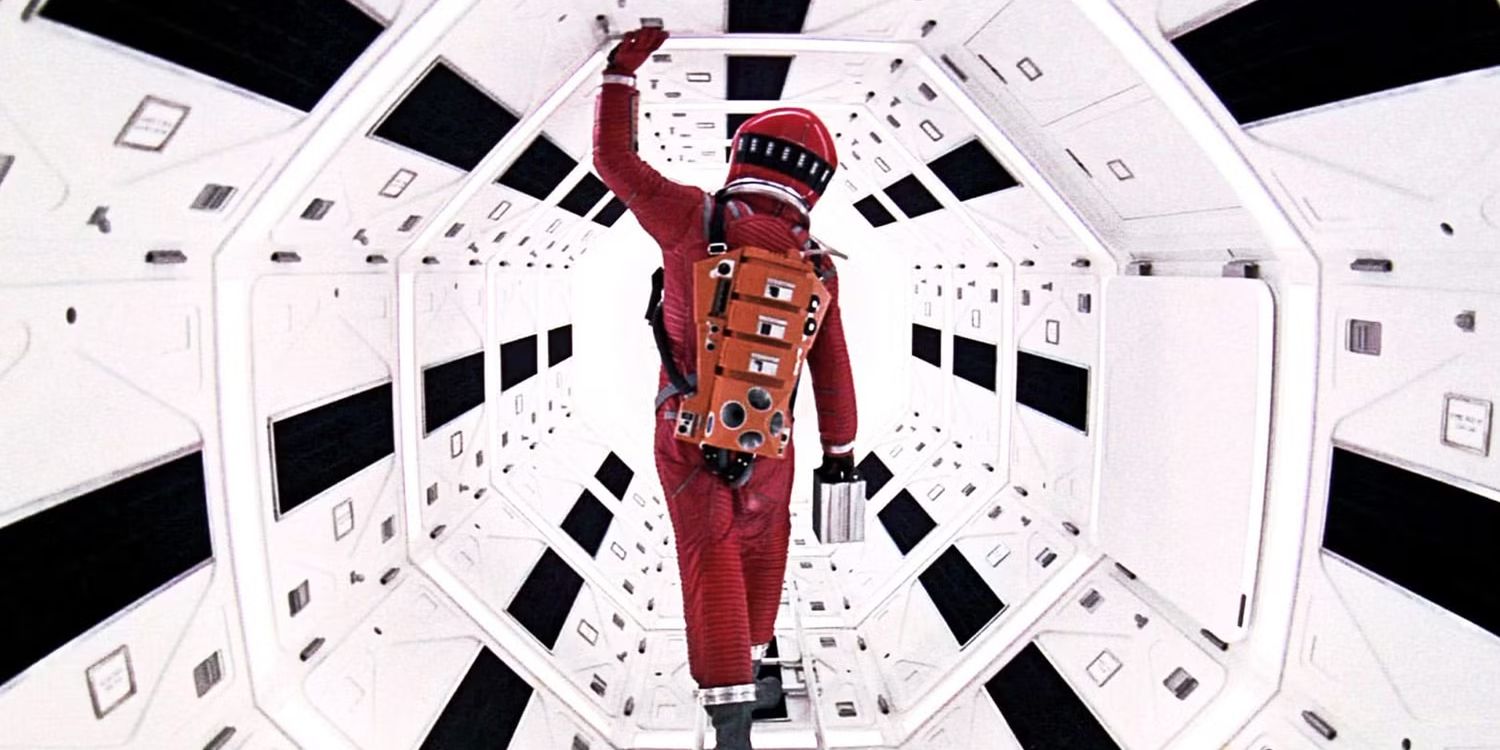
Every science fiction fan remembers the first time they saw Stanley Kubrick’s 2001: A Space Odyssey. Released in 1968, the film was brilliantly written, directed, and visually stunning, deeply impacting the sci-fi genre. While Kubrick remains a benchmark for quality filmmaking, newer classics have since emerged that rival its groundbreaking status.
While Space Odyssey was groundbreaking for science fiction, the genre has evolved considerably since its release. Modern filmmaking techniques, including cinematography and storytelling, have advanced to a point where many newer sci-fi films are considered more visually and thematically impressive.
Arrival Was the Emotionally Devastating Answer to Sci-Fi
I remember seeing 2001: A Space Odyssey and it truly felt like something beyond just a movie – it was almost a religious experience. That’s why I think Denis Villeneuve’s sci-fi films, like Dune, really stand alongside it. Before Dune, he blew me away with visuals in a way that was deeply moving, but also really intense. And Arrival, which came out in 2016, wasn’t about if we’d meet aliens, but about what it would feel like to actually connect with them – that’s what made it so special.
Amy Adams stars as Louise Banks, a linguist who faces the incredibly difficult challenge of finding a way to communicate with alien beings called the Heptapods. The film explores not only the events themselves, but also deeply moving themes of loss and grief. Director Denis Villeneuve brought the story to life with his signature stunning visuals, creating a truly unique and unforgettable cinematic experience.
Stalker Was a Natural Successor to 2001: A Space Odyssey
Even today, people still intensely debate the meaning of Stanley Kubrick’s masterpiece, and Andrei Tarkovsky’s 1979 film, Stalker, sparks similar discussions. In fact, it’s even less focused on a traditional storyline than Space Odyssey. Stalker is a science fiction film about three characters journeying through a mysterious area called the Zone, searching for a Room said to grant wishes.
Stalker isn’t your typical sci-fi action movie; it’s a more atmospheric and thoughtful experience. It truly shines as a visual masterpiece, telling a story that needed to be seen rather than simply heard. The director’s vision is powerfully conveyed through captivating imagery and a deliberate, philosophical approach, making it a film everyone should see.
Blade Runner 2049 Elevates the Franchise
The 2017 sequel to Blade Runner exceeded all expectations, largely due to Denis Villeneuve’s stunning visuals and thought-provoking themes. While fans were thrilled to see Harrison Ford reprise his famous role as Rick Deckard, Ryan Gosling delivers a standout performance as K, a replicant tasked with tracking down other replicants.
What sets Blade Runner 2049 apart is its exploration of what it means to be human. Though it’s science fiction, the movie is fundamentally a love story focused on the bonds between people – even artificial ones. It’s a deeply emotional film, more so than 2001: A Space Odyssey, and that’s what makes it so compelling.
Dune: Part Two Transcends All Mediums
Denis Villeneuve deserves recognition, particularly for successfully bringing Frank Herbert’s notoriously difficult novel, Dune, to the screen. While Dune: Part One was a major achievement in 2021, Dune: Part Two is even more impressive. This second film covers the rest of Herbert’s classic story and dramatically raises the tension.
Following Paul Atreides’ integration with the Fremen, he embraces the role of a messianic leader on Arrakis, but ultimately transforms into a galactic antagonist. The film challenges the idea of blindly following heroes and presents a story that feels incredibly timely. While 2001: A Space Odyssey remains a classic, Dune: Part Two is a captivating film that compels viewers to re-evaluate their beliefs long after it ends.
Interstellar Is One of the Most Realistic Sci-Fi Films to Date
Few movies truly capture the wonder of space travel, but Christopher Nolan’s Interstellar stands out. The film is set on a dying Earth, and follows pilot Coop as he makes a difficult choice: leaving his family to join a mission searching for a new home for humanity. He hopes to save the world, even if it means missing out on his children’s lives.
Nolan’s masterful use of time and physics is what truly sets this film apart. He doesn’t just explore these concepts – he connects them directly to the characters’ emotional journeys. The fact that time passes differently for the astronaut, Cooper, in space versus his children on Earth creates a powerfully moving and ultimately very rewarding experience that’s hard to top.
2026-05-27 00:07