When Lost first aired on ABC twenty years ago, its success took everyone by surprise, including those who made the show. A key reason it’s still so popular is that many of the central mysteries were never fully resolved. While one of the show’s biggest questions was answered in the very first episode, many viewers felt it was a flaw in the production. Before the show introduced elements like the island’s whispers or the Smoke Monster, the questions that captivated audiences were focused on the characters themselves.
Early on, the biggest questions fans had about the show revolved around the characters’ backstories. The series quickly started revealing these stories through its famous flashbacks. Even though viewers questioned everything happening on the island, they generally accepted the flashbacks as truthful. Perhaps they shouldn’t have. Close attention to the dialogue within these flashback scenes reveals small inconsistencies – things that should align if the scenes depict the same events. While many fans assumed these were simple errors, they could have been clues that the flashbacks weren’t straightforward and were instead shaped by each character’s perspective.
The Lost Pilot Was a Breakneck Production That Went from Concept to ABC Debut in Less Than Nine Months
The TV show Lost started with an idea from ABC executive Lloyd Braun. He envisioned a dramatic series similar to Survivor and asked writers to develop several scripts.
The network decided not to move forward with a pilot, but changes happening at Disney’s corporate level gave Braun more control. He then pursued his vision for the show, teaming up with J.J. Abrams and up-and-coming writer Damon Lindelof. They quickly developed a basic outline, and Braun approved the production of a pilot episode.
I was always drawn to ambitious, large-scale stories, and Lost was exactly the type of show I wanted to bring to life, explained Lloyd Braun. While I didn’t write the show myself – that was the work of incredibly talented writers – I was the one who originally came up with the central idea.
Originally, the show was unusually long for television, and ABC initially doubted it would succeed. But positive feedback from test audiences and numerous discussions convinced the network to order thirteen episodes. This gave creators Abrams and Lindelof roughly double the time they had before to refine the pilot and prepare it for broadcast.
During this period, the visual effects, music, and sound were finalized to prepare the show for broadcast. Although the timeframe was tight for a production of this scale, it allowed the team to correct any issues in the episode. For example, a problem was identified during sound design, as reported by .
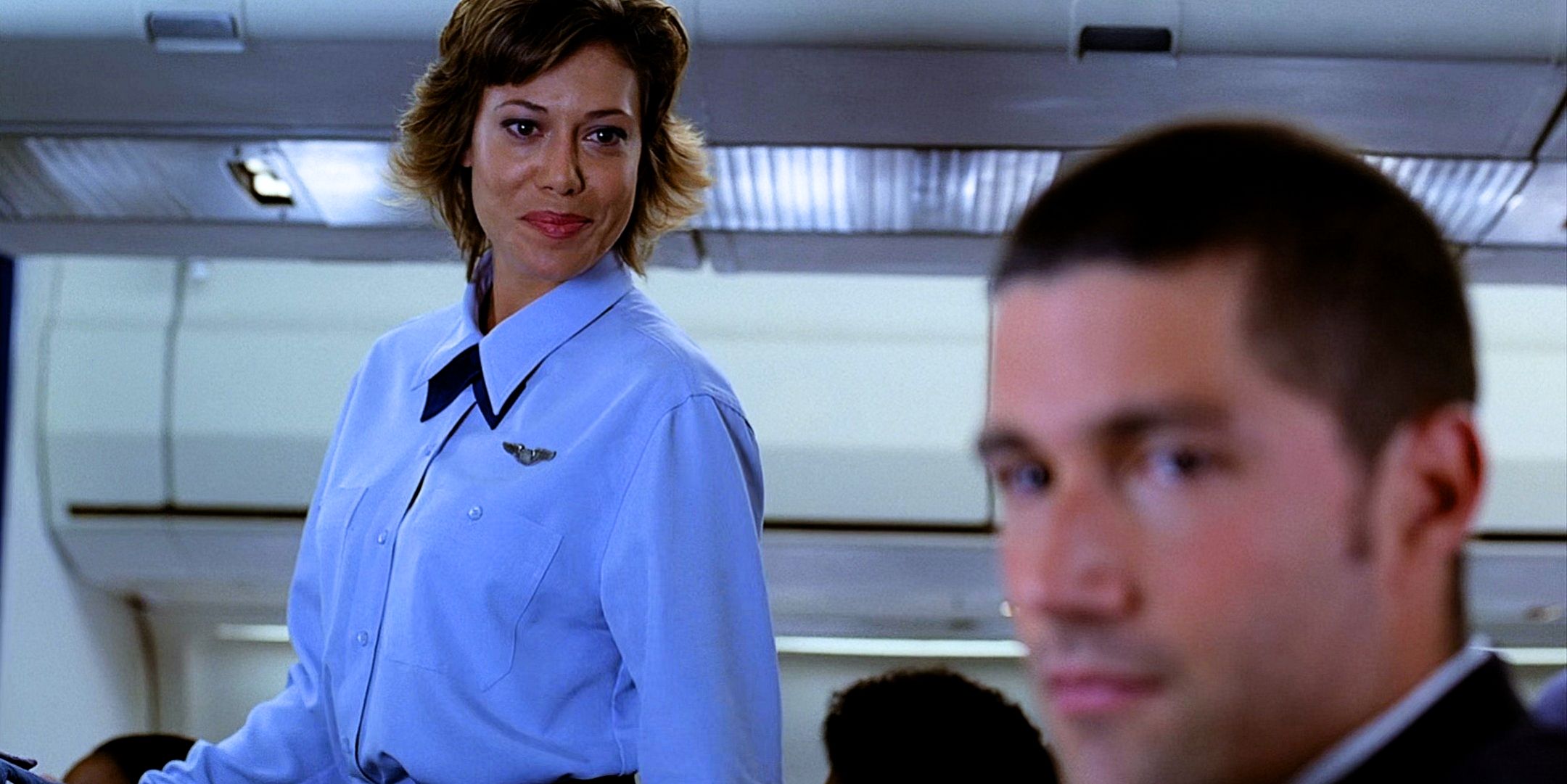
The announcement Cindy, the flight attendant, made was written identically each time it appeared in the script. However, the actor’s delivery of the lines varied slightly during filming. These inconsistencies could have been easily fixed by recording the dialogue again.
Although the final version was edited, those changes actually made the announcement more confusing, not clearer. It’s possible this was an oversight, but it wasn’t the only one.
How the ‘Seatbelt Announcement’ Discrepancies Affect Lost’s Storytelling
The Flashbacks Are Clearly Memories, and Therefore Not Consistent
The story is told through Jack Shephard’s eyes. He receives two vodka bottles from Cindy and uses one to clean a cut he got in the plane crash. Cindy remembers that the pilot turned on the fasten seatbelt light right before the crash.
Jack loses consciousness as the plane crashes and wakes up in the bamboo field, just like in the show’s famous opening scene. He had been drinking beforehand, but didn’t seem overly affected. Later, viewers hear the same announcement again, this time from someone experiencing the early stages of heroin withdrawal.
In this scene from Cindy the Flight Attendant, Cindy seeks assistance from her colleagues, but Charlie tries to avoid her, accidentally colliding with Jack in the process. As this happens, Cindy announces over the intercom, “The captain has turned on the fasten seatbelt sign.” We initially see the actor speaking these lines, but the audio continues as Charlie rushes to the first-class bathroom to find the drugs he hid there after the plane crash.
By the third time we hear the announcement, it’s presented from Kate Austen’s point of view, confirming she’s the person they’re looking for. Interestingly, Cindy refers to the pilot as “the Captain” and uses the phrase “switched on” instead of “turned on,” a detail the documentary highlighted. The fact this wasn’t corrected in editing is a small but noticeable clue. In each of the three scenes, the character whose memories we’re seeing is distracted by something other than the announcement itself.
Lost’s Flashbacks, Flash-Forwards and Flash-Sideways Were All Subjective
It’s easy to assume this is just a simple error, even without knowing how demanding the schedule was for the Lost pilot. Despite the careful planning that went into the show, it was made by people, and mistakes happen. The attempt to create a relatable side story for minor characters – intended as a treat for fans – was unfortunately not well-received.
Looking back, the small differences within the flashbacks reveal they’re actually memories, and human memory is known to be unreliable. The show connects both flashbacks and flash-forwards to a single character’s perspective. This tells us we aren’t seeing an objective record of events, but instead how the characters remember them.
Lost was a show that asked viewers to pay close attention, more so than most other programs on network television. These small details weren’t random; they were deliberately included as hints about what the creators had in mind, especially for its dedicated fans. Similar to how people remember things, the scenes showing life before the island were filtered through each character’s own perspective and weren’t always completely reliable.
Damon Lindelof explained that the show was inspired by the concept of ‘The Bardo’ from the Tibetan Book of the Dead – a state people enter after death where they don’t immediately realize they’ve died. The point of this state, according to the book, is to understand you’ve passed on, but no one is permitted to tell you directly.
The experience of the “bardo” – a sort of in-between state after death – was unique to each character. For example, Sun and Jin Kwon spent roughly a day in a different version of Los Angeles before regaining consciousness and making their way to the church in the last scene.
Characters like Jack and John Locke spent days or even weeks reaching that place. As Christian Shephard revealed at the end, time moved differently for everyone on the island, depending on their personal journey to what came next.
Lost Reaffirmed These Inconsistencies in Season 5’s Flash-Forwards
After the show Lost revealed glimpses of the characters’ lives outside the island in Season 4, Season 5 focused on how they returned. A scene featuring a gathering with Ben Linus shows different details depending on whose perspective the episode is told from.
This moment highlights that what we see happening off the island is shaped by each character’s individual viewpoint, and therefore varies slightly. Things are more consistent when the characters are actually on the island. It took until the third episode of Season 2 for the reason behind this to become clear.
The confrontation between Jack and Desmond, where Desmond is holding a gun to Locke’s head, is shown from three viewpoints. No matter if Jack, Locke, or Kate is experiencing it, the conversation and situation remain largely the same. While each character perceives the events through their own lens, the core details don’t change much.
Viewers generally agreed on what happened on the island. However, stories that took place off the island are much more open to different understandings. These parts of the show, even with slight variations in details, are often what people interpret in their own way. Because memory isn’t always accurate or consistent, the flashbacks, flash-forwards, and especially the ‘flash-sideways’ in Lost could vary significantly from person to person.
You can buy the entire Lost series on DVD and Blu-ray, or watch it online through streaming services like Netflix, Disney+, and Hulu.
2026-05-19 03:38