The entertainment industry thrives on taking chances. Every type of show, how it’s paid for, and even when it airs exists because someone once decided to gamble on an idea – a decision some saw as brilliant, while others thought it was foolish.
These choices included changes to how projects were financed and the elimination of old systems that caused anime to be released much later in some countries. Some decisions were even made with extremely limited resources – no money, no time, and no safety net – yet they created successful models that other, better-funded projects have since chosen to follow.
Osamu Tezuka Forced the Entire Industry to Rethink What TV Animation Could Be
When Astro Boy first aired in 1963, Osamu Tezuka knowingly used a simplified animation style. He borrowed techniques from the UPA school – using fewer drawings, holding poses longer, and using clever camera angles – to make producing a weekly TV show affordable. This approach became standard for every studio that followed Astro Boy into television, as no other method was financially practical.
The most significant impact wasn’t about money, but about artistic style. Because early anime didn’t have smooth animation, creators relied on strong writing, music, and carefully composed images to tell stories. This gave it a cinematic feel that remained even as animation technology improved. Later, shows like Neon Genesis Evangelion intentionally used this storytelling approach as a key creative element.
Studio Ghibli’s No-Cuts Policy Proved That Feature Animation Could Refuse Commercial Compromise
Hayao Miyazaki strongly believed that every Studio Ghibli film should be shown in theaters exactly as they were created, without any changes demanded by distributors. This was a rare and successful stance for an animation studio. Films like My Neighbor Totoro and Spirited Away proved this approach worked both artistically and financially, consistently enough that it became a core principle of how Studio Ghibli operated.
The success of Ghibli films set a new standard that extended beyond their own productions. When Princess Mononoke was released in America by Miramax in 1997, the well-known story of Miyazaki refusing to make changes to the film proved a point: Ghibli had shown that animated films deserved the same respect and creative control as live-action movies. This influenced how future distributors handled animated films and ultimately impacted how streaming services began acquiring them.
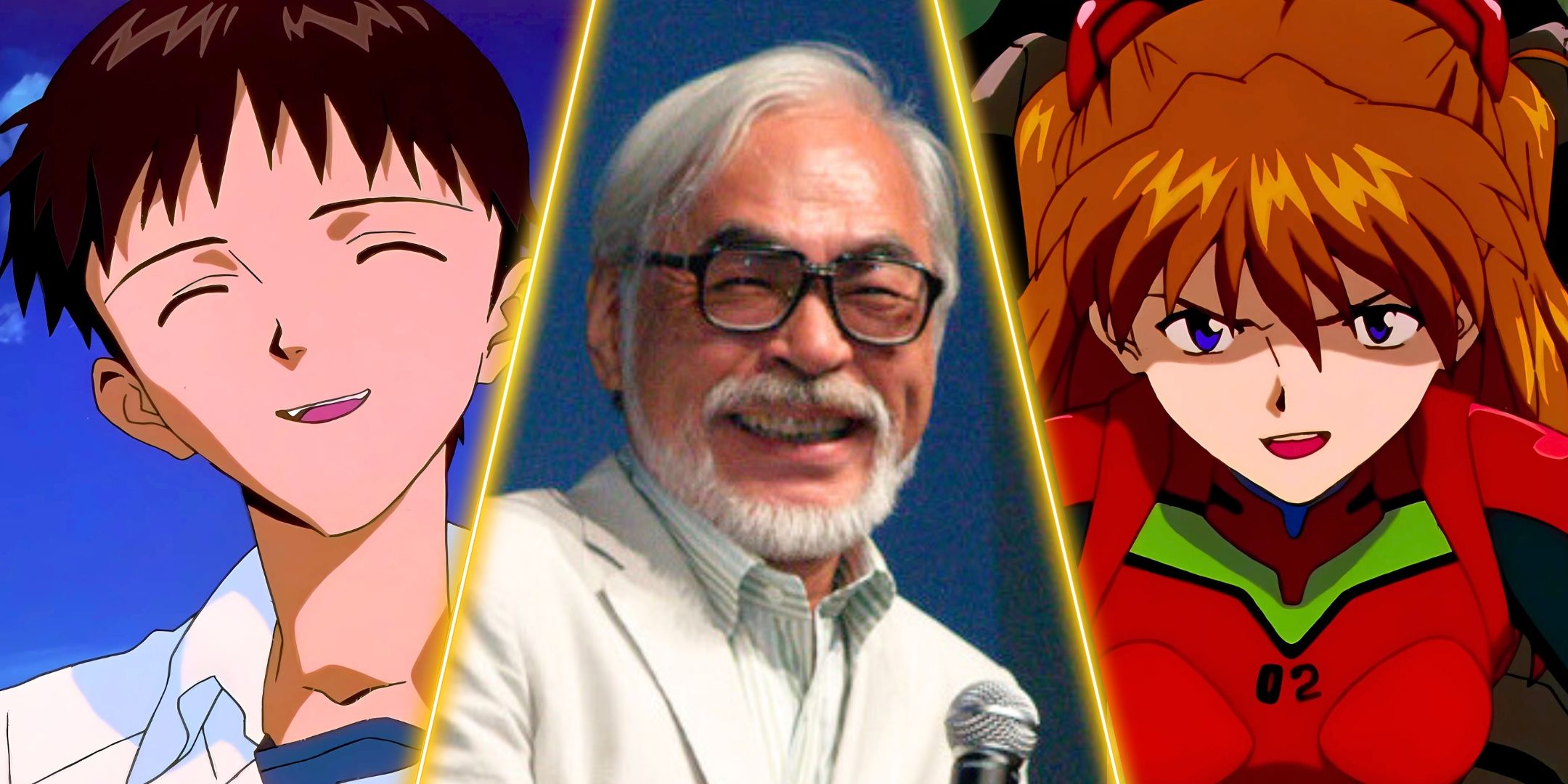
Hideaki Anno Turned the Evangelion Budget Crisis Into the Most Influential Finale in TV Anime
By late 1995, the anime Neon Genesis Evangelion had run out of money and its creator, Hideaki Anno, was emotionally drained. Instead of continuing with full animation for episodes 25 and 26, the team used cheaper methods like sketches, still images, and internal thoughts. This wasn’t a compromise, but a deliberate choice to visually represent the characters’ intense inner lives, suggesting that true psychological depth didn’t need flashy visuals.
Shows like Serial Experiments Lain, Paranoia Agent, and The Tatami Galaxy all learned from Evangelion that animation becomes more powerful when creators break from traditional methods instead of striving for flawless execution. Hideaki Anno pioneered this approach while facing challenges, and other directors have embraced it ever since – a lasting impact greater than what any big-budget project could achieve.
The Production Committee Model Separated Creative Risk From Corporate Survival
Before the 1990s, if an anime series flopped, the broadcaster who funded it would bear all the financial risk. The modern system, where investment is shared among different companies like those making merchandise, DVDs, and broadcasting the show, changed that. Now, a show can be unsuccessful without bankrupting the main production company. This shared risk allowed for more experimentation, something that wasn’t possible when a single company was solely responsible for funding.
I’ve definitely noticed how much more anime there is now compared to before. It seems like more shows are getting the green light, covering a wider range of stories, and even less popular manga and novels are getting adapted. What’s really interesting is how the way anime is produced now – with committees involved – has led to a huge focus on merchandise. That’s how franchises like Sword Art Online and Re: Zero keep going long after the initial TV run, turning into long-term money-makers instead of just being one season and done.
Studio Orange’s Full Commitment to CGI on Land of the Lustrous Ended a Decade of Skepticism
For about fifteen years, computer-generated imagery (CGI) in anime often looked stiff, especially in scenes with large crowds or moving machines. But in 2017, the anime Land of the Lustrous broke that mold. Director Orange didn’t use CGI to simply imitate traditional animation; instead, they used it to create effects that are impossible to achieve with hand-drawn techniques. For example, the character Phosphophyllite’s gem body and hair moved in ways that couldn’t be realistically animated by hand, thanks to CGI’s unique rendering capabilities.
The anime Beastars used CGI in a unique way, focusing on a consistent style rather than trying to look like traditional animation. This approach influenced how people began to judge animated works, mirroring what the studio Orange had already shown was possible. Similarly, Land of the Lustrous was built around the strengths of CGI—what it could do well—instead of attempting to replicate techniques better suited to traditional methods, offering other studios a fresh creative path beyond simply reducing costs.
Netflix’s Investment in Anime Production Rebuilt the Ceiling for Budget and Ambition
Around 2017, Netflix began investing in original anime, and one of the first results was Devilman Crybaby. Director Masaaki Yuasa had creative freedom because Netflix wasn’t bound by the rules of traditional TV anime. Unlike TV shows, Netflix didn’t limit what could be shown, how long episodes were, or how a story unfolded over a season. This level of creative control couldn’t have been achieved with more money from traditional broadcasting.
Netflix changed how anime was released worldwide. By making shows like Aggretsuko and Castlevania available everywhere at the same time, they eliminated the long delays Western fans used to experience since the days of VHS tapes. This new approach was driven by streaming needs and resulted in shows that likely wouldn’t have been made under the traditional TV anime system.
Toei Animation’s Long-Running Weekly Format Made Dragon Ball and One Piece Into Cultural Infrastructure
Choosing to make Dragon Ball a continuous weekly series instead of a limited OVA changed how anime was produced. Instead of simply adapting the manga, Toei Animation treated the manga as a constant source of material. This allowed them to create a successful formula, first with the 291 episodes of Dragon Ball Z, and then by repeating it with Sailor Moon, Digimon, and ultimately One Piece. This established a unique business model with its own way of keeping viewers engaged.
Toei developed a strategy where it’s much harder to cancel a show than to keep making it. This unusual approach—prioritizing continuation over cancellation—explains how these franchises maintain their popularity and why Western animation hasn’t created anything quite like them.
Akira’s 1988 Production Redrew What International Audiences Believed Anime Could Be
As a huge animation fan, I still can’t get over how groundbreaking Akira was! Back when it was made, it cost around 1.1 billion yen to produce – absolutely massive for a Japanese animated film at the time. What really blew people away was the detail – everything was perfectly lip-synced, it moved at a super smooth 24 frames per second, and they used over 160,000 individual animation cels! Western distributors just hadn’t seen anything like it coming from Japan before. When it hit theaters internationally in 1989 and 1990, it introduced so many people to anime for the very first time – and there really wasn’t anything else like it out there then!
The groundbreaking anime film Akira had a huge impact on a generation that would later create popular programming like Cartoon Network’s Toonami, start early anime fan communities, and ultimately work at the streaming services that made anime mainstream worldwide. Directors like the Wachowskis have even pointed to Akira as a direct inspiration for their live-action films, meaning the creative choices made by Otomo in 1988 had a lasting influence on filmmaking far beyond the world of animation.
Late-Night Programming Created the Otaku Market and Made Neon Genesis Evangelion Possible
In the early 1990s, Japanese TV stations started airing anime late at night because those times were inexpensive and appealed to a dedicated, though small, group of fans. This created a unique space for anime production, free from the usual restrictions of family-friendly prime-time programming. As a result, shows like Evangelion, Serial Experiments Lain, and Cowboy Bebop could be created specifically for their target audience, rather than being made to appeal to everyone.
You know, the way anime was scheduled late at night actually created the system that kept it going strong through the 2000s! Shows aimed at dedicated fans – what we call ‘otaku’ – developed a really loyal fanbase who were happy to spend money on special, limited-edition DVD and Blu-ray releases. That meant even if a show didn’t get huge TV ratings, it could still succeed financially if its core fans bought lots of physical copies. It was a game-changer!
Crunchyroll’s Simulcast Model Ended Fansub Culture by Making Simultaneous Releases Standard
Before 2009, when Crunchyroll popularized officially licensed streaming of new anime episodes, Western fans had to wait months, or even years, to see shows. Fan-created subtitle groups, or “fansubs,” stepped in to fill this gap by sharing unofficial translations online. Crunchyroll’s approach – offering legally licensed, subtitled episodes just hours after they aired in Japan through a subscription service – proved there was a strong demand for quick access to anime, a demand fansubs had already shown existed.
The shift to legal streaming happened quickly, as fans had always wanted a legitimate way to access the content. The huge popularity of Attack on Titan in 2013 was a direct result of the groundwork Crunchyroll had already laid.
Before the ability to stream shows at the same time as their release in Japan – known as simulcasting – it was impossible for a show to become an instant international hit. Furthermore, Crunchyroll’s data showing how many people were watching in real-time proved to studios which types of shows were popular overseas, influencing all future decisions about what to license and produce.
Read More
- Inception Meets Lost In HBO’s 4-Part Sci-Fi Game Of Thrones Replacement
- Star Trek: Starfleet Academy Review – The Kids Are Just Okay in Gaia Violo’s School-Set Comedy-Drama
- Star Trek II: The Wrath of Khan Is the Only True Masterpiece Movie In the Franchise
- Доллар обгонит аргентинское песо? Эксперты раскрыли неожиданный сценарий
- Доллар обгонит южноафриканский рэнд? Эксперты раскрыли неожиданный сценарий
- Циан акции прогноз. Цена акций CNRU
- James Gunn on What Makes DCU Unique & Different From Marvel
- Stephen King’s Hit 10-Part HBO Crime Thriller Series Returns As Worldwide Streaming Success
- One Of Star Wars’ Best Villain Changes Looks Even Better Now 18 Years Later
- Legendary Space Western Creator Says Anime Was ‘Broadcast on Cartoon Network at the Right Time’
2026-05-09 05:21