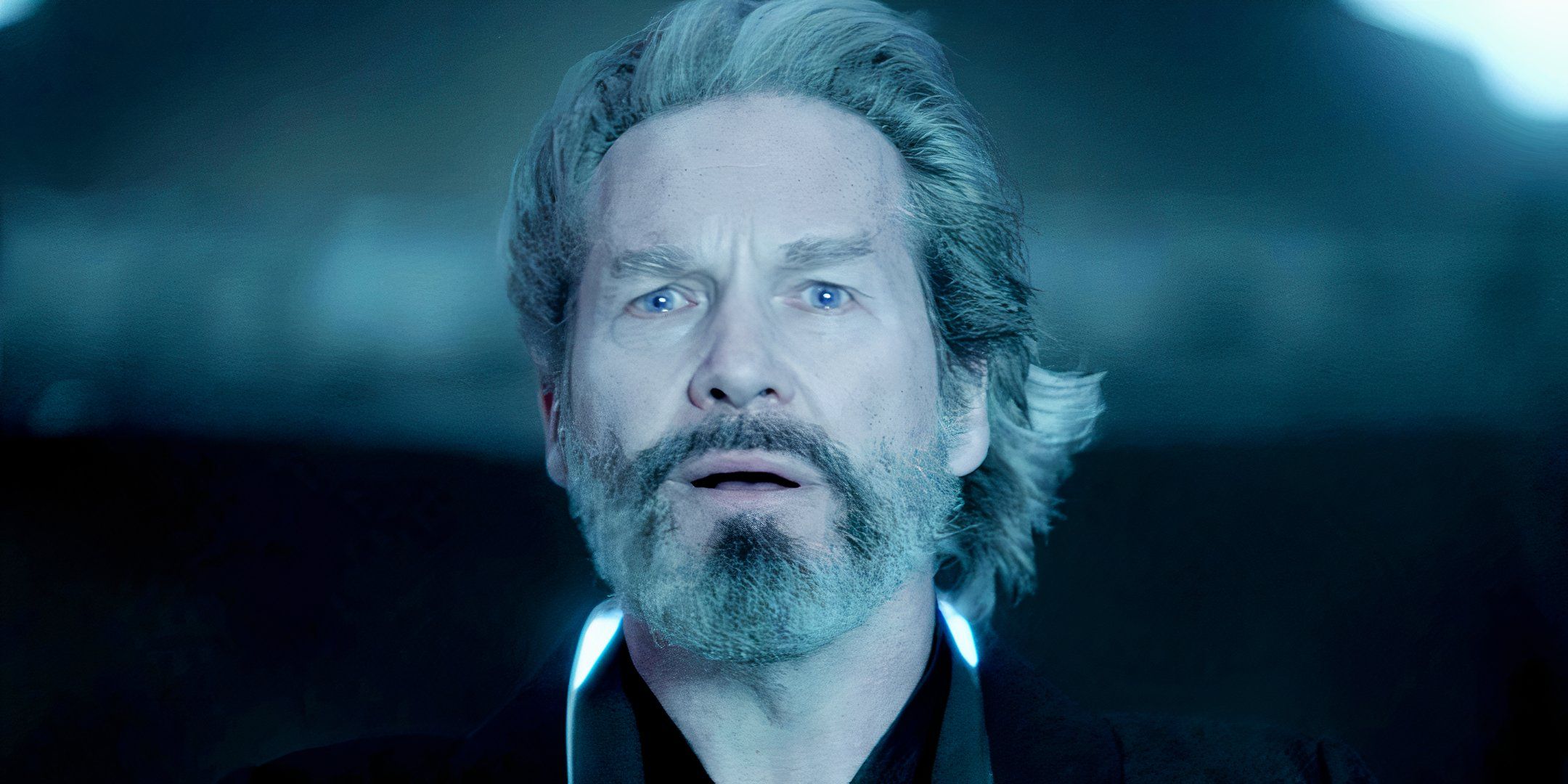
Jeff Bridges is a well-known actor, especially to film lovers. He’s starred in iconic movies like Heaven’s Gate, Thunderbolt and Lightfoot, and The Big Lebowski, and continued to deliver popular performances in the 2000s with the film TRON: Legacy.
The 2010 release of Tron: Legacy was among the first big movies to use digital de-aging technology – making actors look younger on screen – along with films like Terminator Salvation and X-Men: The Last Stand. While the technology wasn’t perfect at the time, few realized how much future development would stem from these early, imperfect attempts.
Tron: Legacy’s Digital De-aging Was A Noble Misfire
The character of Clu from TRON: Legacy – a digital copy of Kevin Flynn – is a prime example of something found in the “Uncanny Valley.” This internet term describes things that look almost, but not quite, human, creating a strange or unsettling feeling.
Despite any drawbacks, the extensive digital de-aging in TRON: Legacy was a remarkable technical achievement for its time. It was one of the earliest feature films to use this technology, following The Curious Case of Benjamin Button, which had pioneered it two years earlier.
What’s most impressive is the surge in digital de-aging technology that began after the film TRON: Legacy. Disney has been at the forefront of this trend, especially with projects like Star Wars and the Marvel Cinematic Universe.
Suddenly, we were seeing digitally younger versions of familiar actors like Robert Downey Jr. as Tony Stark and Samuel L. Jackson as Nick Fury. We also saw actors standing in for others, such as Guy Henry performing as a younger Grand Moff Tarkin based on the late Peter Cushing, and this trend continued.
By the end of the 2010s, viewers had grown tired of the technology, causing it to gradually fade from prominence. However, recent movies like Here demonstrate that digital de-aging remains a useful tool in filmmaking.
The Tron Sequel’s Legacy As A Pioneer Cements It As An Important Piece Of History

As TRON: Legacy approaches its 20th anniversary, it stands out as a bold, though imperfect, example of filmmaking’s constant effort to innovate. In many ways, it foreshadowed the rise of AI-generated content we’re seeing today.
In contrast, the polished look of Jeff Bridges’ face in Legacy shows the dedication and work that went into improving a still-developing technology. More importantly, its release in 2010 sparked a surge of content that pushed both viewers and studios to explore fresh ideas and approaches as the 2010s began, ultimately marking it as a key moment in film history.
2026-04-02 00:08