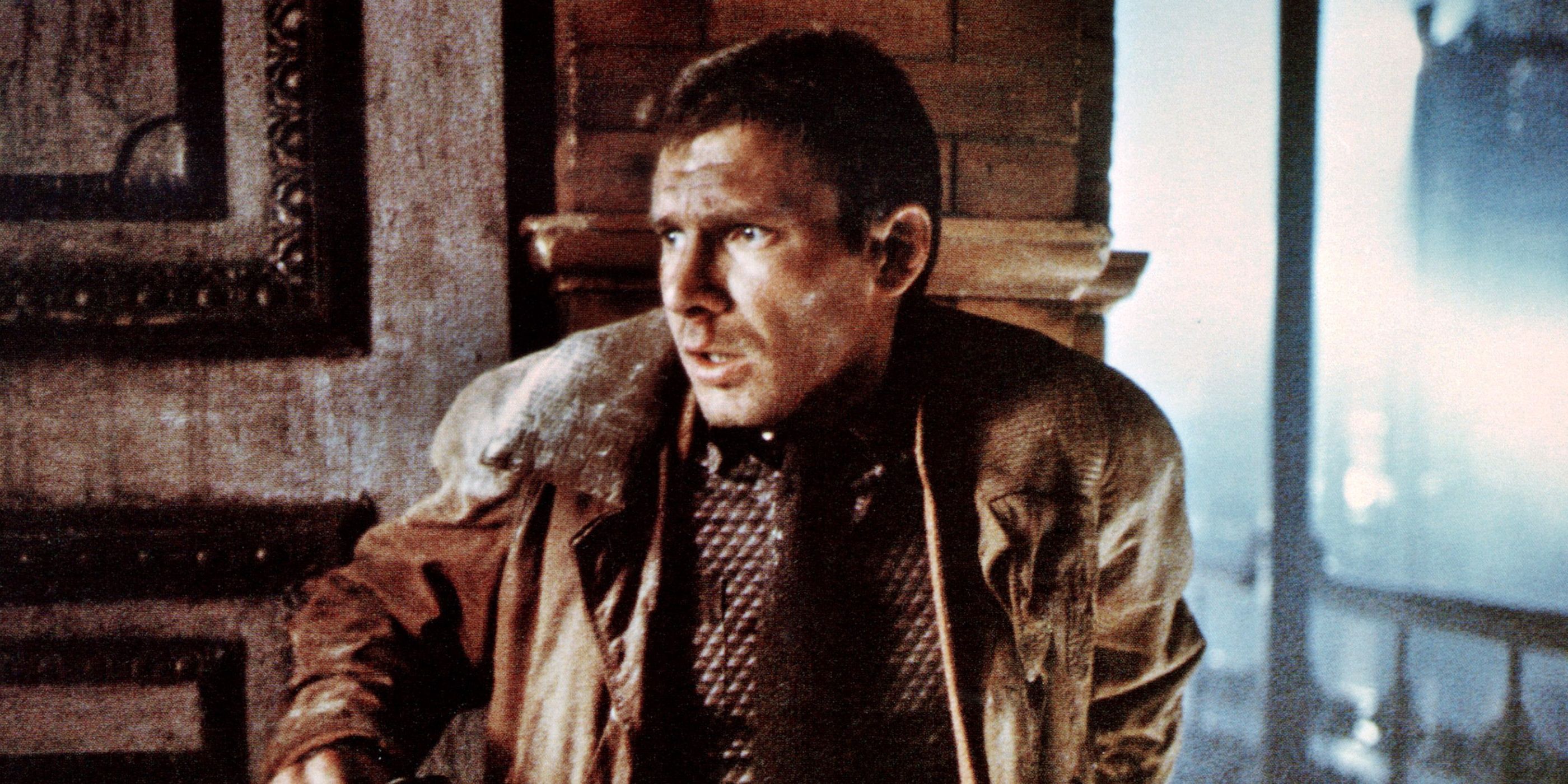
When people think of Harrison Ford’s iconic roles, after Indiana Jones and Star Wars, the sci-fi film Blade Runner often comes to mind. This 1982 masterpiece, directed by Ridley Scott, was adapted from Philip K. Dick’s novel, Do Androids Dream of Electric Sheep? and is set in a futuristic Los Angeles in 2019. The film portrays a bleak future filled with flying cars and bright neon lights, where artificial humans called Replicants are created by the Tyrell Corporation to work on other planets, but are forbidden from living on Earth.
Rick Deckard, played by Ford, is a Blade Runner – a special police officer tasked with tracking down and eliminating rogue Replicants who have escaped to Earth. When a group of four to six Replicants break free in Los Angeles, Deckard is called upon to hunt them down. Amidst thrilling chases, futuristic technology, and a rain-soaked, neon-lit city, the film explores questions of morality. While Blade Runner is a classic of science fiction, some elements haven’t held up well after 43 years.
Blade Runner Is Slow
Look, I love Blade Runner, but honestly, one of the biggest things that gets me about it now is how slow it is. Especially in the beginning, it really takes its time, and it feels more interested in showing off its incredible world than actually moving the story forward. It’s beautiful, for sure, but it can be a bit of a slog, you know?
The constant stream of rain-soaked, gritty, and strangely Japanese-influenced scenes in Los Angeles becomes tiresome. The film deliberately moves at a slow pace, aiming to make viewers think about what it means to be human, but what resonated with audiences in 1982 doesn’t necessarily hold the same power now.
Viewers were likely more captivated by the film’s vision of the future, making the setting initially engaging. However, this focus on atmosphere came at the expense of a fast-moving plot, compelling action, and well-developed characters, which explains why many struggle to finish the movie. The setup – Deckard’s investigation, the central conflict, and the introduction of the villains – takes too long in Blade Runner.
Rachael And Deckard’s Intimacy Scene Was Problematic
The intimate scene, intended to be a pivotal moment in the film, felt awkward and unsettling instead. Deckard drastically changes Rachael’s life by revealing she’s a Replicant, and surprisingly, he becomes attracted to her after she kills for him.
One of the most disturbing moments in the sci-fi film occurs when Deckard kisses Rachael and manipulates her into saying and doing what he wants, exploiting her status as a Replicant. Rachael clearly doesn’t consent and seems confused, but Deckard shows no regret, believing Replicants aren’t capable of independent thought or action.
Viewers were deeply troubled by the power dynamic and lack of consent during the sexual encounter, finding it deeply problematic. This felt like a significant ethical misstep for a film that otherwise aimed to examine themes of power, what it means to be human, and gender roles.
Harrison Ford’s Voiceover Is Terrible
When Blade Runner was first released in American theaters, a voiceover by Harrison Ford was added. The idea was to reveal Deckard’s thoughts, make the story clearer, and enrich the film. However, most fans dislike it. While it could have achieved those goals, the voiceover ended up sounding flat, awkward, and didn’t fit the film’s stylish look and feel.
Harrison Ford and Mark Hamill both disliked having a narrator explain the story, but the studio thought audiences would get lost without one. Ford reluctantly agreed to do the voiceover, but intentionally delivered it in a dull and lifeless way, hoping it would be cut from the final film. Unfortunately, even his deliberately poor narration made it into the movie, simply repeating what viewers could already see happening.
The Characters Seem Underdeveloped
Most characters in Blade Runner felt underdeveloped, with the exception of Roy Batty, who had a surprisingly complex and emotional ending. The Replicants, for example, weren’t given much depth: Zhora was quickly killed off despite being designed for combat, Pris and Leon had no real character arcs, and Rachael discovered her entire past was manufactured.
Rick Deckard, the film’s protagonist, lacked a compelling backstory. Even a brief glimpse into his past could have improved the movie, but unfortunately, the characters felt flat and underdeveloped. This becomes apparent when watching Blade Runner now. The film might have benefited from focusing less on special effects and more on creating characters that viewers could connect with and truly care about.
There Were Too Many Inconsistencies
Despite being a classic, the movie has several noticeable plot problems that can be distracting for modern viewers. For example, Deckard is initially informed that six Replicants are at large, yet he only identifies and eliminates four.
The error was corrected in a revised version of the film by establishing that Mary, a fifth Replicant, had died previously. Also, the Voight-Kampff test given to Leon to check if he was human proved unnecessary, as video footage of the rogue Replicants was already available.
As a huge film buff, I noticed some pretty glaring issues while watching – things like confusing details about the Replicants’ lifespans, or scenes that didn’t quite line up each time they happened. And these weren’t minor mistakes, they really jumped out even on my first viewing! Honestly, if the filmmakers had concentrated more on a tight, consistent story, a lot of these problems could have been avoided, but they just kept adding up.
Deckard’s Belated Replicant Status Felt Forced
The unicorn scene – which revealed Deckard’s memories were artificial – was a late addition to the movie. Director Ridley Scott added it during editing, implying that Deckard himself was a replicant. While surprising, this change felt confusing and didn’t quite fit with the rest of the film. Had it been part of the original plan, it likely wouldn’t have been so shocking.
It’s strange that a Replicant would be used to hunt down other Replicants. Why would they do that? Also, how could Deckard have been unaware he wasn’t human, and if he was a Replicant, how long was he designed to live?
If he was a Replicant, he’d likely be gone by now, or Roy would have revealed the truth. While a clever surprise, this plot twist actually added to the confusion. It felt like it was added later to create more mystery, but ultimately made the movie harder to follow as it went on.
There Are Far Too Many Blade Runner Cuts
There have been seven different versions of Blade Runner released so far. In 1982 alone, four versions came out: a Workprint prototype, a sneak preview shown in San Diego, the American theatrical release, and the International theatrical release.
The film went through several changes, with additions like Deckard’s narration and more intense violence, and even a hopeful conclusion for Rachael and Deckard. Ten years later, Ridley Scott released his Director’s Cut, which removed the voiceover, the happy ending, and instead included a dream sequence featuring a unicorn.
This release is widely considered the most complete version of the classic sci-fi film. It features a longer, previously unseen version of the unicorn dream sequence, as well as all the alternate and graphic scenes from the original international release. While it’s exciting to see all the previously unused footage, it can be frustrating for fans trying to decide which version is the ‘true’ one. Asking viewers to watch Blade Runner seven different times just to understand the complete story feels excessive.
Read More
- Taylor Sheridan’s Mayor of Kingstown Kills Off Tracy in Season 3
- Captain America’s Cut Fantastic Four First Steps Scene Revealed (Report)
- Доллар обгонит пакистанскую рупию? Эксперты раскрыли неожиданный сценарий
- Whether Dunk Was Really Knighted in A Knight of the Seven Kingdoms Revealed
- Прогноз криптовалюты OP: прогнозы цены OP
- Avatar: The Last Airbender’s 8 Biggest Takeaways, 20 Years Later
- New Chris Pratt Sci-Fi Flop Already Out on Streaming
- House of the Dragon Season 3 Teaser, Photos Reveal New Character
- Heated Rivalry Star Christina Chang Discusses Season 2 and Handling Fame
- Universal Announces 2-Month Long Mardi Gras for 2026 With More Information Still to Come
2025-12-17 23:08