
Movies are open to personal interpretation, and that’s usually a good thing. However, sometimes this can lead to audiences misunderstanding what the director actually intended. When films are commonly misinterpreted, it’s often due to a lack of media understanding, cultural biases, how the movie was marketed, or a mix of these reasons.
Watching only clips or summaries of a movie, instead of the whole thing, can cause important underlying messages to be missed. This is a growing problem with today’s fast-paced communication, and it can lead to misunderstandings about what films are really about.
Once a wrong idea about a movie becomes popular, it’s hard to correct. This means many fantastic films are still misunderstood or remembered incorrectly by viewers.
RoboCop (1987)

RoboCop is a sharp critique of unrestrained capitalism, predicting a future where all public services are run by private companies. In this future, the corporation that owns the police department introduces a cyborg police officer, claiming it’s a groundbreaking way to improve performance and profits. The company’s leaders don’t care that this mechanized policing could become violent.
As a movie fan, I’ve always thought what’s brilliant about RoboCop is how its writer, Ed Neumeier, managed to sneak in these really dark and even challenging ideas. He didn’t do it by being preachy, though! He wrapped it all up in a super exciting, action-packed package, which is why it’s so engaging and why people connect with it.
Neumeier explains that using genre – like science fiction or comedy – allows him to explore difficult topics in a way that’s more easily accepted by audiences. The lightheartedness of the genre creates a safe distance, letting people laugh and then consider tougher issues like police brutality, crime, and political extremism without feeling directly confronted. It’s a way to address serious subjects with a bit of levity, making them more approachable.
You know, whenever RoboCop pops up in pop culture, it’s usually just the cool surface stuff – the action, the suit – that gets remembered. It’s a shame, really, because the movie is so much more than that. It’s a surprisingly sharp satire about corporate greed and how the police are used, and it’s often totally missed or even misinterpreted as just another ’80s action movie supporting the police, which is the opposite of what it was trying to say.
Fight Club (1999)

The shocking violence in David Fincher’s Fight Club often overshadows the film’s main point. It’s not a movie about men being aggressive; it’s actually a criticism of our obsession with buying things.
The movie Fight Club, based on the novel by Chuck Palahniuk, centers around a successful but unfulfilled office worker (Edward Norton). Feeling lost and empty despite his achievements, he and a daring new friend start an underground fight club that evolves into a larger scheme to rebel against the corporate world.
The film aims to critique the restrictive nature of consumer culture, but many viewers mistakenly believe it’s actually about the pressures of traditional gender roles. Some people, particularly in certain online men’s rights groups (according to Vice), think the main character is held back by societal expectations surrounding masculinity and his ability to express aggression.
American Psycho (2000)

Many people see the main character in American Psycho as a cool antihero, but the movie actually shows him as a clumsy and inept villain.
Based on Bret Easton Ellis’s novel, American Psycho centers around Patrick Bateman (Christian Bale), a wealthy and successful Wall Street banker who secretly harbors disturbing and violent thoughts. The film portrays Bateman as a flawed and often clumsy character, serving as a critique of extreme materialism and the advantages held by privileged white men.
Despite the novel and movie clearly showing Patrick Bateman as ridiculous and unlikeable, he’s surprisingly become a popular figure – especially among the investment bankers he’s meant to be satirizing.
Director Mary Harron says she and her co-writer, Guinevere Turner, are surprised and disappointed by how some people have misunderstood Patrick Bateman, missing the point of the film entirely.
In a conversation with Letterboxd, director Harmony Harron admitted she and writer Guinevere Turner never anticipated ‘American Psycho’ becoming popular with Wall Street types. ‘That wasn’t what we were aiming for,’ she said. ‘So, did we miss the mark? I’m not sure why it happened, considering Christian [Bale] was clearly satirizing them.’
Jennifer’s Body (2009)

The movie Jennifer’s Body deliberately flips the typical way women are presented in horror films. Film theory often discusses the ‘male gaze,’ which refers to showing female characters in a way that’s meant to be visually appealing to male viewers. Instead of being looked at, Jennifer (played by Megan Fox) actually does the looking – and consuming – of boys, completely reversing this common trope.
A boy band involved with Satanic practices tries to sacrifice a girl named Jennifer, but the ritual goes wrong and transforms her into a demon who feeds on people. The movie Jennifer’s Body also stands out for its strong, independent female characters and presents the story from a female perspective.
As a critic, I’ve been hearing a lot about the issues surrounding the marketing of Jennifer’s Body, and Amanda Seyfried recently hit the nail on the head in her interview with GQ. It’s frustrating because the campaign completely misrepresented the film. They leaned hard into Megan Fox’s looks, which was the exact opposite of the story they were trying to tell! Instead of showcasing the film’s themes, the marketing unfortunately cemented it in the public’s mind as just another shallow, action-packed thriller. It’s a real shame, because the movie itself is so much more than that.
The Wolf of Wall Street (2013)
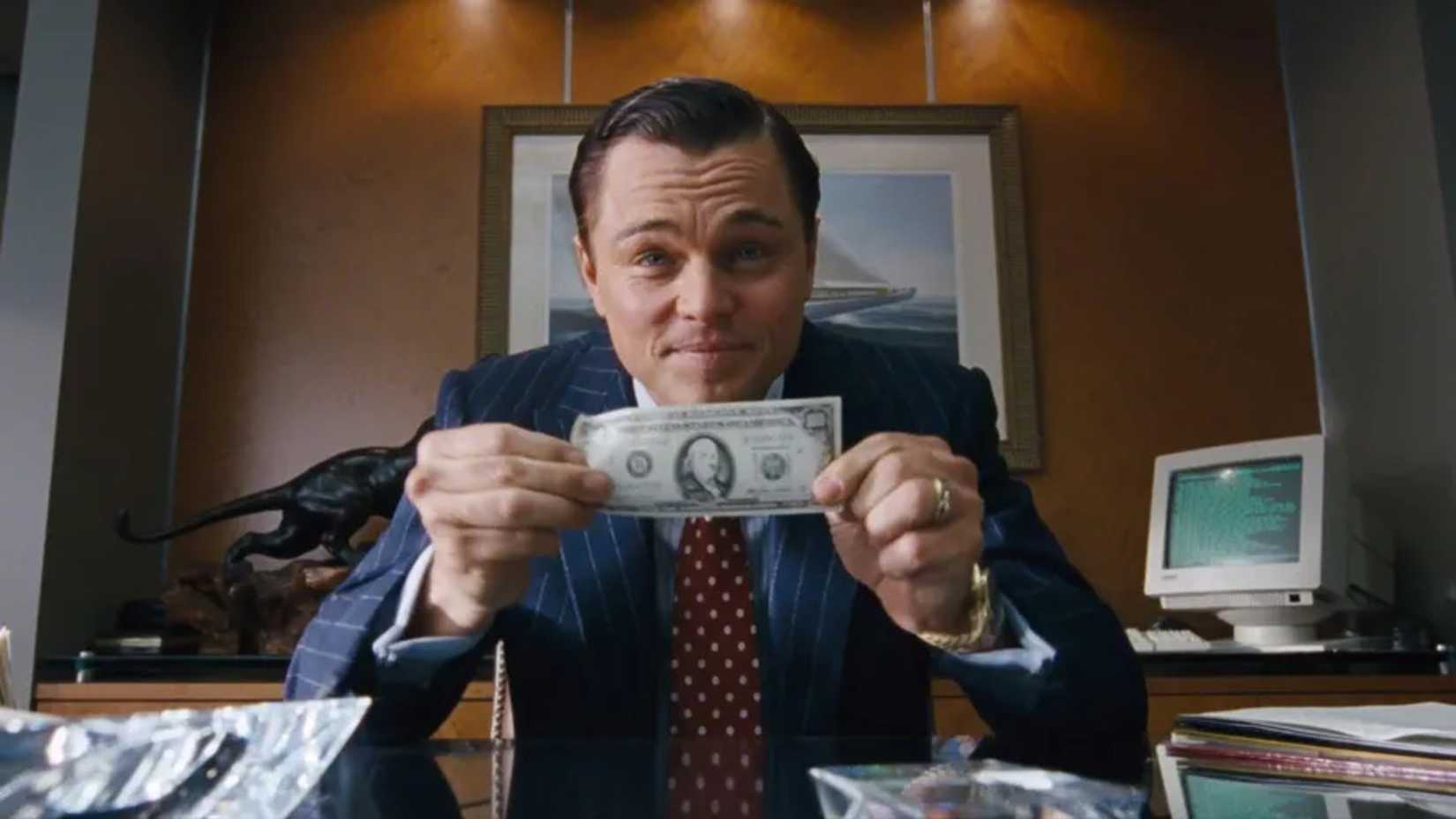
The movie The Wolf of Wall Street, based on Jordan Belfort’s life story, shows his incredible but ultimately destructive success as a stockbroker. It portrays how he climbed to the top of the financial world through dishonest and unethical practices.
Although Martin Scorsese uses over-the-top humor to show the negative consequences of the main character’s behavior, many viewers mistakenly think The Wolf of Wall Street celebrates Belfort’s achievements. The film vividly portrays the excessive and wild lifestyle fueled by money among high-level businesspeople.
Though many viewers see the film as glorifying Jordan Belfort’s wild lifestyle, it actually aims to show how limitless wealth can lead to corruption. While meant to be a condemnation of unethical financial leaders, The Wolf of Wall Street has ironically inspired some aspiring brokers who are drawn to the film’s lavish displays. This is a misinterpretation of what is fundamentally a satirical critique.
Starship Troopers (1997)

The film Starship Troopers offers a critique of militarism and fascist ideologies by highlighting their inherent flaws. Adapted from Robert A. Heinlein’s 1959 novel, this science fiction satire presents a future where people only gain full citizenship – and the rights that come with it – by serving in the military.
The movie centers around a team of soldiers who have to fight enormous alien insects, creatures they barely understand. The story challenges traditional military thinking, making viewers question the rush to conflict and the tendency to see opponents as less than human.
Many people mistakenly believe the film is actually promoting military ideas and nationalism, rather than satirizing them. As Danielle Ryan points out in SlashFilm, viewers often take the film’s exaggerated displays of military power seriously, misinterpreting them as the movie’s true message. Because of this, Starship Troopers is usually advertised as a straightforward action or science fiction film, not as a satire.
Taxi Driver (1976)

The film Taxi Driver centers on Travis Bickle (Robert De Niro), a New York City cab driver who becomes increasingly disturbed by the state of society. He feels a strong urge to use violence to fix what he sees as a deeply flawed world.
In Martin Scorsese’s 1976 film, Travis Bickle is often seen as a heroic figure. Some people even admire him as someone who stood up against a frustrating and challenging world. However, Scorsese intentionally portrays Travis as a disturbed, violent, and subtly prejudiced individual.
Although Travis believes he’s a hero, the movie doesn’t necessarily portray him that way. Viewers might admire Bickle because action films often mix violence with heroic behavior, leading people to see revenge as something admirable.
Read More
- Прогноз криптовалюты ATOM: прогнозы цены ATOM
- Taylor Sheridan’s 2-Part Action Thriller Series Is The Perfect Binge Ahead Of The New Season
- Welcome to Derry Just Officially Confirmed Its Shining Connection (& It’s Perfect)
- Прогноз нефти
- JJK Director Taps Talent From Spy x Family & JoJo’s Bizarre Adventure For New Movie
- One of Clint Eastwood’s Best Westerns (That Isn’t ‘The Good, the Bad and the Ugly) Is Leaving Free Streaming
- In Just 1 Day, Universal’s Wicked: For Good Is Officially the Most Watched Title on PVOD in America
- Following Tangled Casting Its Rapunzel And Flynn, I’m Psyched That A Fancast Favorite For Mother Gothel Is Being Lined Up
- Prime Video’s 10/10 Sci-Fi Fantasy Masterpiece Can Only Get Better With A New Addition
- Why A Knight of the Seven Kingdoms Has Flashbacks
2026-03-29 20:51