
Many shows that run for a long time eventually become inconsistent in quality, but some manage to stay good throughout their run. Often, later seasons feel stale because they repeat old ideas. Other times, shows try to be exciting by making big changes, but end up losing what made them special – their characters, overall mood, and core themes.
The TV show Happy Days is famously known as a turning point for many series. The phrase “jumping the shark” – meaning a show has declined in quality – comes from a memorable, and unrealistic, scene where the character Fonzie water-skied over a shark on Happy Days. However, plenty of great shows have lasted for eight, ten, or even more seasons without experiencing a similar decline.
ER
1994-2009, 15 Seasons

Despite lasting an impressive 15 seasons and completely refreshing its main cast over that time, ER remained consistently captivating. A key to its success was its focus on the patients and the bustling emergency room itself – and, through them, a vivid portrayal of the city of Chicago.
The show beautifully portrays the city and is known for its incredibly realistic depiction of emergency room life. It’s similar to popular shows like The Bear – imagine The Bear focused on hospitals instead of restaurants – and The Pitt, which features Noah Wyle, a former star of ER.
Despite its fast pace, ER features memorable and well-developed recurring characters, particularly among the hospital staff. For example, George Clooney’s Dr. Doug Ross is strongly dedicated to protecting children, a characteristic stemming from his difficult relationship with his own son – a backstory that’s clear without being overly emphasized.
Though ER features compelling characters, the show prioritizes its overall themes, which means it isn’t afraid to let characters go. The way Dr. Mark Greene, played by Anthony Edwards, left the series was particularly well-done – it was both moving and realistic within the show’s context. This willingness to be affected by, yet also move beyond, individual characters is what allowed ER to stay fresh and successful for so long.
Friends
1994-2004, 10 Seasons
 NBC via MovieStillsDB
You can really see the quality of Friends when you compare the first and tenth seasons. All six main characters grow and change over the ten years, but they still retain the essential traits that defined them in the beginning. This demonstrates that the show evolved without losing what made it special.
As a total movie and TV buff, I always loved how Friends handled its characters’ growth. Chandler, who started out so insecure, finally gets over his fear of settling down, and it’s great to see. Ross and Rachel? They’re still a bit of a mess, honestly, but after all the ups and downs, their relationship feels so much richer and more real. And Phoebe? She never loses that wonderfully quirky spirit, but she finally starts to really find her footing in life, which is just lovely to watch.
The constant changes in who lived together on the show were another sign that Friends was willing to evolve without losing its core appeal. Over the seasons, we saw Monica and Rachel, Monica and Chandler, Rachel and Joey, Rachel and Phoebe, and even Rachel and Ross share a living space. Each new roommate pairing marked a fresh chapter for the characters and reinforced the show’s focus on their relationships and growth.
Friends centers around a close-knit group of young adults who become each other’s family, largely within the setting of their iconic purple apartment. The show understood that losing that central living space would change the core of what made it Friends, and they skillfully maintained that element. By changing who lived there and the reasons why, the show stayed fresh and relatable for a decade.
Night Court
1984-1992, 9 Seasons

The basic idea behind Night Court had a lot of potential, but it took dedication to the show’s unique style and humor to make it a success for nine seasons. As 30 Rock famously joked, “Court? At night? I’m already laughing!” That simple line perfectly captures what worked so well – and what could have easily failed – with Night Court.
I absolutely loved Night Court! What really made it special was how it embraced the craziness of a late-night courtroom and all the unusual characters who ended up there – not just the defendants, but the whole team, especially Judge Harry Stone. He was hilarious, a bit of an amateur magician, but at his core, he was a genuinely good person, which kept the show from going completely off the rails. It was zany, yes, but it always had heart.
I’ve been really enjoying Night Court. It’s funny, sure, but what surprised me is how much heart it has. It consistently roots for the little guy and makes you look beyond the quirky surface of the show and its characters. That’s what really sets it apart – it could have easily become just a series of weird moments, but the cast has fantastic chemistry, and that keeps everything grounded and genuinely touching.
Modern Family
2009-2020, 11 Seasons

It’s tricky for TV shows to depict young characters growing up. Some, like Gilmore Girls with Rory, lose their appeal as the characters enter their 20s. Shameless struggled with what to do with a grown-up Liam, and That ’70s Show showed that adult characters still living with their parents isn’t very interesting. However, Modern Family managed to pull it off successfully.
As the kids on Modern Family – Haley, Alex, Luke, Manny, and Lily – got older, the show explored their individual quirks in more significant ways. Haley’s tendency to avoid schoolwork and choose the wrong guys started to create real problems, which made her relationship with Andy – and its eventual end – especially touching. Meanwhile, Alex’s struggles with being the “smart” sibling became more intense and had bigger consequences.
The key to the lasting success of these shows is simple: genuine change. To stay interesting for years, characters need to grow and evolve – but still remain believable and true to their core personalities. They can’t just repeat the same patterns and face the same problems over and over.
Throughout its many seasons, Modern Family excelled at showing how its large cast of characters grew, particularly as the children matured. Importantly, the show consistently highlighted the importance of family connection, even when people have different perspectives.
M*A*S*H
1972-1983, 11 Seasons

MASH demonstrated that sitcoms could effectively balance humor with serious, dramatic, and even tragic storylines. While many comedies avoid getting too heavy, MASH’s unique combination of comedy and the harsh realities of war is what made it so memorable and long-lasting.
Similar to Harry on Night Court, Alan Alda’s Hawkeye is a central figure for both the funny and more serious moments. He’s known for being playful, a bit of a prankster, and often challenging rules. But what makes him so likable is his ability to become thoughtful and sincere when needed, creating a character that’s both endearing and complex.
What makes the show so interesting is how quickly the characters and mood can shift. Even the funny moments reveal the serious, painful truths about war, as Hawkeye uses humor to cope with everything he’s experiencing.
Unlike most sitcoms, especially those from the 1970s, MASH* was remarkably deep and complex. It was this emotional richness that allowed the show to run for 11 popular seasons.
Frasier
1993-2004, 11 Seasons
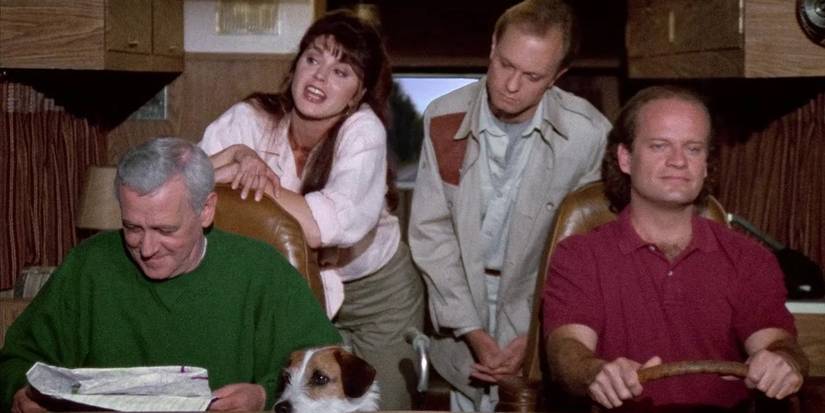
Honestly, I think a huge part of what made Frasier so great was Niles. David Hyde Pierce was just phenomenal – his timing was perfect, and he could bring so much emotion to every little thing his character did and said. He really stole the show, in my opinion!
Niles provides a lot of the humor in this witty, talkative show through his quirky physical habits – like meticulously cleaning his chair or his unusual routine when ironing. And his unrequited love for Daphne is actually more touching than Frasier’s complicated romances.
Frasier is essential to making Niles’ humor work. His constant frustration sets the stage for comedy, especially when Niles unexpectedly shows up. But it’s the fantastic connection between all the actors that truly makes Frasier a beloved and enduring show.
Similar to many sitcoms, Frasier relies heavily on misunderstandings for its humor and storylines. What sets it apart is that the show often lets certain characters – and the audience – understand what’s really going on. This creates a fun, shared experience where we’re all ‘in on the joke,’ which makes the eventual resolution of the misunderstanding especially satisfying.
In the “The Matchmaker” episode of Frasier, Frasier tries to play matchmaker for a coworker, intending to set him up with Daphne. However, he doesn’t realize the coworker is actually attracted to him, and Frasier unintentionally encourages this misunderstanding throughout the evening.
The moment Niles finally discovers the truth is a highlight of the episode, especially Martin’s hilarious off-screen reaction. This clever use of mistaken identity is a key reason why Frasier became such a popular and enduring series—remarkable considering it started as a spin-off.
Read More
- Heated Rivalry Star Christina Chang Discusses Season 2 and Handling Fame
- Прогноз криптовалюты OP: прогнозы цены OP
- Whether Dunk Was Really Knighted in A Knight of the Seven Kingdoms Revealed
- The Mummy Returns Sets 25th Anniversary Rerelease Date With Poster & Teaser
- Darth Maul Theory Teases The Return Of A Surprising Star Wars Villain In Shadow Lord
- Taylor Sheridan’s Mayor of Kingstown Kills Off Tracy in Season 3
- New Chris Pratt Sci-Fi Flop Already Out on Streaming
- ‘Black Mirror’ Is a Great and Relevant Sci-Fi TV Series on Netflix
- 7 Series Finales Worse Than Stranger Things
- ‘The Elder Scrolls’ TV Series Will Never Happen Because of ‘Lord of the Rings’
2025-12-10 00:23