Throughout history, television has gone through major shifts, moving from one style of programming to the next. Many people think we’re currently experiencing another one of these shifts, driven by the rise of streaming. Streaming services have different needs and expectations for shows than traditional cable television, which saw its peak in the early 2000s. Before that era, in the 1990s, a number of shows, particularly those focused on crime, were innovative and helped to redefine what television could be.
Shows from the 1990s really stretched the boundaries of what television could be, paving the way for the changes we saw in the early 2000s. These series experimented with storytelling, trying new and unusual approaches for network TV. Some were groundbreaking in their subject matter, while others offered a raw and honest look at life. Whatever they did, these six gritty shows pushed television to its limits and ultimately made it a better medium.
Without Homicide: Life on the Street, Many of Today’s Best Crime Shows Wouldn’t Exist
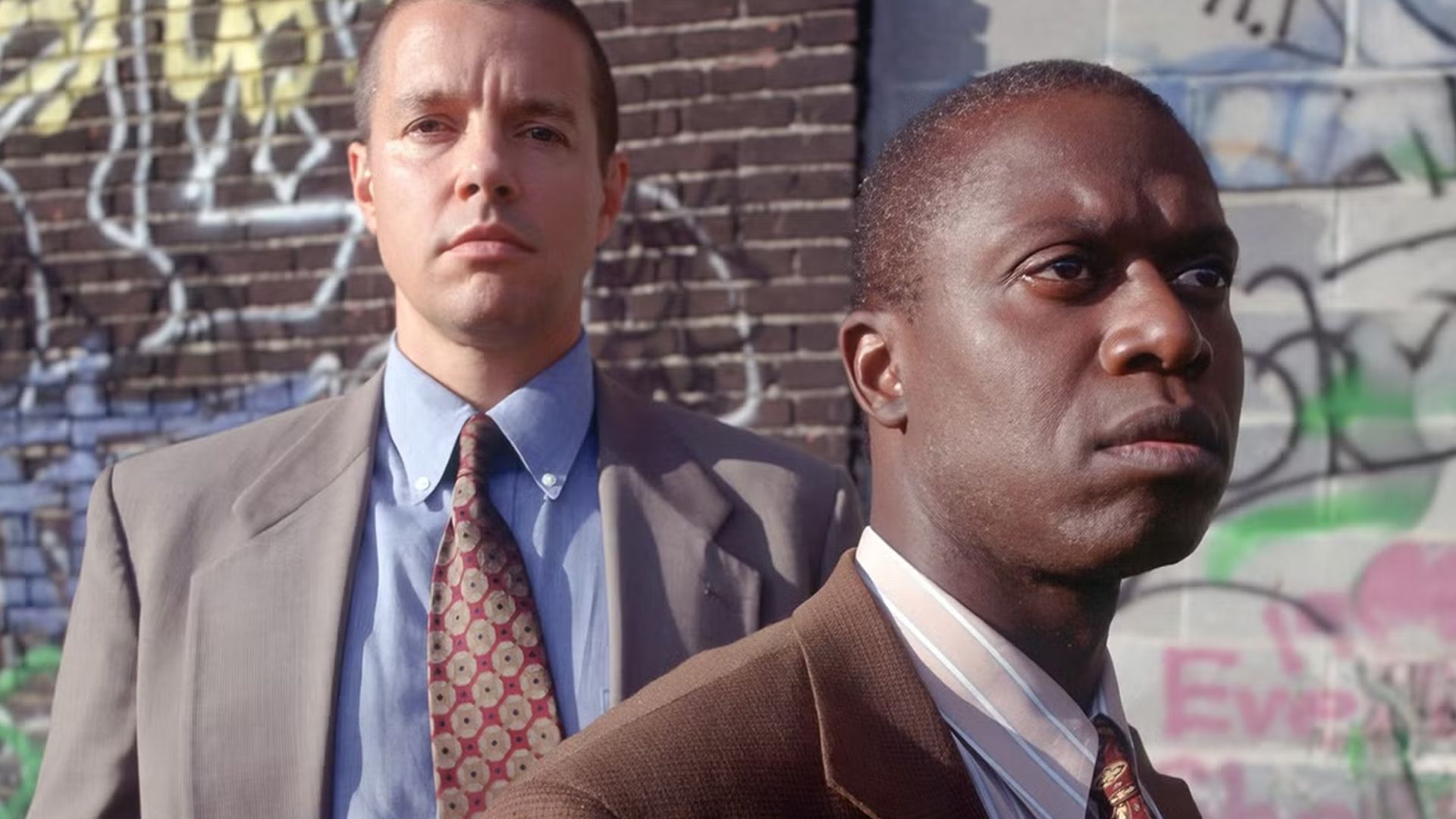
The NBC drama ran for seven seasons and stood out for its raw and realistic portrayal of detectives working in the city. Unlike previous police shows and movies, it aimed for complete authenticity, showing audiences the often harsh and unglamorous truth of police work.
Viewers suddenly saw a raw, emotionally draining look at the lives of police officers, and a world where justice wasn’t always served by the end of each show. Revisiting Homicide: Life on the Street today is interesting because you can clearly see how it influenced so many later crime dramas, even in its somewhat rough, handheld visual style.
Similar shows include The Shield, Southland, and especially The Wire, which shares a strong connection with Homicide. Homicide was originally adapted for television by creator Paul Attanasio from the non-fiction book Homicide: A Year on the Killing Streets, written by Baltimore Sun journalist David Simon. Simon later became a TV creator himself, focusing on the complex and pervasive drug problem in Baltimore, Maryland.
Cracker is a Grimy British Masterpiece Starring a Never-Better Robbie Coltrane
I’ll always remember Robbie Coltrane, of course, as Hagrid to so many, but for me, and a lot of crime drama fans of my generation, he was Dr. Fitz! That sarcastic, wonderfully blunt criminal psychologist he played in Cracker was just unforgettable. That show, set in Manchester, really delved into some dark and gritty territory when it first aired between 1993 and 1996, and it completely captivated me.
The TV show Cracker didn’t shy away from showing the harsh realities of violent crime and its effect on the detectives, like Fitzgerald, who investigated them. Many of the show’s most memorable episodes prove that the creators weren’t afraid to explore difficult and controversial subjects. A key part of Fitzgerald’s job was to get confessions from criminals – essentially, to ‘crack’ them.
The show featured shocking confessions, including a teacher accused of murdering a student, a man with memory loss suspected of a razor-blade killing, and a cult leader linked to a ritualistic murder of a young girl. These intense stories frequently tested the boundaries of what was acceptable on British television. However, the show was consistently well-made, allowing it to push those limits further than many other programs.
New York Undercover Made History For its Casting
When New York Undercover premiered on Fox in September 1994, it was a groundbreaking moment – the first police drama on American television to star two actors of color in the leading roles. It’s surprising it took so long for television executives to recognize the potential of diverse leads, but the show was significant for paving the way.
Malik Yoba as Detective J.C. Williams and Michael DeLorenzo as Detective Eddie Torres led the groundbreaking series New York Undercover, with strong support from actors like Lauren Velez (from Dexter) and Michael Michele (ER). While New York Undercover existed within the same universe as Homicide: Life on the Street, the show didn’t heavily emphasize this connection. Instead, it primarily focused on realistic stories of Williams and Torres solving cases—often involving gangs—and balancing their personal lives.
The show was a big hit for its first two seasons, but faced problems when the two main actors tried to get better contracts. One of the actors’ characters was then unexpectedly killed off at the end of season three, which many saw as a consequence of the contract dispute. While a new cast was brought in for season four, viewers had lost interest, and the show was quickly canceled.
Profit Pushed the Envelope So Hard That it Only Lasted For Eight Episodes
By 2026, a TV show featuring a ruthless and unethical businessperson climbing the corporate ladder wouldn’t raise any eyebrows. Viewers have become accustomed to watching anti-heroes – mobsters, drug lords, and even serial killers – as the main characters in popular shows, so a greedy and self-serving executive seems relatively tame in comparison.
When Fox aired the crime drama Profit in 1996, viewers flooded the network with complaints, calling the main character, Jim Profit, “Satan in a suit.” And honestly, they hadn’t seen anything quite like it before. Unlike most TV leads at the time, who usually had good intentions despite their flaws, Jim Profit was completely amoral. He was determined to succeed at the powerful company Gracen & Gracen, and he’d do anything – manipulate, bribe, blackmail, use corporate secrets, or even exploit relationships – to get to the top.
Overall, Profit was a disturbing and unsettling show that explored themes of greed, past trauma, and obsession. It presented a deliberately unpleasant depiction of corporate employees, gradually challenging the idea that people are naturally good. Sadly, the show only lasted five of its eight planned episodes before Fox cancelled it, responding to strong public criticism and very low viewership.
Murder One Took a (Previously Unheard Of) Serialized Approach to Legal Drama
Most U.S. TV dramas follow a predictable pattern: each episode presents a new case that’s usually resolved by the end. However, in 1995, the creator of L.A. Law, Steven Bochco, tried something different. He envisioned a show where a team of lawyers would work on a single, complex case throughout the entire season.
The show Murder One unfortunately only ran for two seasons. The second season was even shorter, with just 18 episodes, and many of the original cast members didn’t return. It was a disappointing end for a series that was innovative for its time, but struggled to find an audience on network television in the 1990s. The main issue was that viewers didn’t have the same easy access to TV shows back then as they do today.
Today, it’s simple to find almost any TV episode on demand, but 30 years ago, missing just one episode of a show like Murder One meant waiting for a rerun – if you were lucky. This often led to viewers getting lost in the complex storyline. To help, the network started adding increasingly lengthy “Previously On” recaps at the beginning of each episode. While Murder One was a good show and an interesting attempt at something new, it was ultimately set up to fail due to the viewing habits of the time.
The Commish Mixed Comedy and Drama to Brilliant Effect
While many ‘90s crime shows were intensely dramatic, they weren’t known for being funny. However, humor can actually be very effective when dealing with serious topics, and The Commish understood that. Ten years before Michael Chiklis became famous for his tough roles, he played a much more approachable police commissioner in this comedy-drama, set in a made-up New York suburb.
Chiklis perfectly embodied Tony Scali, a character known for his wit and unconventional approach to problem-solving. The portrayal was a wonderful homage to the real person who inspired it: Anthony Schembri, a former New York City Police Commissioner. Schembri was famous for his unique methods, including once convincing a suicidal man to step down by jokingly asking if he had the proper permit to jump from the rooftop.
Unlike typical, lighthearted sitcoms, The Commish didn’t shy away from tough issues. It realistically explored problems like police corruption, prejudice, drug abuse, and sexual harassment, alongside topics of race and immigration. In doing so, it paved the way for later shows like Monk and Castle, which successfully combined humor with deeper themes.
Found an error? Send it so it can be corrected.
Read More
- Доллар обгонит лев? Эксперты раскрыли неожиданный сценарий
- Hogwarts Sure Does Look Familiar In The New Harry Potter Trailer (But Not From The Movies)
- Disney+ Launches New Feature That Marvel Fans Will Love
- Supergirl Gets a Big Change Ahead of Release — Report
- Is There a Fire Force Season 3 Episode 26 Release Date or Part 3?
- Уфргсинтез префы прогноз. Цена префов UFOSP
- Game Of Thrones Star’s New Sci-Fi Movie Changes The Rules Of A Popular Genre
- Steamy Series ‘Outlander’ Dominates Its Raunchy Competition on Streaming
- ‘The Drama’ Review: Robert Pattinson & Zendaya Deliver a Fantastically Twisted Romcom
- Star Trek Shows Surge on iTunes Amid Franchise Uncertainty
2026-02-20 07:18