It’s common to think of movies from the 1950s as silly and old-fashioned. However, a lot of them were actually very good and remain enjoyable even now. Many horror films from that era are still genuinely frightening, either through shocking visuals or by playing on your mind – and sometimes both.
Many classic horror films from the 1950s reflected anxieties about the Cold War and the threat of nuclear disaster. However, some of these movies tapped into deeper, more timeless fears – like what happens when nature turns against us, supernatural forces become evil, or our everyday lives are completely disrupted. Here are five films from that era that still resonate with audiences today.
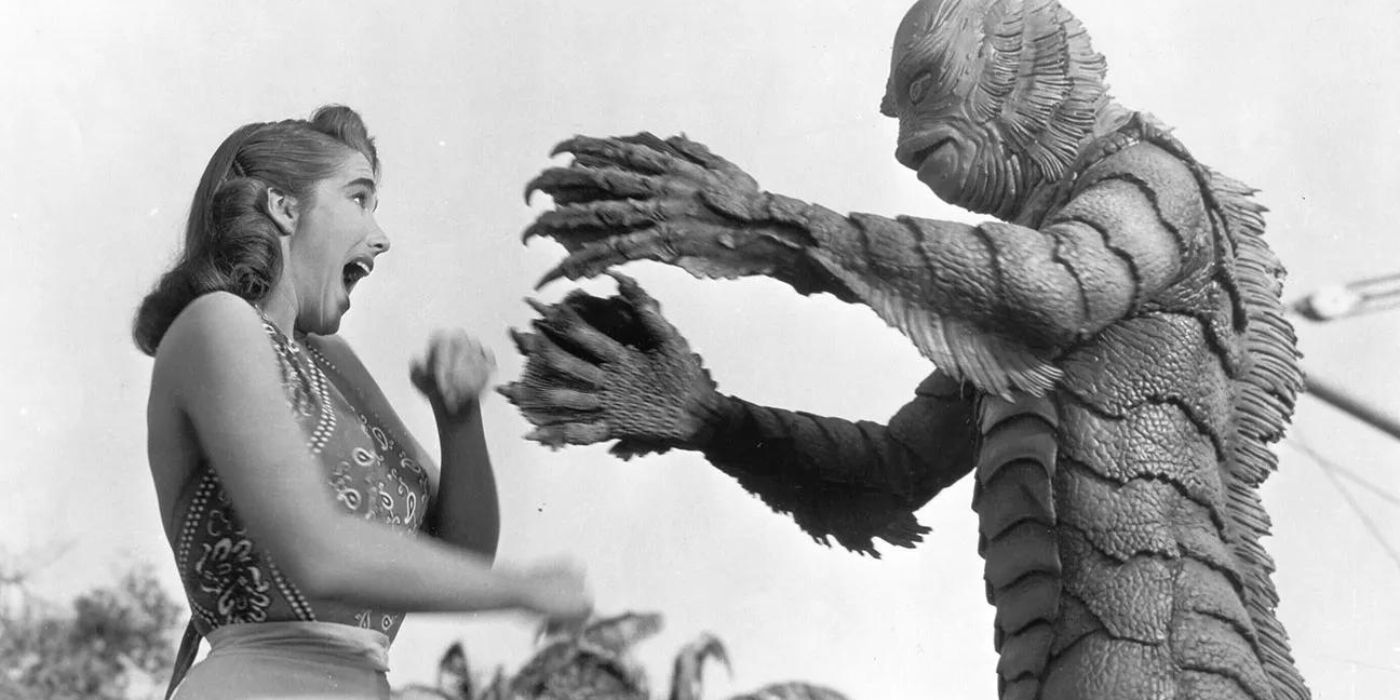
The Creature from the Black Lagoon Was the Last True Universal Monster
The Universal Classic Monsters series is often considered to have started with either The Hunchback of Notre Dame in 1923 or The Phantom of the Opera in 1925, both featuring Lon Chaney. Regardless, the series was most popular in the 1930s and 1940s. After a long break of over ten years without a new iconic monster, Universal delivered Creature from the Black Lagoon in 1954.
A remarkable fossil—a potential ‘missing link’ between land and sea creatures—is unearthed in Brazil. When scientists journey to Brazil to search for more evidence, they realize this creature isn’t just something from the past—it’s actively hunting them.
Released in the 1950s, Creature of the Black Lagoon was a groundbreaking film thanks to its impressive special effects and underwater filming. Even today, the movie maintains a spooky and captivating quality. While the creature isn’t necessarily a likable monster, it’s definitely one of Universal’s most memorable.
Tarantula Is One of the Decade’s Best Giant Monster Movies
Following the popularity of the dinosaur thriller The Beast from 20,000 Fathoms, the 1950s saw a surge in monster movies. People loved watching giant insects and creatures – like grasshoppers, birds, octopuses, and ants – wreaking havoc on screen.
Professor Deemer is conducting experiments using radiation, hoping to grow giant animals as a solution to world hunger. However, one of his test subjects – a tarantula – escapes and begins to grow uncontrollably, becoming increasingly dangerous. This sets off a chain of incredible and memorable confrontations.
I have to admit, like a lot of people, I’m pretty scared of spiders! But what’s really interesting about the old film Tarantula is that instead of using puppets like many movies did back then, they actually used a real tarantula! They used special effects to make it look huge, and honestly, seeing a real spider on screen makes it way more believable – and terrifying – than other monster movies of the time.
Invasion of the Body Snatchers Will Always Be the Best Movie About Paranoia
Great horror films often disrupt our sense of everyday life. They tap into the unsettling idea that something familiar – a child, a neighbor, even reality itself – could be terrifyingly different. Invasion of the Body Snatchers perfectly embodies this fear, perhaps more effectively than any other movie.
A doctor in a small California town starts receiving reports from people who believe their loved ones have been secretly replaced by identical imposters. When he witnesses these ‘replacements’ emerging from strange pods, he realizes the claims are true. Unlike typical alien invasions, these extraterrestrials aren’t arriving in spaceships – they’re trying to take over Earth subtly, by replacing people one by one.
Unlike many other films, Invasion of the Body Snatchers doesn’t rely on special effects. The unsettling idea that people around you might be replaced is enough to create a sense of dread. It remains a truly disturbing film and was a clear influence on movies like The Stepford Wives and Rosemary’s Baby.
20 Million Miles to Earth Proves that Stop Motion Is Still King
Many people today find computer-generated imagery (CGI) uninspiring. While it can create any visual imaginable, it often feels artificial and lacks warmth. Stop-motion animation, when done well, can bring characters to life with a personality and connection that computer animation often struggles to achieve. Even now,
When astronauts returned from a mission to Venus, their spacecraft crashed into the ocean near Sicily. Everyone on board was rescued, including a unique creature they’d brought back – a reptile-like alien named Ymir. But Ymir grew rapidly and soon began causing widespread destruction throughout Rome.
Though not as well-known as the Kraken from Clash of the Titans, Harryhausen considered Ymir his most impressive creation. Ymir is a complex character – sometimes frightening, sometimes pitiable, and blending both human and animal traits. He’s a villain, but also feels like a tragic hero. A particularly memorable moment is his fight with a circus elephant, a thrilling scene in both 20 Million Miles to Earth and the broader world of 1950s special effects films.
Christopher Lee Captured the Horror of Dracula Like No Other
Count Dracula is more than just a famous literary character; he’s a huge movie star who will likely remain popular on film for hundreds of years. Many actors have played him, from Gary Oldman to Nicolas Cage, but Christopher Lee’s portrayal in Horror of Dracula and the following sequels is considered one of the best.
Jonathan Harker, a librarian, travels to Transylvania to meet Count Dracula, but he soon disappears. When Doctor Van Helsing arrives to investigate, he finds himself caught in a clever and enduring struggle against the Count.
Several actors have played Dracula, but Christopher Lee brought a unique style to the role – he was sophisticated and alluring, like a spider luring its prey. Watching his performance, it’s clear how he transitioned from appearing in lower-budget films to working with renowned directors like George Lucas, Tim Burton, and Peter Jackson.
Found an error? Send it so it can be corrected.
Read More
- Five Nights At Freddy’s 2 Review: The Video Game Movie Sequel Limbos Under The Low Bar Set By The First Film
- Black Phone 2 Ending & Grabber’s Fate Explained
- ‘And Then The Chesty One Comes In.’ SNL’s Cut For Time Sketch Hilariously Reimagined Sydney Sweeney And Zendaya’s Euphoria
- Прогноз криптовалюты USD1: прогнозы цены USD1
- Прогноз криптовалюты BNB: прогнозы цены BNB
- It’s Been Weeks Since I Watched Freaky Tales, And I’m Still Thinking About That Random Tom Hanks Scene
- Netflix’s #1 Trending Comedy Proves Critics Are Wrong About This $523 Million Franchise
- JOJOLands Chapter 31 Release Date & Where to Read Manga
- Netflix Rolls the Dice on Live-Action Kakegurui Series Renewal for 2027
- 10 Times Lex Luthor Gained Powers
2026-03-03 00:37