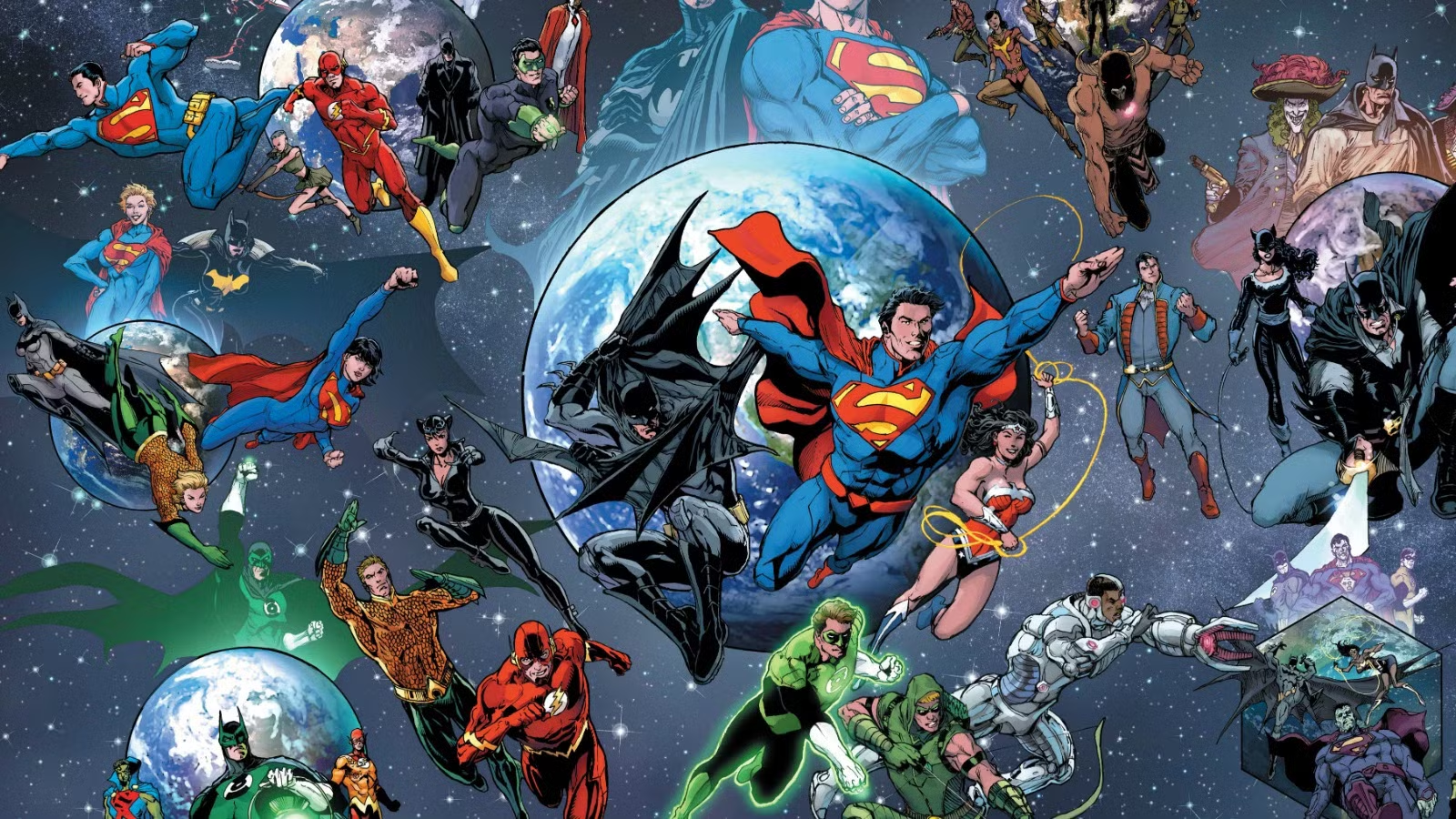
The comic book industry often relies on fresh starts, called reboots, to increase sales, particularly when popular characters like Spider-Man, Superman, and Batman experience declining interest. These reboots can range from minor adjustments – like simply restarting the numbering of issues – to complete overhauls of a character’s history. While some reboots are very successful, others don’t quite hit the mark.
Marvel and DC Comics have repeatedly reinvented their stories, sometimes by creating entirely new worlds and other times by completely resetting everything that came before. While some fans dislike these changes, finding them confusing or feeling pressured to keep up with new storylines, reboots don’t need to be huge financial successes or massive overhauls to be well-received. Companies can learn from past errors without drastically altering their universes, and fans don’t always demand sweeping changes to enjoy a good story.
Failure: DCYou Killed The New 52’s Future (Failure)
By 2014, DC’s New 52 initiative was generally successful, offering popular Batman storylines and exciting cosmic adventures with the Justice League and Green Lantern. However, things changed dramatically when DC launched DCYou, a set of comics with a flexible connection to established storylines. This new approach gave creators more freedom to reimagine classic heroes.
The DCYou initiative, along with missteps in portraying characters like Superman, disappointed many readers and marked a low point for the publishing line. This period forced the company to recognize its mistakes and ultimately led to the development of the Rebirth event. Any remaining promise of the New 52 was effectively extinguished at this time.
DC Rebirth Understood What Fans Wanted (Success)
Following a particularly dark period for the DC Universe, the Rebirth event marked a shift towards a more familiar tone, responding to requests from longtime fans. Though not a complete restart, Rebirth began the process of bringing back the DC Universe readers remembered before the Flashpoint storyline. However, it wasn’t until after the conclusion of Geoff Johns and Gary Frank’s Doomsday Clock that the universe was fully restored to its previous state.
DC fans often remember the Rebirth era with a lot of affection, and many consider it the best version of characters like Green Arrow, Superman, and Hawkman. Ultimately, it succeeded in its main goal: to reconnect with readers and offer a return to the familiar stories they enjoyed, effectively serving as an apology for past creative choices.
Heroes Reborn Was A Good Idea With Bad Execution (Failure)
The 1990s were a tough time for Marvel, bringing the company to the brink of financial ruin and causing doubts about its survival. To turn things around, they brought in artists Jim Lee and Rob Liefeld to relaunch popular characters like Captain America, Iron Man, the Fantastic Four, and the Avengers with a project called Heroes Reborn. While intended as a fresh start, Heroes Reborn quickly gained a reputation for being overly aggressive, with poor artwork and weak stories.
The most memorable thing about the Heroes Reborn event isn’t the story itself, but a single comic book cover by Liefeld – that really shows how unsuccessful it was. Despite having talented creators and good intentions, the reboot failed to connect with readers, who quickly wanted the original heroes back. Ultimately, the whole project flopped.
Heroes Return Apologized For Heroes Reborn (Success)
Following the disappointing reception of Heroes Reborn, Marvel listened to fan feedback and regained control of its characters with the Heroes Return event. This was a clear effort to win readers back by bringing in a diverse and impressive group of creators, including renowned artists like Mark Waid, Dan Jurgens, and George Perez. When the series launched, it quickly became apparent that fans were finally seeing the heroes they loved return to their former glory.
The Heroes Return event is widely seen as a key moment for Marvel Comics, as it signaled a return to respecting the established history and characterizations of its heroes. After the darker, more experimental Heroes Reborn storyline, Heroes Return brought a brighter, more hopeful tone to the main Marvel universe (known as 616) in the 2000s. Importantly, it also secured the rights to Marvel’s most popular characters, preventing the company from having to license them to other publishers.
Marvel NOW! Underwhelmed 616 Fans (Failure)
In 2012, Marvel launched the Marvel NOW! initiative, hoping to boost sales like DC had done with its New 52 relaunch. However, it didn’t achieve the same results and felt less impressive in comparison. While the initiative had promise, it quickly became filled with attention-grabbing but ultimately shallow ideas, inconsistent creative choices, and a focus on replacing established heroes with newer characters.
Marvel NOW! wasn’t a complete restart like DC’s, but it shared similar ideas – updating hero designs and bringing in new creative teams. Despite some good changes, the era ultimately felt disappointing and didn’t live up to expectations. Designed to capitalize on the popularity of the Marvel movies, it intentionally steered clear of mirroring the MCU, and ended up serving as a cautionary tale for how to connect comics and film to drive sales.
Skybound’s Energon Universe Revived ’80s Cartoons (Success)
In 2023, Image Comics’ Skybound brought the Transformers and GI Joe universes together, thanks to creators like Robert Kirkman and Daniel Warren Johnson. Though cross-overs aren’t unusual in comics, this new series quickly became one of the most popular of the 2020s, combining great concepts, skilled artists, and strong storytelling. These comics reimagine the classic cartoons for a modern audience and are already being hailed as the best versions of Transformers and GI Joe since the 1990s.
Currently, this comic is considered one of the most enjoyable available, and it’s facing less competition all the time. After the underwhelming run of Transformers and GI Joe at IDW, few expected these titles to be so popular again after 2023, but fans are thrilled. For those who grew up watching Saturday morning cartoons, this feels like the best kind of nostalgia since DC brought together characters from Hanna-Barbera and Looney Tunes.
People Still Don’t Know What to Make of Future State (Failure)
In 2021, DC Comics did something unusual with its “Future State” event, which ran for two months. It temporarily replaced their regular comic book series with new stories exploring potential dark futures for their most popular heroes. This event also introduced fresh takes on classic characters, like a new Batman named Jace Fox and a new Wonder Woman named Yara Flor.
In 2021, DC Comics was still trying to define its direction, particularly after the storyline Dark Nights: Death Metal which once again changed established continuity. Future State was their initial attempt to revitalize things, but it was followed by less successful events like Infinite Frontier, Lazarus Planet, and Absolute Power. DC didn’t truly find its stride until the ‘All-In’ initiative, and since then, things have been consistently strong.
DC’s Silver Age is the King of Stealth Reboots (Success)
For more than ten years, DC Comics featured heroes like Jay Garrick and Alan Scott as part of the Justice Society of America. Then, in 1956, DC decided to refresh its lineup for a new generation. They introduced Barry Allen and Hal Jordan, launching what became known as the Silver Age of comics—a period characterized by science fiction themes and classic superhero stories. The original, Golden Age heroes weren’t forgotten; they were reimagined as existing on a separate Earth (Earth-2), while the new heroes took center stage on the main Earth, known as Prime Earth.
The DC Silver Age didn’t begin with one specific moment, but the first team-up of the Justice League in 1960 really kicked off a new direction for the comics. For nearly twenty years, this era was known for its lighthearted stories, flexible approach to established history, and the creation of the idea of multiple universes within comics.
Zeb Welles’ Spider-Man Refused to Honor Fan Wishes (Failure)
Zeb Welles took over writing in 2022, following the well-received run by Nick Spencer. Unlike previous stories that had been slowly fixing disliked changes, Welles took the series in a new direction. He jumped the timeline ahead to Peter Parker’s near future, introduced Mary Jane Watson’s new husband, Paul, and pitted Spider-Man against a hostile New York City.
Welles’ run on Amazing Spider-Man actually became known for avoiding what fans wanted. While the Marvel Cinematic Universe was making Spider-Man popular again, this comic series instead repeated the same problems Marvel had with the character, particularly not reversing the controversial ‘One More Day’ storyline.
Crisis On Infinite Earths Began the Modern Age (Success)
In 1985, Marv Wolfman and George Perez created Crisis On Infinite Earths, a comic book event that would redefine the medium. When the powerful Anti-Monitor—a being capable of destroying universes—and Pariah arrived, the Justice League gathered heroes from across multiple realities to fight back. But Crisis wasn’t just a thrilling story; it was designed to give DC Comics a fresh start, merging different worlds into a single, unified continuity.
Following the Crisis On Infinite Earths event, DC Comics successfully relaunched its universe with titles like John Byrne’s Man of Steel and George Perez’s Wonder Woman, integrating characters previously published by Charlton Comics. This post-Crisis era struck a great balance, offering new readers accessible entry points while still appealing to long-time fans.
Found an error? Send it so it can be corrected.
Read More
- Everything We Know About Georgie & Mandy’s First Marriage Season 3
- ‘Lucky Luke’ Trailer Brings Iconic Gunslinger Back on Disney+
- Пермэнергосбыт акции прогноз. Цена акций PMSB
- 10 K-Drama Masterpieces That You Can Binge In 1 Day
- ‘I’d Rather Stick A Gun Up My A–‘ Mickey Rourke Disputes Manager’s Claims About GoFundMe Campaign To Avoid Eviction
- Belissa Escobedo, on Happy’s Place
- 2025 Batman Movie Releases Its Gorgeous First Poster
- President Trump Threatens Tariffs on Foreign-Made Films
- Anthony Hopkins & Ryan Gosling Stole the Show in This Overlooked Mystery Gem
- IT: Welcome To Derry Showrunner Teases Dick Hallorann’s Journey To The Shining
2026-02-26 00:13