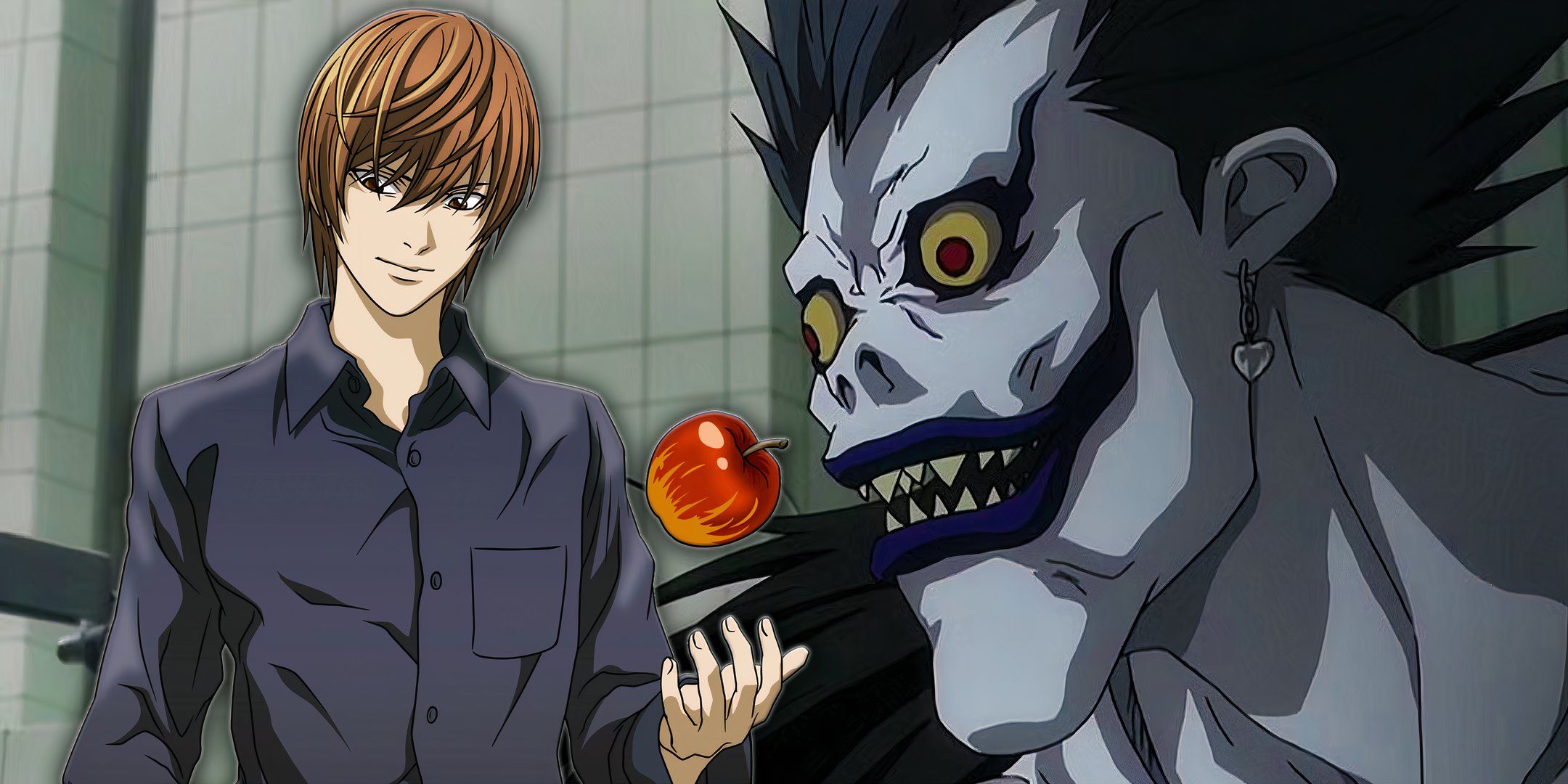
Nearly twenty years after it first aired, the final episode of Death Note – Episode 25, titled “Silence” – remains a deeply debated topic among fans. Some consider it a brilliant, suspenseful conclusion, while others believe it was a disappointing adaptation of the original manga. Now, after two decades, it’s clear that both viewpoints have merit.
Many Death Note episodes spark discussion and analysis, but Episode 25 is particularly memorable. It’s often seen as the peak of the intense battle between Light and L, culminating in L’s death and solidifying Light’s descent into complete immorality – effectively setting up the story’s final events. Some fans even stop watching after this episode! However, Episode 25 isn’t just a great moment in anime rivalry; many consider its 22 minutes to be the best anime has ever offered.
Death Note’s Manga Changes Were Deliberate & Controversial
The most debated part of Death Note Episode 25, aside from L’s death itself, is the suggestion that L somehow knew he was going to die. This differs from the original manga by Tsugumi Ohba and Takeshi Obata, and while it doesn’t change what happens in the story, it significantly alters how viewers understand L’s death and his connection with Light.
In the manga, L continues to suspect both Light and Misa, though he doesn’t realize Light is about to put his final plan into motion. The anime doesn’t directly show L figuring this out; instead, it uses new scenes and visual cues to suggest he’s starting to understand.
This episode stands out because of its use of silence. Unlike previous installments, it largely removes L’s inner thoughts, which were previously a key part of the narrative, and minimizes the usual sound effects. When sounds do appear, they’re often stark, unsettling, or dramatically louder than normal. This creates a prolonged and intensely tense atmosphere, filled with long stretches of silence that are completely new for Death Note.
The episode puts you right in the middle of the suspense, experiencing it alongside the characters instead of simply observing it. We don’t hear L’s thoughts, and we don’t get the relief of seeing him figure things out as he goes—just like Light has felt throughout the series, always trying to predict L’s next move and bracing for the inevitable. By keeping L’s internal process hidden, the episode makes the audience feel what Light feels at the story’s most intense moment.
Two Scenes Define Death Note’s Iconic Legacy
The most memorable part of Death Note Episode 25 is the long showdown between Light and L. It’s essentially one continuous scene that moves from the rainy rooftop of the police headquarters to the staircase inside where they try to dry off. Because the characters’ thoughts aren’t shown, the tension builds quickly. They don’t say much, but every word carries weight, and the pauses between lines feel just as important as the dialogue itself.
The scene on the rooftop begins with Light discovering L standing alone in the heavy rain, an unusual sight. L has been behaving oddly all day, and Light is unsettled by it. Light almost takes the opportunity to kill L, but he’s unsure if this is another one of L’s tricks. In fact, the episode is so cleverly constructed that even dedicated Death Note fans are left guessing, as the familiar guiding narration is absent.
L’s way of speaking is strange – it’s both broken and seems carefully planned. He mentions hearing church bells, admits his words don’t make sense, apologizes to Light, and avoids looking him in the eye. Apologies are rare for L, and usually have a specific purpose, but this one feels different because the scene is already presented as a moment of truth. It’s unclear whether the apology comes from fear, acceptance, or a last-ditch effort to disturb Light, and the show intentionally leaves it open to interpretation.
The tension rises when L directly questions Light about his honesty. Light responds with a typical, practiced answer about human imperfection, claiming people aren’t inherently evil – a response he’s used before to maintain his innocent facade. Surprisingly, instead of challenging Light’s answer as he usually does, L seems content, admitting he anticipated a response like that.
The rain in this story is heavily symbolic, suggesting themes of purification, punishment, or even catastrophe, drawing on biblical imagery. It strongly hints at an overwhelming flood – a chaotic event followed by a perceived ‘cleansing.’ This aligns with the character Light’s goal of eliminating L and then ridding the world of criminals. The symbolism is particularly noticeable given the episode’s existing religious imagery, like church bells and stained glass, making the connection hard to miss.
Rooftops and rain are common symbols in anime for moments of emotional openness. Often, characters reveal their feelings or experience heartbreak in these settings. This scene uses those familiar images, but with a different meaning. Instead of a romantic vulnerability, L is facing a deeper, more personal crisis. He looks up as if contemplating his future, and his apology suggests he believes there is no future to be had.
Death Note’s Staircase Scene Elevates The Entire Story
The staircase scene in Death Note builds on the awkwardness of the previous rooftop encounter, but makes it feel much more personal. After coming inside and drying off, Light sits down on the stairs while L approaches him. L comments on how bad the rain was and apologizes again, then unexpectedly kneels to wash and massage Light’s feet, calling it a way to make amends. This moment deliberately echoes the biblical story of Jesus washing the feet of his disciples, even knowing one of them would betray him.
L isn’t a savior, and the story doesn’t portray him as one. While he’s not a criminal, he’s definitely flawed. He readily manipulates people and doesn’t hesitate to sacrifice others if it supports his theories. This moral ambiguity is what makes the foot-washing scene compelling – it’s about complex characters, not a simple battle between good and evil. L isn’t forgiving Light; he’s trapping him.
The tension in this scene comes from Light losing control – something he’s not used to. Light carefully crafts his image and how others perceive him. L’s unexpected physical closeness – kneeling and pulling Light into an intimate moment – shatters that control. When L says, “You’ll get used to it,” he isn’t flirting; he’s mocking Light’s belief in his own superiority, suggesting that others will continue to idolize him even after L is no longer around.
The scene closes with the line that sparks all the debate: “It’ll be lonely, won’t it? We’ll be parting ways soon.” Light remains silent, and this silence is the strongest hint in the episode that L understands what’s happening. L never directly acknowledges Light’s win; he doesn’t give Light the confirmation he’s looking for. Instead, he describes their ending as a separation, which feels like both a final, pointed remark and a sincere acknowledgment that their battle meant something to him.
The poignant mix of tension and connection is what makes this scene so memorable, even for those not invested in the romantic interpretation. Light and L weren’t truly friends, nor did they fully trust each other, but they were uniquely matched in intelligence. Their complex game finally captivated them both, pushing them to their limits, and this is what distinguished Death Note from other thrillers that depended on action to drive the plot. The real heart of the show was their battle of wits.
Watching the anime, I noticed Light’s victory felt…complicated. While L still dies, it doesn’t feel like he goes down without knowing the truth. He clearly suspects Light is Kira, and seems to accept his fate, even if he can’t definitively prove it. That felt like a kind of win for him – not in terms of beating Light, but in finally understanding what was happening. It really highlighted how Light was the only one left clinging to the idea that his actions were justified, when it was really just about control.
Death Note’s Saddest Episode Still Hurts 20 Years Later
These scenes are well-known for being difficult to understand definitively. They spark debate because there’s no single, clear way to interpret them. The rich symbolism, sparse dialogue, and lack of insight into the character’s thoughts combine to create an episode that doesn’t offer emotional closure, even though the plot itself is resolved. This is why people continue to discuss and debate it even after twenty years – the episode resists a simple, satisfying ending.
L’s death is especially impactful because the story doesn’t explain his final thoughts. In the manga, we hear what L is thinking as he figures things out. But the anime does something different. It’s already emphasized honesty throughout the confrontation, so it doesn’t explicitly show L’s realization. Instead, Light’s smile at the very end feels like a final, honest moment – a brief glimpse behind his carefully constructed facade that proves everything L suspected was true.
Light’s acting after the incident is what truly makes the episode memorable. He delivers a convincing performance, feigning panic and claiming they’re all in danger, which successfully scares the remaining task force members into withdrawing. He then cleverly manipulates the situation to ensure he’s the first to find Rem’s notebook. Finally, he boldly announces his commitment to catching Kira and positions himself as the new leader of the investigation.
The order of events is crucial because eliminating L isn’t just about losing a popular character; it’s about removing the element that truly made Light compelling. L constantly challenged him, pushing Light to be clever and strategic. Once L is gone, Light becomes complacent and overconfident, fundamentally changing the series for the worse. The intellectual battle ends, and Light fully descends into villainy.
Episode 25 is a pivotal moment in how the audience views Light. Before this, it was easier to sympathize with him, as the show often portrayed criminals as deserving of their fate and positioned Light as the hero. However, this episode makes it impossible to ignore his true nature. Light isn’t simply evil because he kills; it’s the cold, calculating way he manipulates people’s loyalty, fear, and sadness that reveals his wickedness.
The manga provided a definitive end for L, but the anime stretched out his final moments. Episode 25 avoids a clear resolution, instead hinting at L’s thoughts and feelings as he dies. This leaves viewers questioning what he understood, when he realized it, and whether he accepted his fate or fought against it. While Light seemingly triumphs, the episode makes his win feel empty. Even after twenty years, the story remains unresolved, and this unsettling feeling is precisely what makes the episode “Silence” so memorable.
Read More
- ЭсЭфАй акции прогноз. Цена акций SFIN
- HBO’s The Penguin: A Stellar Cast Powers This Gotham Crime Drama
- Mel Gibson’s $610M Epic Becomes Global Streaming Hit As 2027 Sequel Draws Closer
- Why Atonement Is Officially The Most Devastating Movie Streaming On Netflix
- ДВМП акции прогноз. Цена акций FESH
- 12 Famous Actors Who Played Batman (That Everyone Forgot About)
- Sci-Fi Movies That Are Better Than Dune
- Star Wars Is Giving Us A Brand-New Duel Of The Fates, 27 Years After The Phantom Menace
- Доллар обгонит бразильский реал? Эксперты раскрыли неожиданный сценарий
- Lord of Mysteries Episode 8 Release Date, Time, Where to Watch
2026-01-10 05:17