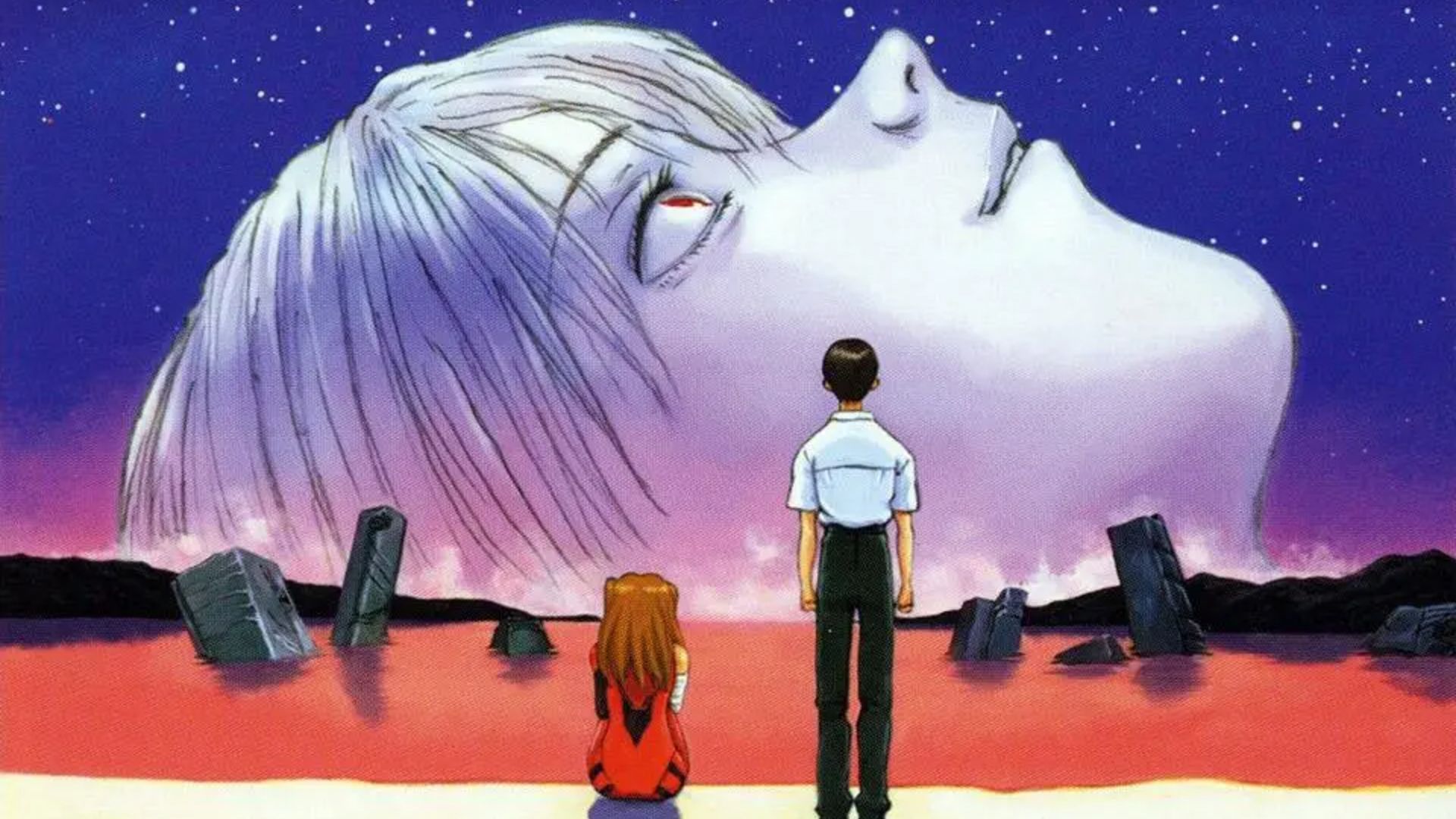
Even after many years, remains a truly iconic mecha anime series. It’s also famous for having a surprisingly complex storyline, particularly towards the end. While some mecha shows are simpler to follow, this complexity doesn’t mean it’s poorly made – quite the opposite, in fact.
While Evangelion is hugely popular, many other excellent mecha anime deserve just as much attention. Some are part of larger series and offer a similar level of depth and complexity. Though they may not be as famous, these shows are definitely worth checking out, particularly if you found Evangelion‘s story confusing at times.
First released in 1997, The King of Braves GaoGaiGar was the last major installment in the Brave series from Sunrise and Takara. The series was short-lived, serving as a bridge to something else. GaoGaiGar featured many robots that could transform into different vehicles and combine with each other, and the main robot was no different. Though not particularly complicated, it offers a refreshing change of pace after watching a much darker and more psychologically intense mecha anime from around the same time.
Unlike the complex and often dark themes of Neon Genesis Evangelion, GaoGaiGar was designed as a purely action-focused super robot series. This approach meant it didn’t initially appeal to fans who were expecting something similar to Evangelion‘s style, and it remained somewhat overlooked. However, it’s a fantastic option for those seeking a more straightforward, exciting robot adventure, and a satisfying conclusion to its franchise.
Gasaraki, like many anime created after Evangelion, adopted a similarly dark and serious tone. However, it differs by focusing on a more realistic, military conflict with a Middle Eastern nation. This storyline feels just as relevant now as it did when the series was first made, and the cultural details add significant depth beyond simple background elements.
Gasaraki feels deeply spiritual, drawing heavily from Japanese culture and the Shinto religion. Unlike Evangelion, which only hinted at Judeo-Christian themes, Gasaraki fully incorporates these spiritual elements into its story. It’s a complex and unique mecha series for its time, and features particularly exciting action scenes.
Brain Powerd was a mecha anime from the late 1990s that also appeared as manga and light novels. It stood out in its genre with a genuinely post-apocalyptic setting, even more so than Evangelion, focusing on humanity’s struggle to survive an alien invasion. Notably, it was co-created by Yoshiyuki Tomino, the creator of Gundam, giving it strong roots in anime history.
I absolutely loved the environmental themes in Brain Powerd – the whole future of Earth really hinged on this ecological disaster, which was super compelling! And the mecha designs? They’re unlike anything I’ve seen, really slender and almost fragile-looking. It’s a really fast-paced show with a surprisingly deep story, and honestly, it felt like Yoshiyuki Tomino’s take on Evangelion in a lot of ways – especially when it came to the overall themes and mood.
Many viewers saw RahXephon as similar to Neon Genesis Evangelion, and that’s understandable. Both shows feature complicated relationships with mothers, mecha that feel both mechanical and alive, strange enemies, and religious themes. However, RahXephon is generally more direct and less complex than Evangelion.
RahXephon feels like a fresh take on Brave Reideen, even sharing some design similarities in the robots themselves. When the series touches on religion, it’s meaningful and goes beyond simple imagery. Though the plot can be complex, it’s easier to follow than the ending of Evangelion, ultimately delivering a more rewarding narrative.
Interest in anime with complex themes is higher than ever, but it wasn’t as popular in the 1990s. The Vision of Escaflowne uniquely blended giant robots, fantasy, stories of being transported to another world, and a touch of romance – a combination very different from Evangelion. Although it was released just a year after Evangelion, Escaflowne didn’t try to tear down the genre in the same way, and it remains a beloved classic.
If you’re looking for a mecha anime with a touch of fantasy, romance, and adventure, Escaflowne is a great choice. It’s also surprisingly appealing even if you don’t usually enjoy mecha shows, because it blends in elements from many different genres. Approaching its 30th anniversary, Escaflowne remains a fantastic example of how to do the isekai genre well.
Released in the late 1990s, Gunbuster was an early work by the famed animation studio Gainax, which later became known for Evangelion. Interestingly, both series were created by Hideaki Anno. While Evangelion often explored darker and more complex themes, Gunbuster was a lighthearted and enjoyable story – essentially an anime version of the movie Top Gun.
Gunbuster follows two young friends determined to become expert mecha pilots, and its story playfully references a popular tennis anime. Beyond its lively and energetic tone, the series explores serious themes like growing up and the effects of time travel. It’s become a defining work for the mecha genre and a symbol of late 80s/early 90s anime, inspiring a new wave of fans.
Released in the 1990s, Turn A Gundam aimed to bring together all previous storylines into a single, unified world. While appearing to be set in its own unique setting where mobile suits (called “dolls”) are uncommon and a steampunk aesthetic is present, the series is actually set in a future devastated by the events of nearly every prior Gundam anime. This effectively created a complete and connected timeline, and the Turn A Gundam itself featured designs and abilities characteristic of “super robot” anime.
Though often overlooked, Turn A Gundam is a highly praised series that offers a hopeful contrast to Neon Genesis Evangelion. While both are set in a post-apocalyptic world that still retains elements of civilization, Turn A Gundam‘s powerful abilities in its final stages echo those seen in the climax of Evangelion and the End of Evangelion movie.
Inspired by a manga of the same name, Bokurano takes apart the giant robot genre even more thoroughly than Neon Genesis Evangelion. The story centers around a group of children who are told to pilot a massive robot as part of a strange “game” by an enigmatic figure. They soon discover the consequences of playing are far more serious – and devastating – than they could have imagined.
Both the anime and manga versions of Bokurano are known for their intense and often shocking violence, which isn’t surprising considering it was created by Mohiro Kitoh, the author of the similarly dark Shadow Star Narutaru. However, Bokurano is easier to follow than Evangelion, making it a good choice for viewers who want to see complex mecha ideas fully explored.
Though packed with exciting robot battles, Argento Soma was an anime that also deeply explored its characters and their motivations. The story centers around guilt and revenge, following a scientist who is reborn with the goal of getting back at the monstrous creation he helped build to fight off aliens. This leads to plenty of conflict and suspense, and constantly makes you question who the real enemy is.
Argento Soma creates a dark and atmospheric mood, emphasized by the story’s frequent focus on complex procedures and regulations. The exciting mecha battles are effective because they aren’t the central point of the narrative. While not widely recognized, this anime is truly commendable for its bold and creative vision.
I remember the original Gridman series – it was a live-action special effects show that didn’t quite get the same attention as Super Sentai or Kamen Rider. Interestingly, some of its footage was actually used to make the American show Superhuman Samurai Syber-Squad. But then, in the late 2010s, the anime SSSS.Gridman came along – the title was a nod to both the American adaptation and the original Japanese series – and it really brought the franchise back to life. It reimagined Gridman, transforming him from a hero battling in cyberspace into a giant robot. Made by Tsuburaya Productions and Trigger, it ended up launching one of the most popular new mecha series in recent years.
Unlike the complex and thought-provoking themes of Evangelion, Gridman shines with its unique visual style. Created by Trigger, it’s famous for its nods to the classic Transformers series. While it hasn’t reached the same legendary status as Neon Genesis Evangelion, Gridman has since expanded with a sequel anime and a movie, and many believe it paved the way for the recent surge in popularity of tokusatsu-inspired anime.
Read More
- Доллар обгонит лев? Эксперты раскрыли неожиданный сценарий
- Daredevil Born Again Reveals Full Look At Bullseye’s Comic-Accurate Costume In Season 2
- Hogwarts Sure Does Look Familiar In The New Harry Potter Trailer (But Not From The Movies)
- Netflix’s 8-Part Psychological Thriller Is Its Best New Show To Binge This Weekend
- Disney’s Greatest Sci-Fi Franchise Of All Time Finds New Streaming Home
- The Last Of Us Season 3 Set Photos Reveal Kaitlyn Dever’s Abby Return & New Character Lev
- Apple TV’s New Horror Series Is Stephen King-Like Nightmare Fuel In First Widow’s Bay Trailer
- HBO’s Harry Potter Series Lands 2026 Release Date
- Disney+ Launches New Feature That Marvel Fans Will Love
- Supergirl Gets a Big Change Ahead of Release — Report
2026-02-21 06:39