
While few science fiction books match the captivating story and detailed universe of Dune, several come close. Originally published in 1965, the core Dune series consists of six novels by Frank Herbert. Following his father’s passing, Brian Herbert expanded the story with 20 more books, co-authored with Kevin J. Anderson.
As a big fan, I’ve been keeping track of all the different ways Frank Herbert’s Dune has been brought to life! So far, there’s the original 1984 movie, a miniseries from 2000, another one in 2003 that covered the later books, and now Denis Villeneuve’s amazing movie series. And just recently, they’ve started a TV show called Dune: Prophecy which is a prequel – I’m really excited about that!
It’s impossible to fully recreate the epic scope of Frank Herbert’s Dune, but several other science fiction novels capture similar elements of intricate world-building, ecological themes, and philosophical ideas. These books are great options to read while you’re anticipating the release of Dune: Part Three on December 18th.
The Forever War (1974)
Author: Joe Haldeman

Most science fiction focuses on grand, sweeping stories, which can make it hard to connect with on a personal level. But Joe Haldeman’s The Forever War is different. Inspired by Haldeman’s own time in the Vietnam War, the novel tells the story of William Mandella, a college student who gets drafted into a long and difficult war against a formidable alien race called the Taurans.
Though it appears to be a standard space war story, The Forever War is much deeper than that. The novel features soldiers who travel at nearly the speed of light, leading to a phenomenon called time dilation. This means time moves slower for them compared to people back on Earth.
Though Mandella’s absences only last a few months, vast amounts of time pass on Earth. Each return brings him to a changed world, making him feel more and more disconnected from the home he’s trying to save. Similar to novels like Dune and The Forever War, this isn’t simply a sci-fi adventure; it’s a story that explores themes of war and loneliness, using the concept of time as a central element.
Empire Of Silence (2018)
Author: Christopher Ruocchio

Christopher Ruocchio’s Empire of Silence feels like a personal story because it’s told from the perspective of the main character, Hadrian Marlowe. The novel follows Marlowe’s life, detailing his experiences as a nobleman, a soldier, and ultimately, the man responsible for extinguishing the sun. Throughout his journey, Marlowe transforms from a hero into a villain, and finally, a legendary figure.
Like Dune, Empire of Silence blends space adventure with political intrigue, a strict class system, and thoughtful philosophical ideas. Both books are epic in scope, but Empire of Silence feels more intimate because the story is told from a personal perspective by the main character, Marlowe.
Hyperion (1989)
Author: Dan Simmons

Dan Simmons’s 1989 novel, Hyperion, was remarkably innovative for its time, and continues to stand out as a uniquely complex science fiction story. The novel follows seven pilgrims as they journey to the planet Hyperion, each with their own individual motivations.
What makes Hyperion so impressive is its unique structure. It doesn’t read like a single novel, but rather a collection of seven distinct stories, each told from a different character’s perspective. Despite being so varied, these stories blend together beautifully to create a grand, sweeping saga of politics, religion, and war across the stars.
The Dispossessed (1974)
Author: Ursula K. Le Guin

While Dune is famous for its epic scale, The Dispossessed stands out for being a more focused, yet equally captivating, story. It follows Shevek, a physicist, and explores the differences between two very different societies: Urras, a wealthy and comfortable world, and Anarre, a challenging moon with a society built on freedom and without traditional leadership.
Shevek, unhappy with life on his home planet, makes the rare journey to Urras to share a groundbreaking idea he hopes will benefit everyone. While not a story of war or epic landscapes, The Dispossessed powerfully explores themes of freedom, social structure, and the restrictions placed on society.
Foundation (1951)
Author: Isaac Asimov

Isaac Asimov’s Foundation is a landmark science fiction novel from the 20th century. What makes it unique is its use of “psychohistory,” a technique that analyzes the past to foresee future events. The novel’s main character, Hari Seldon, a mathematician, predicts a 30,000-year dark age for humanity through his research.
To prevent a massive disaster from lasting a millennium, he establishes an organization called the Foundation and recruits other gifted people to join him. Unlike stories like Dune which are tied to politics and religion, the Foundation centers on science, mathematics, and physics, exploring whether we can use history to foresee the future.
Foundation isn’t limited to a single time period. The story unfolds across many generations, showing us how Seldon’s plan develops and the impact it has. This allows us to witness the decline of an empire and the disasters that follow.
The Three-Body Problem (2006)
Author: Liu Cixin, English Translator: Ken Liu

The Three-Body Problem is the first book in the epic sci-fi trilogy, The Remembrance of Earth’s Past, and explores the familiar idea of an alien invasion. The story begins during China’s Cultural Revolution, where astrophysicist Ye Weijie witnesses the tragic death of her father. Disillusioned with life on Earth, she creates a way to send a message into space, hoping to reach intelligent life beyond our planet.
After eight years, Ye receives a response from the Trisolarans, aliens who have discovered Earth and intend to invade. They’re trying to escape their own dying planet, a consequence of being unable to solve a complex scientific problem. This sets the stage for a conflict between two groups of humans: one believes humanity is beyond saving, while the other tries to help the Trisolarans and find a solution to their crisis.
At its heart, The Three-Body Problem is a grand story exploring humanity’s role in the cosmos, the power of science, and the potential dangers – or benefits – of encountering alien life. It’s a tale that asks whether we, as a species, are worth saving, and offers a glimmer of hope amidst the uncertainty.
Red Rising (2014)
Author: Pierce Brown
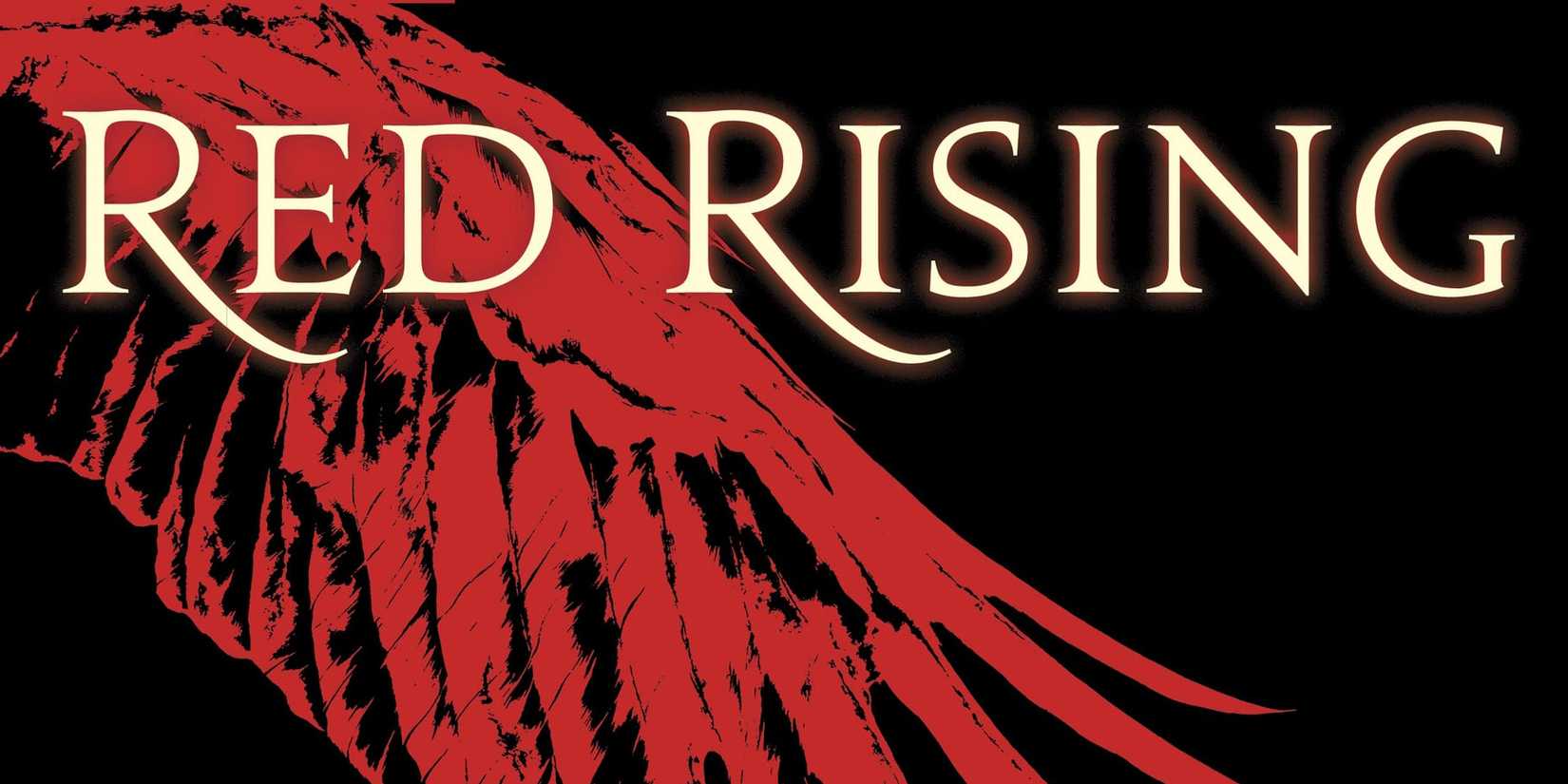
Like The Hunger Games, Red Rising explores a dark, futuristic world. The story takes place far in the future, after humans have spread throughout the solar system, and society is rigidly divided by a color-based class system.
In Pierce Brown’s Red Rising, society is divided between the working-class Reds (miners) and the wealthy, ruling Golds. After the death of his wife, the protagonist, Darrow, undergoes a dangerous transformation to appear as a Gold, with the goal of dismantling the upper class from within. This novel is a fast-paced, intense, and action-filled story. While it doesn’t build as slowly as Dune, its compelling characters, intricate world, and unique societal structure make it a standout for science fiction readers.
The Hitchhiker’s Guide To The Galaxy (1979)
Author: Douglas Adams
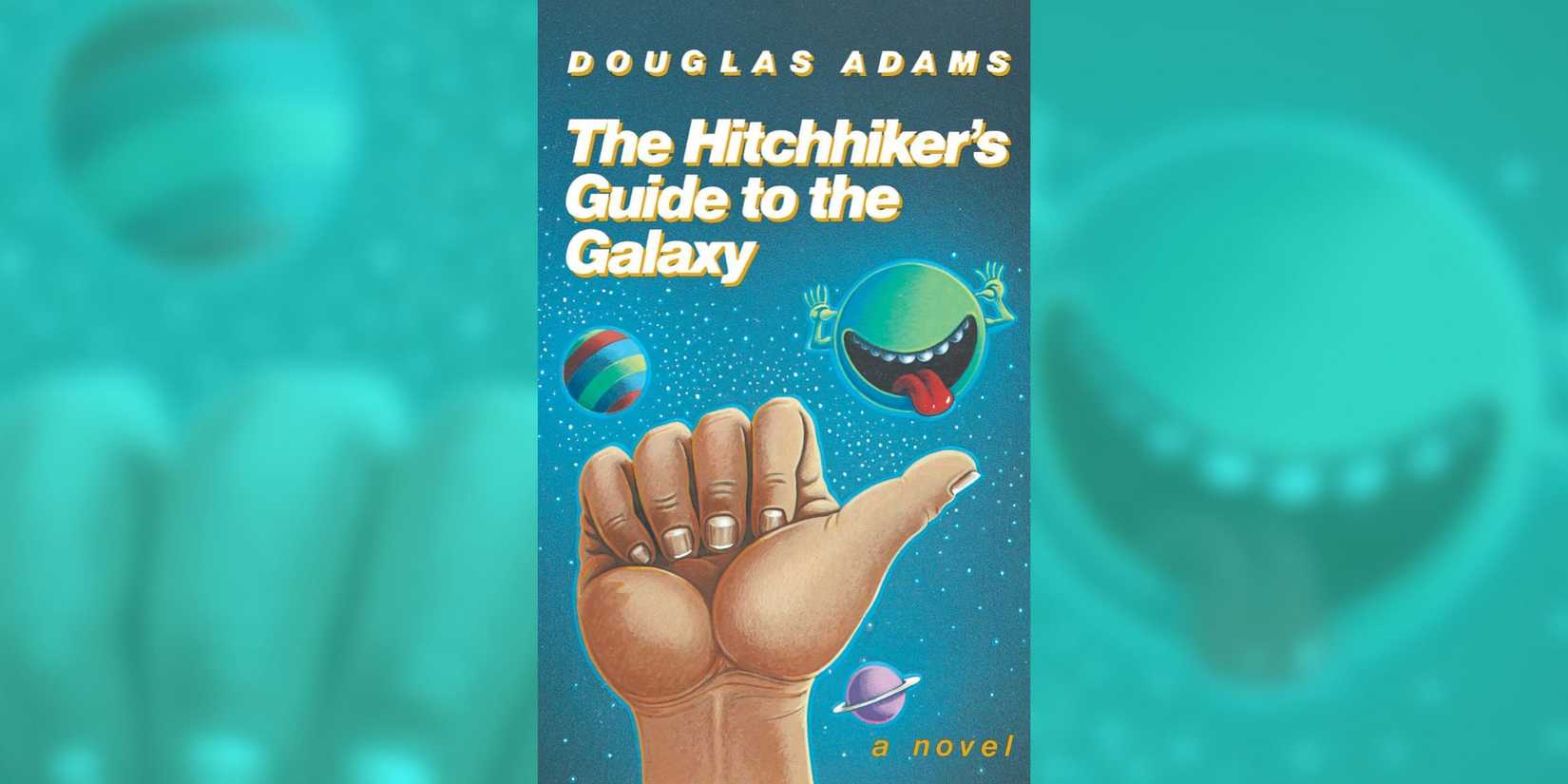
Many science fiction stories are dark and pessimistic, but The Hitchhiker’s Guide to the Galaxy is different. It’s a funny story about an ordinary Englishman named Arthur Dent whose bad day turns catastrophic when Earth is destroyed to make way for a galactic highway. The book proves that sci-fi can be genuinely enjoyable.
Okay, so things went from bad to utterly disastrous for me. Luckily, my friend Ford pulled me off Earth just as it was demolished to make way for a hyperspace bypass! We managed to hitch a ride on a Vogon spaceship, but it wasn’t a smooth journey. We got caught, and let me tell you, the Vogons have a unique method of torture – they make you listen to their poetry. Seriously, it was awful. Absolutely awful.
The Hitchhiker’s Guide to the Galaxy is a delightfully silly novel. It’s a humorous and touching story that uses space travel to explore themes of friendship and what it means to encounter other life forms.
The Martian (2011)
Author: Andy Weir

Andy Weir, the author of popular science fiction, became famous with his novel The Martian. He originally published it himself in 2011, and it was later picked up and republished by Crown Publishing Group in 2014. The story follows astronaut Mark Watney, who is mistakenly thought to be dead and left stranded on Mars. Using his knowledge of botany and engineering, he must find a way to survive on the harsh planet. The Martian is a captivating novel that truly draws you in.
This is a gripping story packed with tension and suspense. You’ll constantly be on the edge of your seat, questioning whether Watney has what it takes to make it. Just when things seem to be improving, new dangers arise, keeping you guessing until the very end.
The Expanse Series (2011-2021)
Author: James S. A. Corey
Often called the ‘Game of Thrones’ of science fiction, The Expanse is a unique and compelling space opera. The story takes place in the future, where our solar system is politically divided between three major groups: Earth, a haven for the rich; Mars, a powerful and technologically advanced planet; and the Belt, a region where workers face harsh conditions and exploitation.
When James Holden and the crew of the Rocinante search for a missing person, they stumble upon a conspiracy involving a strange substance called the protomolecule, which can amplify human capabilities. This discovery launches them into a vast story filled with political maneuvering, compelling antagonists, and conflicts between planets – a struggle between those clinging to control and those fighting for a better future.
Unlike Dune, which centers around a chosen one, The Expanse avoids that common storyline. However, if you loved the expansive universe and large-scale war in Herbert’s novels, you’ll likely enjoy The Expanse as well.
Read More
- Taylor Sheridan’s Mayor of Kingstown Kills Off Tracy in Season 3
- НОВАТЭК акции прогноз. Цена акций NVTK
- Прогноз криптовалюты OP: прогнозы цены OP
- James Cameron Blasts America: Hollywood Billionaire Trashes the Nation That Made Him Rich
- Why Star Wars’ 2-Part Prequel Masterpiece Was Missing Key Rebel Character Explained
- Heated Rivalry Star Christina Chang Discusses Season 2 and Handling Fame
- House of the Dragon Season 3 Teaser, Photos Reveal New Character
- Captain America’s Cut Fantastic Four First Steps Scene Revealed (Report)
- ‘I’m Gonna Give You Receipts For Free.’ Todd Chrisley Doesn’t Mince Words About His Daughter Lindsie Making Blackmail Claims And More Against Him
- Happiness Apocalypse: Inside Vince Gilligan’s Brave New Sci-Fi World At Apple TV
2026-03-23 21:15