It can be surprisingly satisfying when a show deliberately goes against the patterns it’s spent a long time building. After a few episodes, viewers settle into expectations and trust the show to stay consistent. But when a storyline breaks that trust and offers something truly different, it can become the most memorable part of the entire series.
I’m a huge anime fan, and one thing I really love is when a series throws you a curveball with an arc that’s totally different from the rest. It’s amazing when a fast-paced action show suddenly slows down for a peaceful interlude, or vice versa! What makes these arcs so special isn’t necessarily that they’re better than other parts of the story, but that they feel completely unique. They almost break the established rules of the world, stripping away the usual tropes and letting the story explore something new, even if just for a little while. Then, just as quickly, everything returns to normal, and that contrast is what makes it so impactful to me.
Endless Eight Weaponizes Repetition Against the Audience
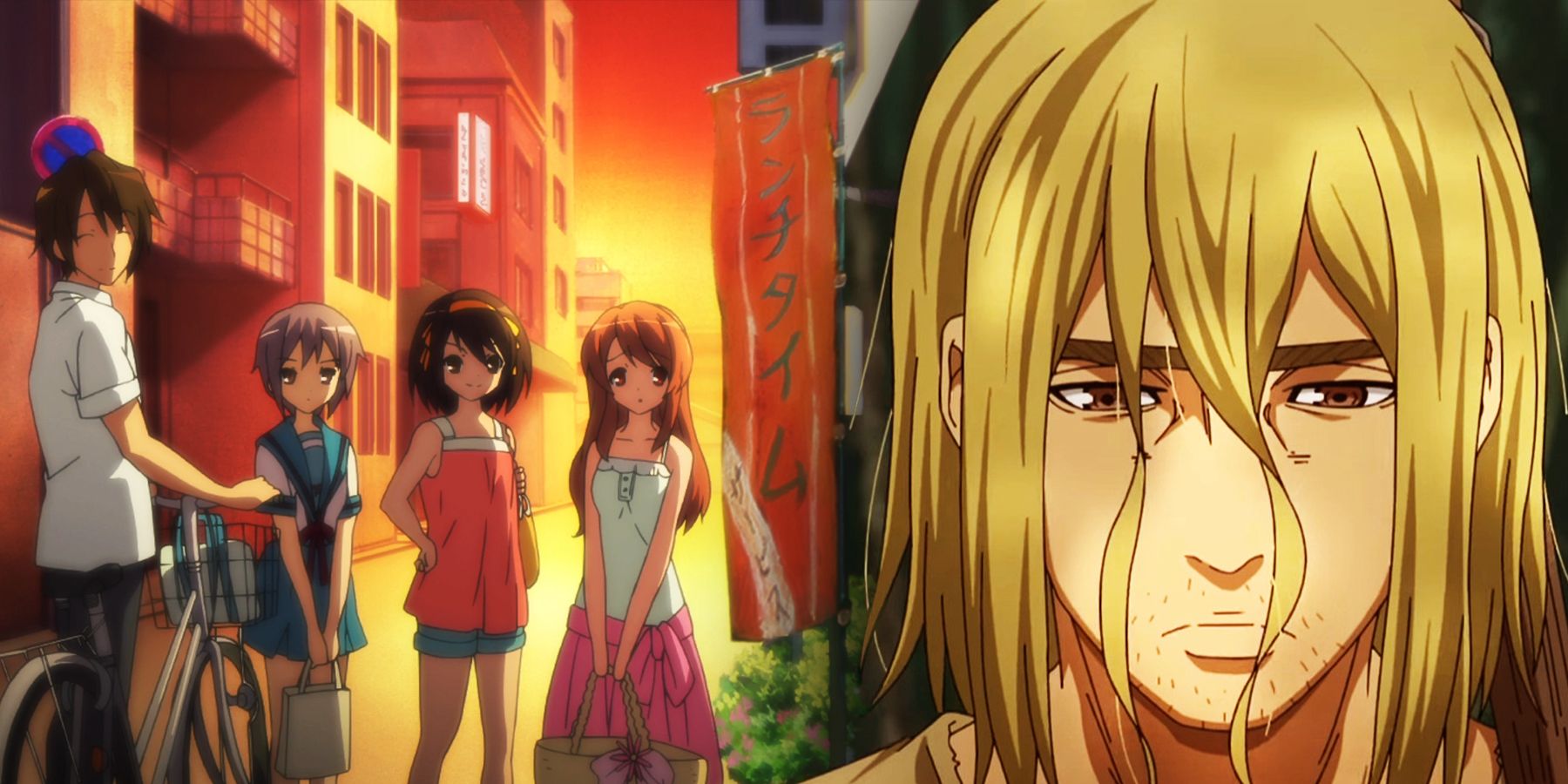
The Melancholy of Haruhi Suzumiya is known for being clever and playing with typical story tropes. However, the first season doesn’t hint at the ambitious approach Kyoto Animation took with the ‘Endless Eight’ arc. Instead of quickly showing a two-week time loop with fast cuts and summaries, the studio created eight almost identical episodes, each fully animated. This unusual choice makes the audience really feel how overwhelming Haruhi’s control over reality is, and how much Nagato suffered as a result.
When the decision was made, many fans stopped following the series, but surprisingly, it’s become the most talked-about storyline. The series had always been inventive with its storytelling, but this particular arc, “Endless Eight,” takes that to a whole new level, changing how viewers connect with the show.
The Near and Mello Arc Exposes What Made L Irreplaceable
Death Note became famous for the intense psychological battle between Light Yagami and L – their scenes together were incredibly gripping. After L’s death and the end of their rivalry, the story lost that central focus. Instead of one main conflict, the tension spread out across several different storylines and investigations.
Near and Mello, who took over after L, investigate Kira in very different ways. Near prefers a careful, organized approach, while Mello is more reckless and disruptive. This difference in style shifts the focus of the story from a single, intense chase to several competing investigations happening at once.
The Election Arc Is Deliberately Anticlimactic After Chimera Ant
The Chimera Ant arc in Hunter x Hunter built up for over fifty episodes, leading to a major showdown. The story then shifted to the Election Arc, which focused on the Hunters Association’s internal politics and a leadership election, along with Killua’s family. Director Hiroshi Kojina and the team at Madhouse didn’t try to create another arc of the same size, and the anime ended on a somewhat disappointing note.
The Election Arc feels like a release of tension after a very intense period, and it subtly brings Gon and Killua’s friendship to a definite end – more so than the arcs filled with fighting. While many Hunter x Hunter stories show the dangers of gaining power, this arc focuses on the established systems and world that have always been part of the story. This approach might not appeal to everyone, but it broadens the scope of Hunter x Hunter and sets the stage for some truly excellent story arcs that appear only in the manga.
Farmland Saga Is a Different Show Wearing Vinland Saga’s Name
The first season of Vinland Saga is a violent story of revenge, focusing on Thorfinn’s desire to kill Askeladd. But the following arc, set on a Danish farm, completely changes direction. Thorfinn becomes a slave, and the story shifts from action to exploring the consequences of violence—something the first season presented as commonplace. The arc focuses on Thorfinn’s journey toward peace, the difficulties of hard work, and the true meaning of letting go of hatred.
The creator of Vinland Saga, Makoto Yukimura, initially drew viewers in with intense action in the first season. However, he then used the story arc set on the farm to suggest that this kind of violence isn’t actually satisfying. While this shift surprised some viewers, those who stuck with the show were able to connect with Thorfinn’s journey and understand his world as he does.
Gungrave’s Mafia Flashback Reframes Everything You Already Watched
Gungrave starts as a visually striking action series with supernatural elements, but quickly shifts into a sprawling crime saga that spans decades. It tells the story of Brandon Heat’s ascent and eventual downfall within the Millennion organization. While the series begins with a futuristic setup, most of it is a somber and deliberate tragedy focusing on themes of loyalty, ambition, and how powerful institutions can ruin friendships.
Once Gungrave circles back to where it began, every battle feels much more impactful and sorrowful, thanks to everything the characters have been through. The story about the mafia changes how we see the beginning – it’s no longer just an introduction, but a foreshadowing of what’s to come, which is a surprisingly clever way to build the narrative.
Bites the Dust Turns Diamond Is Unbreakable Into a Horror Arc
JoJo’s Bizarre Adventure: Diamond Is Unbreakable generally feels like a bright and quirky mystery, even when the villain, Yoshikage Kira, commits crimes. But the story arc right before the end, ‘Bites the Dust,’ takes a much darker turn. Kira gains a power that traps victims in deadly time loops, and the arc transforms into a horror story. Scenes start repeating, building tension, and characters are forced to relive their deaths over and over, leaving viewers feeling helpless.
The change in tone feels particularly strong because Diamond Is Unbreakable spent so many episodes establishing a lighthearted atmosphere. Now, Bites the Dust cleverly uses that established comfort – the familiar town of Morioh and its charming characters – to create a consistently unsettling and suspenseful experience.
End of Evangelion Dismantles the Series Rather Than Conclude It
Wow, the ending of the original Neon Genesis Evangelion TV series really sparked a debate, didn’t it? A lot of fans were pretty upset, so director Hideaki Anno actually made End of Evangelion as a way to address all that! It’s this incredibly intense, apocalyptic film that’s both a conclusion to the story and a commentary on how much the series meant to people. It’s wild – Anno even included actual footage of fans protesting and asking for a happier ending, but the film deliberately doesn’t give them one! It’s a really fascinating and bold move.
While the anime series delved into mental breakdown through dialogue and symbolism, End of Evangelion depicts it through complete destruction. Everything established in the show’s story—the Evas, Angels, NERV, and the Human Instrumentality Project—is physically destroyed to such an extent that it feels less like a continuation and more like the series dismantling itself.
Return to Shiganshina Collapses Attack on Titan to Its Original Scale
For a while, Attack on Titan moved beyond its initial focus, delving into complex politics, backstory, and the rules governing the Titans. This made it quite different from the tense, enclosed story of the first season. However, the ‘Return to Shiganshina’ arc brings the focus back to the original setting and a smaller, highly focused mission. As the team faces increasing danger and suffers losses, the story becomes even more intense, and a beloved character is tragically lost.
Erwin Smith’s last attack on the Beast Titan is one of the most intense moments in the series. While the storyline is heavy and emotional, it simplifies things by moving away from the complicated political issues seen earlier. Attack on Titan had become a story about history and shared responsibility, but this arc focuses back on the raw struggle for survival, dealing with loss, and battling terrifying creatures.
Kaiji: Against All Rules Trades Psychology for a Heist
The anime Kaiji became well-known for its gambling storylines that highlighted how desperate people can become. These games often reflected the mental strain players were under. However, the ‘Against All Rules’ arc is different. Instead of a typical high-stakes game, Kaiji and his friends work to expose how a rigged pachinko machine, called the Bog, operates by figuring out its mechanics, getting inside help, and coordinating their efforts carefully.
The story’s twists work so well because the creator of Kaiji has already established how unfair and manipulated the game is. This new challenge, the ‘Bog’ scheme, creates tension not from emotional vulnerability, but from wondering if a carefully crafted plan can succeed despite the pervasive corruption.
The Black Swordsman Arc Introduces Guts as a Man Already Broken
The story of Berserk doesn’t begin with a traditional origin story. Instead, it starts in the middle of the action with the ‘Black Swordsman Arc.’ We meet Guts as a man driven by fury, relentlessly battling demons in a ruined world. The 1997 anime adaptation reflects this immediately, leaving viewers to wonder about the mysterious mark on his neck and the artificial arm he uses to fight, offering no initial explanations.
The first arc stands out because it’s drastically different from what comes next: the Golden Age Arc. That later arc is a much broader story focused on war, loss, and the relationship between Guts and Griffith. It’s far more emotionally resonant and hopeful than the bleakness of the opening arc. Instead of setting the stage, the first arc almost gives away key events, challenging viewers to continue watching knowing Griffith’s fate.
Found an error? Send it so it can be corrected.
2026-04-16 00:48