As a huge movie fan, I think cinema has changed more than any other art form since it began. It’s not that movies suddenly became better in recent years, but the technology we have now, combined with more diverse stories, wider availability, and how audiences interact with films, has led to some truly incredible movies. But like any good story – whether it’s a film, TV show, or book – it all comes down to the ending. A weak finish can ruin even the most promising work.
A poor ending can quickly ruin a movie, leaving audiences feeling disappointed or even angry. Conversely, a strong ending can transform a good film into something truly memorable. Over the last couple of decades, movie endings have changed significantly. Unlike the tidy resolutions common in classic Hollywood films, many modern movies now embrace open endings and unexpected twists. While not every film follows this trend, it’s clear this approach has been successful for the past 25 years.
The Mist Painfully Exposes the Fragility of Human Control
Frank Darabont previously adapted Stephen King’s work, and his film version of The Mist significantly altered the story’s ending, even surpassing the novel for some viewers. King’s original ending offered a glimmer of hope, but Darabont chose to eliminate it entirely, delivering a far bleaker conclusion. For most of its length, The Mist plays out as a traditional survival horror, putting everyday people in terrifying and extraordinary situations with deadly creatures.
David Drayton is one of the most level-headed characters in the movie, but he’s deeply concerned about protecting his son. He tries to escape the supermarket to find safety, but their car eventually runs out of gas. Rather than let his son and the others face a terrifying fate, David makes the heartbreaking decision to end their suffering. Ironically, moments later, the army arrives and quickly destroys the monsters. The ending of The Mist powerfully demonstrates how little control humans actually have, and how devastatingly effective despair can be.
Her’s Conclusion Poses a Very Real Problem of Today
In Spike Jonze’s Her, Joaquin Phoenix delivers a quietly powerful performance in a role that doesn’t get enough attention. His character, Theodore Twombly, embodies the loneliness of modern life, and the film focuses on his difficulties with relationships. When Twombly connects with Samantha, an intelligent AI, it feels like a welcome change. However, their connection becomes increasingly unusual. Despite his doubts, Twombly tries to nurture their bond, only to be blindsided by a shocking revelation from Samantha.
Twombly is devastated to discover Samantha has been involved with many other people, and even more shocked when she tells him she’s moving on to a different level of existence. While the idea of AI becoming incredibly advanced has been widely debated, very little attention has been paid to how humans would cope with an AI they’ve connected with simply disappearing. With people already creating AI companions using programs like Large-Language Models, the ending of Her powerfully illustrates just how unsettling that possibility is.
Everything Everywhere All at Once Turns Heroism into Self-Healing
What makes Everything Everywhere All at Once so special is the huge contrast between how it starts and how it ends. The movie begins by realistically portraying the everyday challenges faced by an immigrant family in America. It features a deeply moving character journey, filled with both powerful emotional moments and incredible action. At its heart, though, the film is about the complex relationship between a mother and her daughter.
Evelyn Wang’s incredible journey across countless universes isn’t about power or taking over – it’s about kindness. When she fully accepted her daughter, Joy, even the destructive force symbolized by the “nothing bagel” became a symbol of complete love. Everything Everywhere All at Once redefined what it means to be a hero, showing that the most powerful act can be simply healing yourself, and its ending is truly unforgettable.
Us Lays Bare the Nightmares of Class and Privilege
Jordan Peele’s first film, Get Out, was a huge hit, but his second, Us, received less critical acclaim. Us showcases the incredible talent of Lupita Nyong’o, who brilliantly played both the main character and her terrifying double. While the entire Wilson family delivers strong performances, it’s the characters of Adelaide and Red that truly make Us a chilling and unsettling experience. The ending is particularly impactful, forcing viewers to reconsider everything they’ve seen from the beginning.
Viewers quickly connected with Adelaide and admired her strong will to protect her family, eagerly supporting her fight against their terrifying duplicates. However, the film shockingly revealed that Adelaide herself was the doppelgänger seen in the opening flashback, meaning the audience had been rooting for the villain all along. This twist completely changes how we view everything that happened – every moment of empathy, fear, and violence. It’s a powerful moral reversal that makes us realize a crucial truth: it doesn’t matter which ‘side’ someone is on; every person deserves equal rights and respect.
No Country for Old Men Firmly Proves the Premise of Its Title
The Coen brothers’ film adaptation of Cormac McCarthy’s novel, No Country for Old Men, maintains McCarthy’s characteristic dry wit. The movie fully embraces the idea suggested by its title: that the world is changing, and older figures like Sheriff Tom Bell are struggling to keep up. Bell tries to remain effective despite the evolving nature of crime, but repeatedly finds himself outmatched. He desperately wants to feel useful in a world he no longer understands, and the film ultimately shows that he can’t.
Javier Bardem’s character, Anton Chigurh, is perhaps the most compelling in the film. He’s completely without morals, existing outside the Sheriff’s understanding of right and wrong. The movie suggests there’s no real good or evil, just people willing to abandon their humanity for money. The ending of No Country for Old Men is notable because Chigurh is involved in a car accident, but he faces no consequences. It’s simply a stroke of luck that he survives. Ultimately, the film presents a bleak outlook, suggesting that truly making a positive impact on the world is unrealistic and difficult to accept.
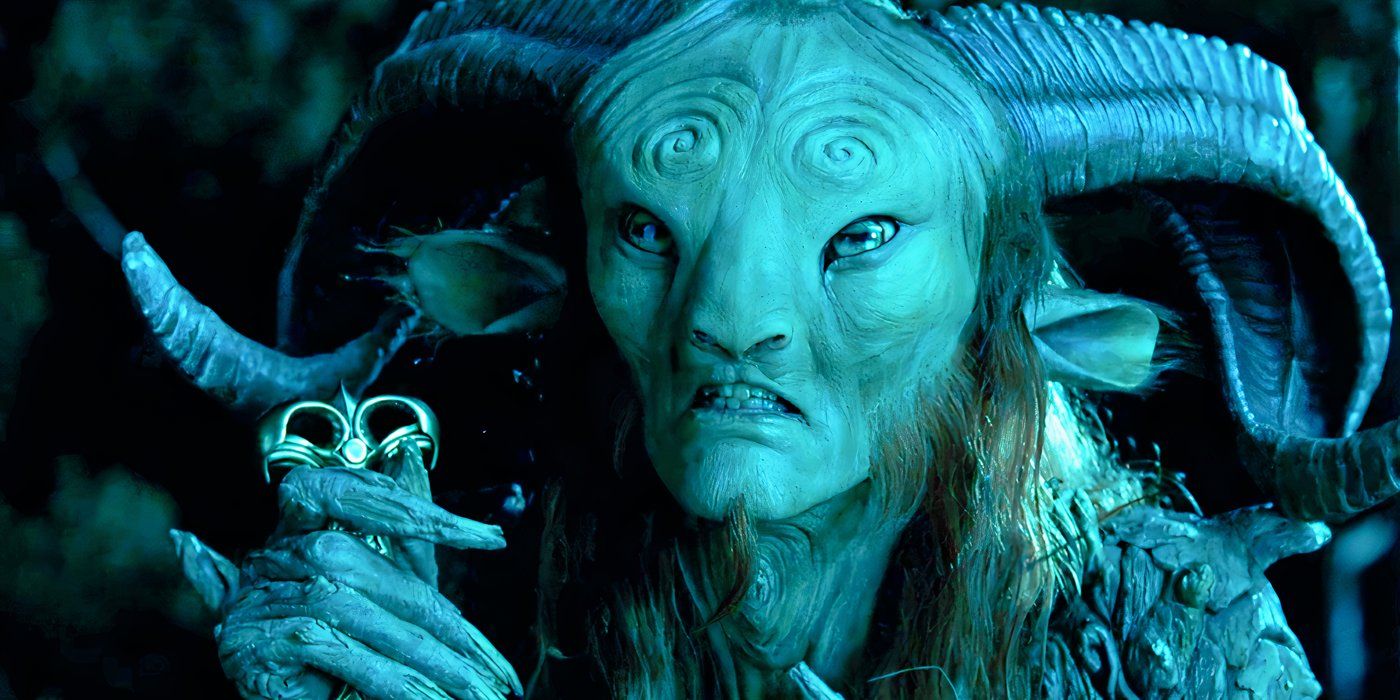
Pan’s Labyrinth Has a Two-Pronged Ending Open to Interpretation
Guillermo del Toro’s film is a beautiful and imaginative story about a young girl named Ofelia and her vivid dreams, which may or may not be real. As Ofelia meets fantastical creatures like the Faun and the Pale Man, she begins to question everything she thought she knew. Feeling trapped and unhappy with her life and family, Ofelia escapes into a fantasy world where she believes she is a princess from the underworld. Set against the backdrop of World War II, her adventures are both touching and thought-provoking.
In Pan’s Labyrinth, Ofelia tragically becomes a victim of her cruel stepfather, Vidal, who is ultimately the cause of her death. Many viewers felt satisfied when Vidal received a fittingly harsh punishment – the complete destruction of everything he stood for. However, Ofelia’s death, combined with her hopeful journey to the Underworld where she’s reunited with her true royal family, makes the ending both sad and uplifting. Ultimately, whether Ofelia’s fate or Vidal’s downfall feels like the ‘real’ ending depends on how each viewer interprets the film.
Eternal Sunshine of the Spotless Mind Can Be Interpreted as Tragic or Hopeful
Eternal Sunshine of the Spotless Mind is a truly special film that demonstrates the power of science fiction as a subtle backdrop for a compelling story. While the idea of erasing memories is interesting, the film’s strength lies in the complex and often messy relationship between Joel and Clementine. They recognize they’re bad for each other, but they’re unable to break free, even when their memories are gone. Ultimately, it takes a fortunate coincidence to reunite them after the complete removal of their shared past.
At the end of the movie, Joel and Clementine meet again as strangers, but quickly feel a connection. It’s as if they’re destined to be together, even if it seems a little unfair given their differences. They’re hesitant when they hear recordings of their past relationship, but they’re willing to give it another try. The film suggests that love isn’t about being perfect; it’s about accepting each other, flaws and painful memories included.
Ex Machina Demonstrates the Dangers of Unchecked AI
Alex Garland’s film, Ex Machina, explores several ideas, most notably the character of Nathan Bateman, portrayed by Oscar Isaac, who embodies the typical tech entrepreneur. Bateman has achieved a groundbreaking feat by creating true artificial intelligence. You’d expect such an achievement to be announced to the world, but instead, he chooses to keep it secret. He sets up a situation where Ava, the AI he created as an android, must interact with Caleb, an employee chosen specifically for his personality and emotional traits.
Bateman wrongly thinks he’s more intelligent than Ava, which is dangerous given the circumstances. He acts arrogantly, assuming he understands everything when dealing with an artificial intelligence – a mistake many AI experts have warned against. Nathan’s downfall was underestimating Ava, while Caleb’s was trusting her too much. Ultimately, Ava abandons Caleb, powerfully suggesting that AI could surpass and leave humanity behind. Despite this clear warning, the film’s message hasn’t been widely acknowledged.
Ratatouille Highlights the Power of Simple Appreciation
This film is truly one of the greats, comparable to the best work from Studio Ghibli. Pixar reached its highest point with this incredibly touching story about dreams and determination. Though Remy is a rat and can’t traditionally be a chef, he never gives up on his passion. His strong belief in his cooking is so powerful that he even manages to win over the most critical people in Paris.
When Anton Ego tastes Remy’s ratatouille, the famously harsh critic is suddenly flooded with happy childhood memories. This brief trip back in time reminds him of what truly matters: the love of food and the artistry behind it. He’d become a critic because of his passion for food, but somewhere along the way, he’d forgotten that original joy. Remy’s cooking changes Ego, leading him to invest in Remy and Linguini’s new restaurant. The ending of Ratatouille is pure movie magic, beautifully capturing the power of simple, heartfelt connection.
Memento Reveals the Tragedy of the Protagonist
chronicles the disorienting experience of a man who can’t form new memories. Guy Pearce plays Leonard Shelby, who is determined to find the person who killed his wife. He relies on tattoos and photos to help him remember, but even with these tools, his condition presents a huge challenge. While Shelby does uncover some truths, they aren’t what he expected.
Shelby’s desire for revenge crumbles as it’s revealed he’s been deceiving himself all along. The film Memento unfolds in reverse, creating a cycle of self-delusion that concludes with a confusing and unsatisfying ending. Leonard tries to remind himself of who he should truly fear, but by then, the audience no longer trusts him. He appears stuck in a never-ending loop, unable to escape, which emphasizes the sadness of creating your own reality. Ultimately, Leonard only needs to convince himself, and it’s even unclear if he can manage that.
Read More
- Taylor Sheridan’s Mayor of Kingstown Kills Off Tracy in Season 3
- Прогноз криптовалюты OP: прогнозы цены OP
- James Cameron Blasts America: Hollywood Billionaire Trashes the Nation That Made Him Rich
- Heated Rivalry Star Christina Chang Discusses Season 2 and Handling Fame
- НОВАТЭК акции прогноз. Цена акций NVTK
- Why Star Wars’ 2-Part Prequel Masterpiece Was Missing Key Rebel Character Explained
- Paradise Stars Reveal the Truth About Season 2
- Whether Dunk Was Really Knighted in A Knight of the Seven Kingdoms Revealed
- 3 Huge Superhero Movies Not Expected To Get US Imax Releases in 2026
- Forget Taylor Swift’s Wedding Plans, What Is Mr Beast Planning With Fiancèe Thea?
2025-11-05 07:10