Staying relevant in the superhero world is tough. Without ties to well-established heroes, most new characters quickly fade away. Even joining a team doesn’t guarantee lasting power, as stories tend to return to the original, core group of heroes.
Characters in comics don’t last forever. Writers will either have them die or simply remove them from the story, often with a quick explanation, and they’re never heard from again. It’s a common occurrence, but fans still find it disappointing.
Empress debuted as a hero in the comic book series Young Justice. Seeing Arrowette in action inspired her to become a crime fighter. While she wasn’t as skilled with a bow and arrow as Arrowette, Empress possessed limited mind control, some magical abilities, and training in martial arts.
Empress was essentially sidelined after the end of Young Justice. During a mission, her parents were turned into children, and she ended up spending most of her time caring for them. Considering her special abilities and memorable costume, it’s unfortunate she wasn’t included when the show shifted focus to the Teen Titans.
Okay, so Secret’s origin story is seriously messed up. Basically, her brother went bad and, as a first act of being evil, shocked her while she was in the bath. She somehow lived, but it totally changed her – she’s now stuck between the world of the living and whatever comes after. It’s a pretty heavy thing to deal with, even for a superhero, and explains a lot about why she is the way she is.
This version of Raven, as seen in Young Justice, was a kind-hearted character with a troubled background. A key part of her story was her journey to understand and manage her abilities. Unfortunately, the storyline ended with Darkseid transforming her into a human, and she hasn’t been prominently featured since.
So, I’ve been following Young Justice for a while, and Cissie King-Jones – aka Artemis – was one of the originals, joining up with Wonder Girl and Secret right from the start. Her dad used to be an archer, and she was seriously good – like, Olympic-level good! She was a key part of the team for a good stretch, but she ended up stepping down after a mission where things almost went way too far. She nearly took someone’s life, and it just made her decide she needed to retire.
Cissie added a sense of seriousness to the Young Justice team, and her decision to leave emphasized the weight of their responsibilities. While she continued to appear in the story as a supporting character, she became less important as comic books began to feature fewer supporting roles in the 2000s, eventually being written out. She has reappeared occasionally since then, but always briefly and without a major storyline.
In the early 1990s, DC Comics revamped the Legion of Super-Heroes, intentionally separating them from the Superman storyline. Among the new members was Jenni Ognats, who had a unique background: she was a descendant of Barry Allen and Iris West, the famous Flash couple. While the reboot focused on fresh characters and ideas, Jenni stood out as one of the few heroes with ties to DC’s established history.
XS was a great character who allowed the Flash legacy to continue far into the future. Unfortunately, DC’s frequent reboots have largely erased her from continuity. Since the ‘Flashpoint’ event, she’s only appeared a handful of times, and those appearances haven’t really explored her potential.
Toni Morrison first appeared in the mid-1990s as the Teen Titans experimented with new team members. Initially believing she was an ordinary teen, Toni discovered she had superpowers when aliens called the H’San Natall teleported her away, as they planned to invade Earth. Instead of helping the aliens, Toni chose to fight against them and became a hero.
Argent had the incredible ability to create things out of energy, making her a hero with huge promise. While her time with the Teen Titans was interesting, it didn’t last very long, and she largely faded into obscurity afterward.
Gates is often considered one of the most humorous superheroes. He was intended to be a member of the Legion after the Zero Hour event, but unlike the other recruits, he wasn’t enthusiastic. A natural rebel, Gates didn’t want to work for the United Planets and actually saw the Legion as a potentially harmful military organization – he had to be compelled to join.
Gates was a huge asset to the team because he could teleport almost anywhere. He stayed with the group through the Post-Zero Hour Legion, but when the team was rebooted again, he was largely left out. Since he wasn’t an original member, he only showed up briefly in big Legion of Super-Heroes stories.
Citizen Steel first joined the Justice Society of America as the team grew to include more heroes from the Golden Age. Nathaniel Heywood came from a family with a history of cybernetic enhancements, but he didn’t want to be a hero himself. That changed when the villain Reichsmark attacked his family, killing most of them with a unique liquid metal. During the attack, Heywood’s body was transformed into living steel.
Citizen Steel was originally meant to be among the next generation of heroes, but his time with the team was unexpectedly brief. He was only able to work with them for about five years before the Flashpoint event completely changed the DC Universe. Since then, DC Comics hasn’t reintroduced him in any stories.
Sodam Yat began as a minor character briefly mentioned in a story within the Tales of the Green Lantern Corps comic book, originally written by Alan Moore. Later, in the mid-2000s, he became an official member of the Green Lantern Corps. Being a Daxamite, Sodam Yat possessed abilities similar to Superman’s, and uniquely, contained one of the emotional energies that power the Lantern Corps within himself, making him a truly powerful being.
Despite showing promise, the character only appeared in a little over 50 issues before being dropped when DC Comics relaunched its universe after the New 52 event. When he returned, he was drastically different, now aligned with an isolationist political group on Daxam. Given how frequently the Green Lantern Corps faces incredibly powerful foes comparable to Superman, it’s surprising he fell into obscurity.
Solstice stood out as a positive addition to the Teen Titans after the team led by John Johns ended. Her friend, Kiran Singh, discovered she could create powerful solar energy. She was a lively and unique character who brought much-needed diversity to the team, and wasn’t simply a continuation of an existing hero’s story.
After that, DC Comics significantly altered her powers when they launched the New 52, which also led to a change in her personality. She stayed with the team for a few years before the storyline moved her to the future, where she joined an alternate Kid Flash. Many fans consider this one of the most controversial decisions in the history of the Titans.
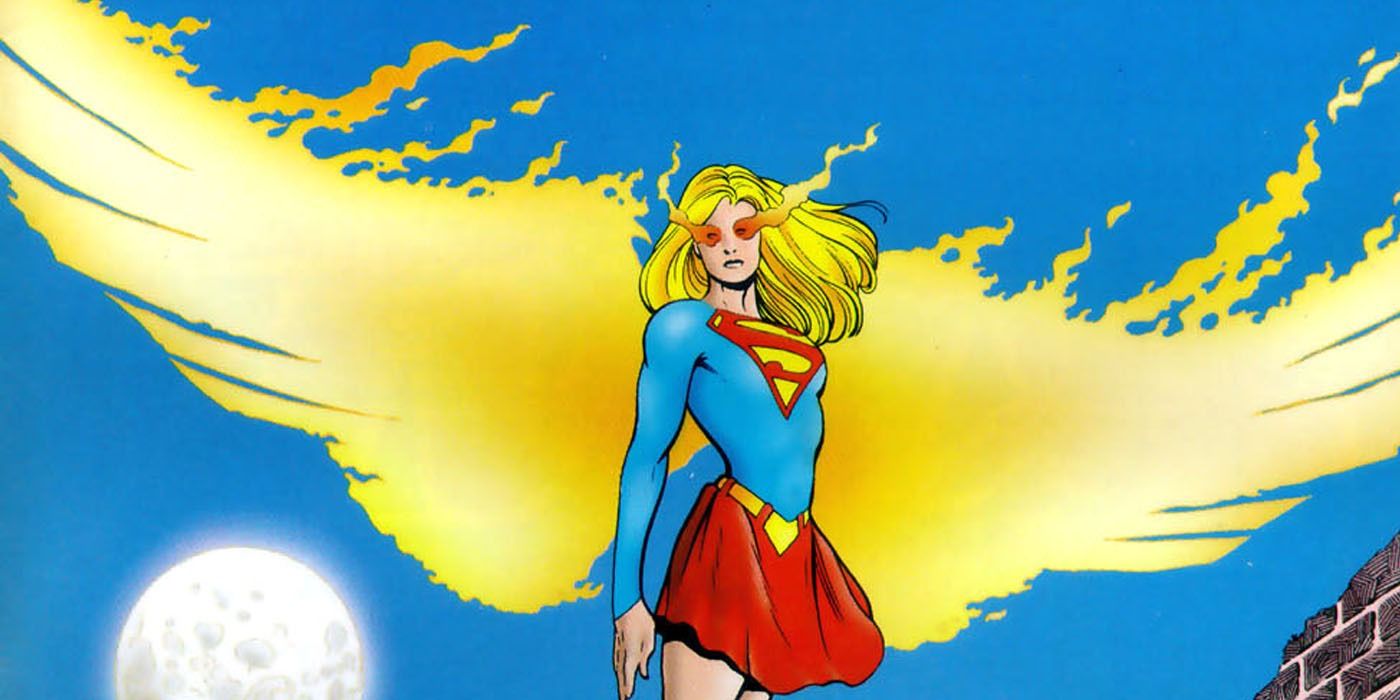
Back in the 1990s, DC Comics wasn’t keen on Superman having a large extended family. Because of this, characters like Superboy and Supergirl had their origins changed to separate them from Superman’s Kryptonian heritage. For Supergirl, the story became quite complicated: a powerful, but flawed, clone of Lana Lang from another dimension combined with a teenage girl named Linda Danvers to survive.
Linda Danvers starred in her own successful and well-regarded comic book series in the late 1990s. However, in the early 2000s, DC Comics decided to re-establish a connection between its heroes and Krypton, bringing back the character Kara Zor-El. As a result, Linda’s series was canceled, with the story explaining she’d traveled to a different universe. Since then, DC has largely ignored the character, rarely including her and often acting as if she never existed.
2026-05-30 14:14