Memorial Day marks the unofficial start of summer, bringing with it busy beaches, barbecues, and, eventually, relaxing indoors with air conditioning and a good movie marathon.
For me, the best summer movies aren’t always about sunny escapes. They capture that feeling of being untethered – when daily life falls away and anything seems possible, even a little risky. I’m talking about first loves, staying up all night, sweltering heat, chaotic family vacations, and that bittersweet feeling you get when you know things are about to change. It’s a specific mood, and certain films just nail it.
Great summer movies recognize that summer evokes different feelings depending on the year. Sometimes it’s about carefree fun, other times it’s a bit more wistful. Some summers feel like beaches and sunshine, while others are filled with impulsive choices. These ten films all capture a unique summer vibe, and watching them again isn’t just entertainment – it’s like revisiting a past version of yourself, when time seemed to stretch on forever and life felt simpler.
Jaws (1975)
Before Steven Spielberg’s Jaws, the idea of a summer blockbuster movie wasn’t really a thing. Jaws essentially created the concept—and then cleverly played on our fears about the ocean. What makes the film still so effective after fifty years isn’t the shark itself (it’s not even very realistic, and that somehow adds to the tension!), but the incredibly realistic portrayal of the town of Amity. The sweaty local politics, the mayor prioritizing tourism revenue over public safety, and the relatable character of Chief Brody—a regular guy who sees the danger and feels powerless to stop it—are what truly make the movie stand out.
The final confrontation on the boat—with Scheider, Shaw, and Dreyfuss building suspense and terrifying both each other and the viewers—is still one of the most impressive scenes in American movie history. Many people feel that watching Jaws every summer is a tradition.
National Lampoon’s Vacation (1983)
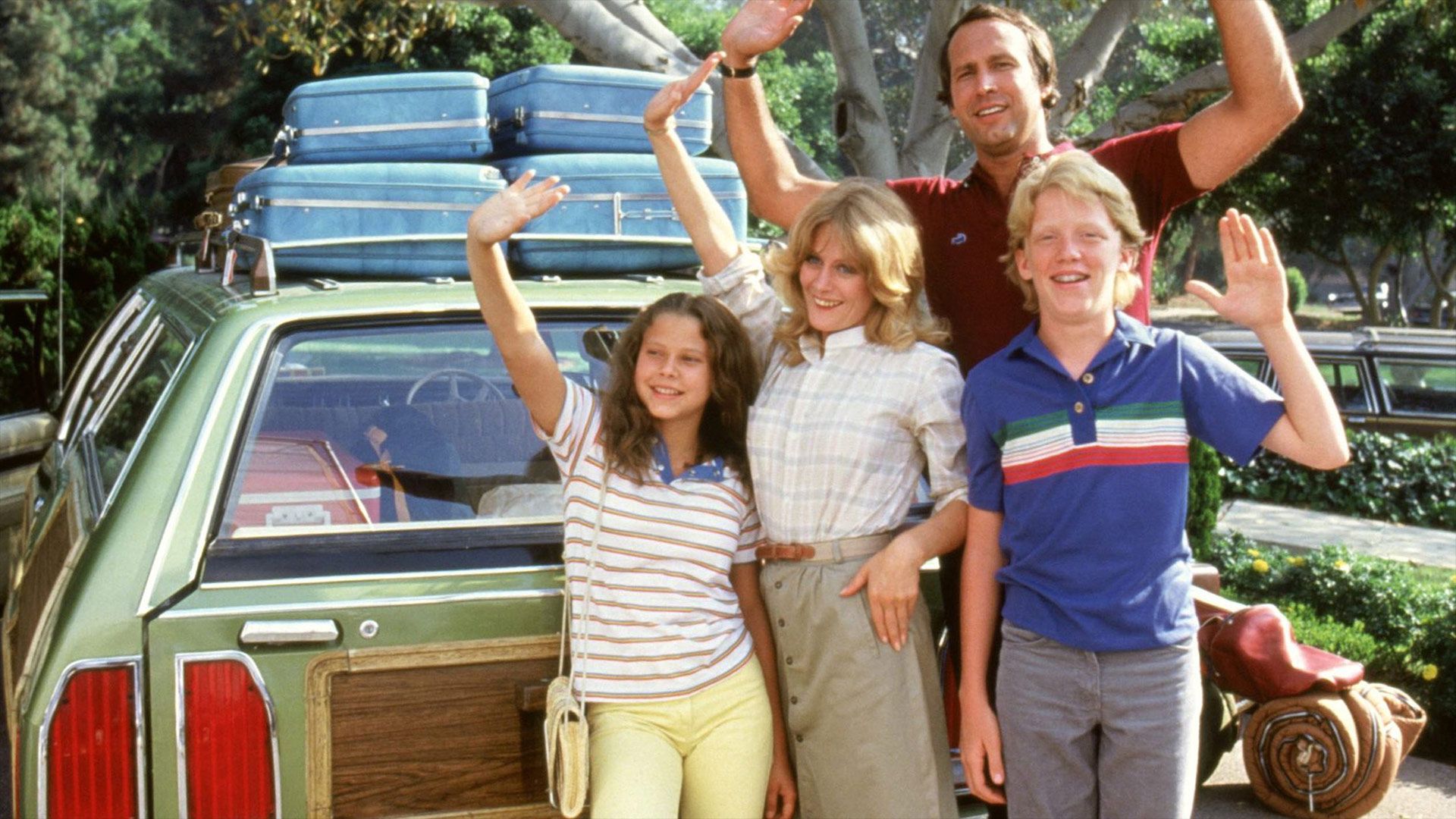
John Hughes understood that in family movies, the real story of a road trip isn’t always about the journey itself, but about how the person organizing it changes along the way. Chevy Chase’s character, Clark Griswold, is a classic comedic creation from the 1980s—a man so determined to have the perfect family vacation that he unknowingly leads his loved ones into frustrating and unpleasant experiences, completely missing the humor in it all.
You know, what I really appreciate about Harold Ramis’ direction in National Lampoon’s Christmas Vacation is that even with all the crazy stuff happening, it feels real. Every family has that one person like Clark Griswold, always trying too hard, and honestly? Most families are that chaotic holiday trip. That’s why the movie still resonates with me, and why it’s so funny after all these years.
Stand By Me (1986)
This film beautifully portrays that bittersweet last summer of childhood—the one right before life changes, when you’re gaining independence but haven’t yet realized what you’re leaving behind. It follows four kids who stumble upon a dead body in the Oregon woods, and the story unfolds over a weekend that feels like an entire childhood packed into a few days.
The main reason to rewatch Stand By Me is River Phoenix’s performance as Chris Chambers. He portrays a depth of sadness in a twelve-year-old that feels incredibly mature and insightful. His scenes capture the film’s central idea: childhood isn’t always carefree, and some kids face hardships too soon. Both the director, Rob Reiner, and the writer, Stephen King, understood this, and subtly revealed it at the very end of the movie.
Dirty Dancing (1987)
You don’t typically go to a summer resort expecting a dance teacher to change how you see the world, but that’s exactly what happens in Dirty Dancing. The movie gets something right about vacations—when you escape your everyday life, the usual rules go out the window. Whether that’s a good thing or a disaster really depends on what your parents think of Patrick Swayze’s character.
Eleanor Bergstein’s writing gives the character Baby a real journey of self-discovery, not just a love story, and Jennifer Grey convincingly portrays her transformation from a naive girl into someone with strong beliefs and courage. Patrick Swayze makes Johnny a character worth fighting for – worth the drama with his family, the awkward moments, and everything else – and he succeeds. The final dance feels earned because the movie builds to it so effectively.
Do The Right Thing (1989)
Spike Lee masterfully transformed a sweltering Brooklyn summer into a remarkably well-crafted film exploring race in America—a truly impressive feat. It’s especially notable considering a central, hilarious debate within the movie revolves around whether a local pizzeria should display photos of Black celebrities. The humor is genuine, the neighborhood feels vibrant and real, and the oppressive heat is palpable. But beneath it all, tensions quickly escalate.
Spike Lee’s Do the Right Thing still feels incredibly relevant today because it captures how summer isn’t always carefree. Often, it’s a time of intense pressure and limited options. The film steadily builds tension with each scene and conversation, and by the time the conflict erupts, you’re completely immersed in its world, leaving you with no easy answers or comfortable perspective. This isn’t a flaw – it’s precisely what the film intends to achieve.
Point Break (1991)
Kathryn Bigelow’s film follows an undercover agent investigating bank robbers who surf. She directs the movie with such skill and seriousness that it feels wrong to criticize anything about it – even the unusual focus on the ocean and the philosophical musings of Patrick Swayze’s character. The California sunshine and waves are almost like characters themselves, and the FBI investigation mainly serves as a way to get Keanu Reeves surfing.
The ending of Point Break often gets overlooked, and it’s surprisingly somber – a stark contrast to the film’s vibrant and exciting first two hours. Bodhi willingly faces a dangerous storm at sea, and Johnny Utah makes the difficult choice to let him go, with Bigelow clinging on for a fleeting moment. It’s a reminder that all good things must come to an end, and the film subtly suggests that grieving the loss of something beautiful isn’t necessarily a negative thing.
Dazed and Confused (1993)
The film Dazed and Confused captures a single day – the last of school – when summer feels full of possibility. It doesn’t focus on a traditional story, but rather on a feeling: that unique, energetic sense of being a teenager with freedom and a whole summer stretching out ahead.
Everyone remembers McConaughey’s character, Wooderson, but the true brilliance of the movie is how it captures the feeling of endless summer nights with teenagers – even though nothing much happens. It’s just a party in a field, loud music, and aimless fun. And that’s exactly the point. The movie isn’t about learning a lesson; it’s about those summers that are just meant to be experienced, and Linklater boldly made an entire film celebrating that idea.
The Sandlot (1993)
The summer starts with a new kid in town, a local sandlot baseball field, a huge dog patrolling the neighboring yard, and a very special baseball—one that absolutely must not be lost over the fence. From there, everything unfolds exactly as it should. While The Sandlot is centered around baseball, it’s really about much more than the game—much like Jaws isn’t really just about a shark. It’s a story about something much deeper and more emotional.
David Mickey Evans perfectly captures the feeling of nostalgia in this film – it’s warm and inviting, but also knows it’s looking back at the past. The fireworks scene is truly stunning, and James Earl Jones gives an unexpectedly powerful monologue as Babe Ruth. What really ties it all together is the narrator, who understands that childhood summers can’t last forever, and that’s exactly how this story needed to be told.
The Parent Trap (1998)
I absolutely adore Nancy Meyers’ take on that classic film! It’s amazing how she reimagined it, setting a big part of the story at a summer camp, and then entrusted the entire movie to a young Lindsay Lohan, playing twins in every single scene. Honestly, the fact that it works – and not just works, but actually surpasses the original, in my opinion – is all thanks to Lindsay. She created two characters that felt completely separate – I never got them mixed up! – and she did it through subtle things like their accents, how they carried themselves, her perfect comedic timing, and even the way they expressed emotions. It’s more differentiation than many experienced actors achieve with a single character, which is truly impressive.
Meyers brilliantly recognized that the true appeal of this story isn’t about bringing the parents back together. It’s the magical summer camp setting—the lake, the cabins, the fencing, and the wild idea that your identical twin could be nearby. Anyone who saw The Parent Trap probably spent the next summer secretly looking around, hoping to spot their double.
Weekend at Bernie’s (1989)
Imagine the Hamptons in August, a beach house, and a recently deceased boss. That’s the setup for Weekend at Bernie’s, a movie built around a single, hilarious idea. The film works brilliantly because the joke is strong, Terry Kiser plays his part perfectly, and director Ted Kotcheff skillfully keeps the situation fresh and funny without letting it become ridiculous and fall apart.
The humor lasts surprisingly long because of the underlying message. Larry and Richard would go to extreme lengths – even dragging a fake corpse to a party and posing it throughout the weekend – rather than give up on their pursuit of a better life. What was a joke in 1989 now feels like a boastful professional update.
2026-05-25 20:35