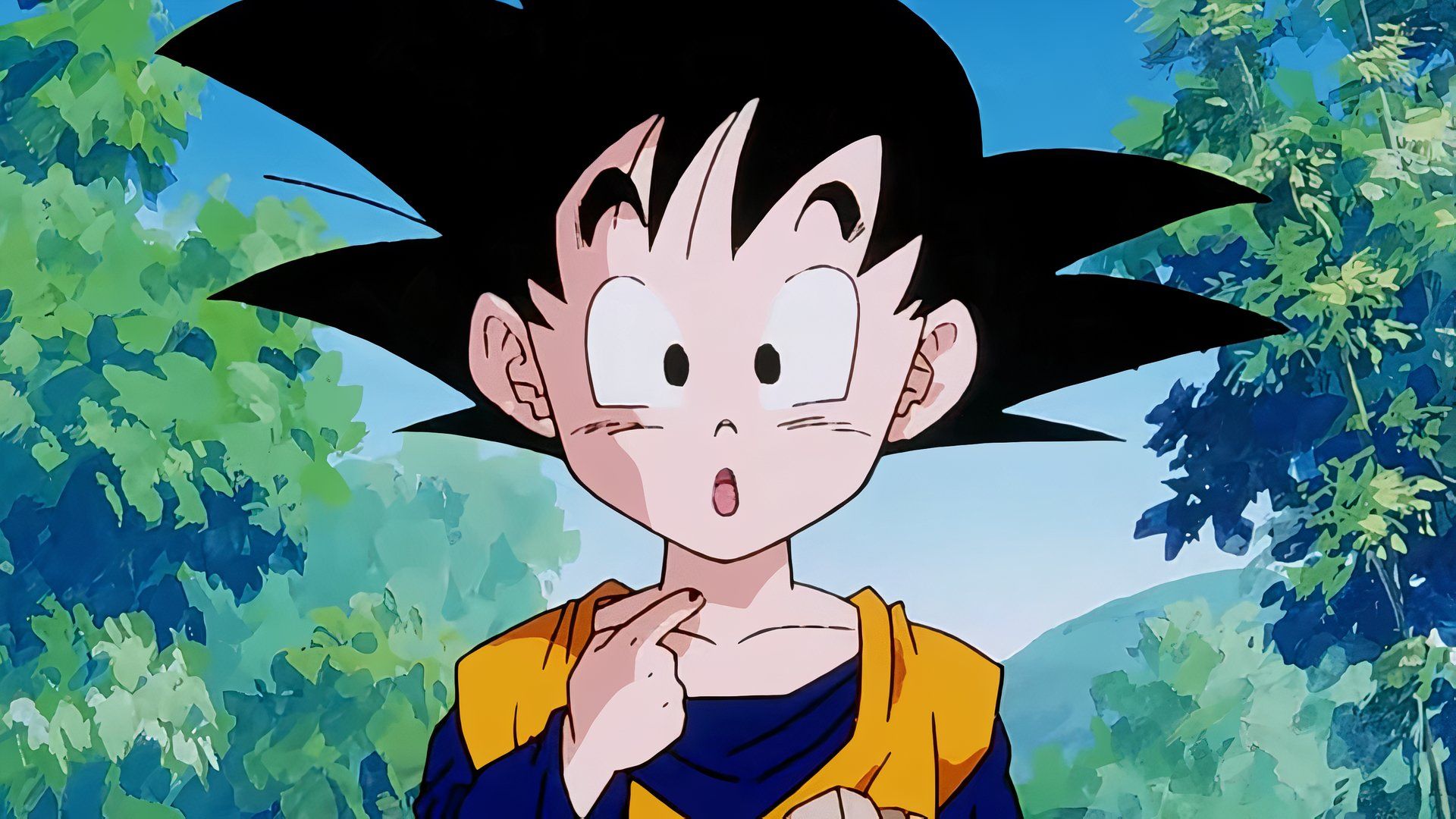
The series concludes by hinting at exciting possibilities for the future. We see Goku discovering Uub, Gohan starting a family, and Goten and Trunks with potential for further development, alongside other Earth fighters who could step up. The ending feels less like a final goodbye and more like a passing of the torch. Unfortunately, that torch is never truly passed. Ever since Dragon Ball Z, the story consistently returns to focusing on Goku and Vegeta as its central figures.
Focusing on these main characters is understandable – they’re the most popular – but it unfortunately sidelines many others. Some are stuck repeating the same story beats, while others briefly reappear then vanish. It’s disappointing because these sidelined characters have potential and interesting backgrounds, but the franchise consistently underutilizes them.
The Franchise Rarely Let Android 18 Be Dangerous
Android 18 is a truly captivating character, which is why it’s disappointing to see her have a smaller part in the stories after Dragon Ball Z. When she first appears, she completely shifts the feel of the Android Saga. She’s cool, fashionable, incredibly strong, and fearless. She confidently enters the scene and easily defeats even Super Saiyans. That’s precisely why her reduced role later on feels so unsatisfying.
Android 18 used to be a truly terrifying opponent, capable of overwhelming even the strongest heroes. However, the series has largely sidelined her, portraying her primarily as a supportive role – a wife, mother, or a fighter who has brief moments of glory before being overshadowed by the main plot. While Dragon Ball often acknowledges her strength and coolness, it rarely gives her a significant role to play.
Videl Lost the Edge That Made Her Stand Out
I absolutely love Videl’s introduction in Dragon Ball Z! She felt so fresh – a genuinely strong personality, and so much more down-to-earth than Goku or the other powerhouses. She wasn’t some distant god or Saiyan; she was actively fighting crime, pushing herself in training, and refusing to be sidelined just because she wasn’t super strong. She brought this really cool, human element to the fights early on. It’s a shame that side of her character got lost a bit as the series went on, though. It really added something special at first!
Videl joins Gohan’s family, but the series doesn’t explore her character much after that. She loses her individual motivation and becomes more of a supporting character. Her skills as a martial artist, her confidence, and her dedication to doing what’s right all fade into the background, turning a once-strong character into someone who mainly exists to help others.
Yamcha Became a Punchline Instead of a Veteran
Yamcha once played a key role in the Dragon Ball series, starting as a desert bandit and becoming a skilled martial artist alongside Goku and the others. While he faded into the background after Dragon Ball Z, his earlier contributions and history with the franchise still deserve recognition.
After Dragon Ball Z finished, Yamcha became largely known as a comedic relief character. While his defeat by the Saibaman initially damaged his image, subsequent stories continued to portray him as ineffective. He’s often used to highlight how much stronger the main characters have become, surpassing the level of ordinary humans, but he rarely gets a chance to contribute in a significant way. Unfortunately, the series frequently uses him as a symbol of weakness or failure.
Dragon Ball Refuses to Reward Tien’s Training
Tien is arguably the most dedicated martial artist in the entire Dragon Ball series. He’s constantly training and maintains a traditional martial arts spirit, even in a world of gods and powerful Saiyans. His backstory gives him significant depth – he begins as a formidable enemy but earns Goku’s respect and becomes a trusted friend. Because of this journey, he deserves a more prominent role in the story after DBZ.
Tien shows up whenever Earth needs help in a fight, but his hard work doesn’t seem to make a real difference. The story focuses on him training constantly, yet he rarely gets to demonstrate significant progress. This creates a disconnect between his dedication and what we actually see him accomplish. He’s often around, but never truly plays a key role, which feels like a missed opportunity for such a strong and capable warrior.
Android 17 Got a Great Comeback, but Not Enough Follow-Through
Android 17’s appearance in Dragon Ball Super highlights his continued coolness, intelligence, and calm demeanor, making him a standout character. His return as a park ranger with a peaceful family life is a particularly smart move by the series, showing his personal growth and hinting at the character’s untapped potential.
I always felt like Android 17 vanished for a long stretch of time after the Cell Saga, and a lot of what he did afterwards wasn’t really shown to us. Even though he proved he was strong enough to fight alongside the best, the story quickly shifted focus. It’s good he wasn’t completely forgotten like some characters, but overall, I think he could have been used a lot more.
Majin Buu Is Too Powerful to Keep Getting Written Out
Majin Buu has the potential to be one of the most powerful and helpful characters in the Dragon Ball series. His abilities are incredibly strong and make him a fascinating character. By the end of Dragon Ball Z, he demonstrates that even the most terrifying villains can change and become more peaceful without completely losing their power.
This character had the potential to be a significant unpredictable force after Dragon Ball Z. However, the series consistently sidelines him during key conflicts. He’s either put to sleep, someone else takes over, or he simply vanishes from fights. This is unfortunate, as he brings a unique element of unpredictability that Goku and Vegeta lack. Instead of utilizing his creative fighting style, the series often treats him as a comedic relief character.
Kid Trunks Had Saiyan Royal Potential and Nowhere to Take It
Kid Trunks seemed destined to be an incredibly powerful fighter. As the son of Vegeta and Bulma, he inherited both Saiyan strength and a brilliant mind. He mastered the Super Saiyan transformation at a remarkably young age, indicating his potential was exceptional, even for the world of Dragon Ball. Everything suggested he’d become a key fighter in the series.
Kid Trunks remains largely unchanged after the Z series. He’s still boastful and playful, and his story heavily revolves around his friendship with Goten. While this can be enjoyable, it prevents him from developing as an individual. He often feels stuck as a child in a series that doesn’t allow its younger characters to mature meaningfully.
Gotenks Went From Secret Weapon to Comic Relief
I always found Gotenks to be over-the-top, but that’s really what makes him so fun. Fusing Goten and Trunks brought a wonderfully chaotic energy to Dragon Ball Z, making him a uniquely powerful fighter. He’s incredibly strong, but also really immature, and his bizarre attacks just felt right for the fight against Buu. Basically, he’s the immense power of two kids who completely overestimate themselves. But after the Buu Saga, that comedic angle started to hold him back a bit.
Gotenks is still amusing, but the series tends to rely on the same joke repeatedly. He usually shows up, acts cocky, attempts a powerful move, and then fails. While this is often funny, it doesn’t fully utilize the potential of his fusion. Gotenks could have evolved alongside Goten and Trunks, but instead, he’s stuck as a character defined by the lighter moments of the Buu Saga.
Uub Was Introduced as the Future, but Barely Got to Exist
The conclusion of Dragon Ball Z introduces Uub as a key figure for the future. As the reincarnation of the villain Kid Buu, he possesses immense, untapped power. However, Uub is initially timid and doesn’t realize the huge role he’s destined to play. Goku choosing to train him implies that Uub will become a powerful warrior and potentially the next defender of Earth.
After introducing Uub with a lot of potential, the series doesn’t really develop his character. While he’s meant to be important – as Goku’s potential student, Buu’s rebirth, and a future strong fighter – he mostly feels like a concept rather than a fully realized person. This is disappointing considering the initial build-up surrounding his introduction.
Goten Had the Most Potential and the Least Direction
Pan, Goku’s second son, offers a fresh take on the Saiyan narrative. Unlike his older brother Gohan, Pan isn’t weighed down by expectations or the need to excel academically. He’s growing up in a more peaceful era, with established heroes already protecting the world. This unique upbringing and his potential as a Saiyan should make him a compelling character.
Goten never really gets a chance to shine as his own person. When he’s young, he’s mostly known for fusing with Trunks. Even as he grows up, the story doesn’t give him much of an identity beyond being Goku’s son or Trunks’ friend. Unlike Gohan and Future Trunks, he doesn’t face significant emotional challenges or dramatic conflicts. It’s disappointing, considering how much potential he had.
2026-05-28 16:40