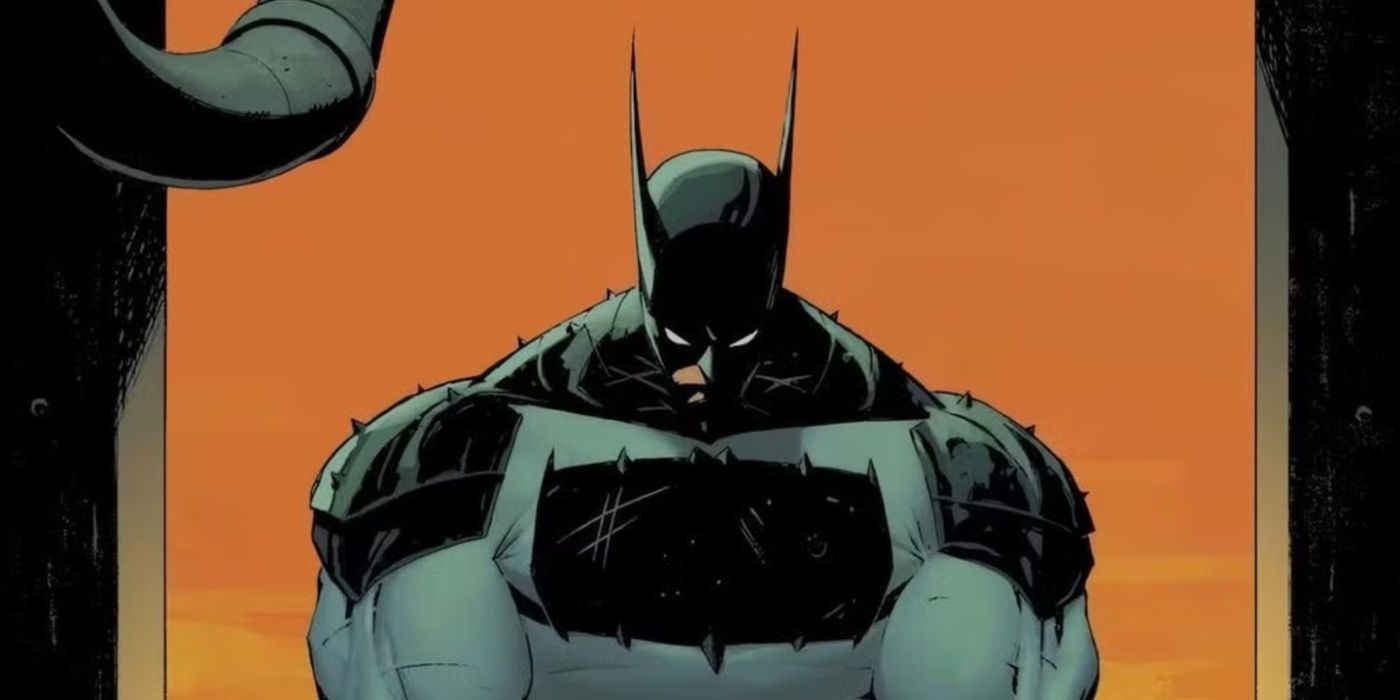
Having debuted nearly 90 years ago, this character—along with many of their key friends and enemies—has a long history. Over decades of stories, these characters have gradually evolved into the beloved figures fans recognize today, becoming much more complex than their original versions.
Characters like Harley Quinn, Barbara Gordon, and Dick Grayson were first introduced in comic books with carefully planned storylines. While those original stories are now in the past, DC Comics has embraced new directions for these heroes and villains, and fans are really enjoying the fresh takes.
Deathstroke first appeared in 1980, created by Marv Wolfman and George Pérez as a major enemy for Dick Grayson and the Teen Titans. Initially, he was portrayed as a hardened mercenary motivated solely by violence. However, DC Comics later developed the character by giving him a strong personal code of ethics and a complicated, heartbreaking relationship with Adeline. These additions helped turn him into a more relatable and sympathetic villain.
Slade Wilson, originally a mercenary, has changed a lot over the years. While his morality used to fluctuate, after the ‘New 52’ reboot, he became increasingly portrayed as an antihero. More recently, in ‘Deathstroke: Rebirth’, he even took on the role of a mentor to his children. And in the series ‘Dark Knights of Steel: Allwinter’, a version of him is shown striving to become a hero who saves the world. This demonstrates how far the character has come from his beginnings as an unpredictable mercenary.
Mr. Freeze first appeared as a minor, ice-themed villain in Batman comics back in 1959. He wasn’t particularly compelling and often got overshadowed by more popular villains like the Joker and the Penguin. However, his story was later developed, making him a more interesting and relatable character for audiences.
The animated series Batman: The Animated Series reimagined Mr. Freeze as a tragic scientist desperately trying to cure his wife, Nora, who was frozen with a life-threatening illness. This compelling story proved popular with fans and was later adapted into the Batman comic books. As a result, Mr. Freeze transformed from a simple, one-dimensional villain into a character known for his deep sorrow and all-consuming obsession, becoming one of the most complex and emotionally resonant antagonists in Batman’s rogues gallery.
Batgirl was originally created for the 1960s Batman TV show as a female hero, and later appeared in comics in 1967. As the daughter of Police Commissioner James Gordon, Barbara Gordon was always involved in dangerous situations. In the comic storyline The Killing Joke, she was shot by the Joker, resulting in paralysis. However, this wasn’t the end of her crime-fighting career. Instead, Barbara reinvented herself as Oracle, becoming a vital source of information and technical support for the superhero team.
The experience profoundly changed Barbara, and it took her a long time to heal. However, she ultimately moved forward. While she’s still widely recognized as Batgirl – a role she’s become famous for – fans appreciate her as a complex character who’s much more than just a female version of Batman. Now, Barbara has returned to being Batgirl, but this isn’t a step back. Everything she’s been through has made her a stronger and more mature hero.
Poison Ivy first appeared in 1966 as a truly extreme villain – someone who hated people and prioritized protecting plants at all costs. However, as society began to embrace environmentalism, her character evolved. Now, she’s often seen as an antihero, and many fans actively root for her to protect the planet.
A significant development during the New 52 era was the blossoming romance between Poison Ivy and Harley Quinn. Their relationship has become incredibly popular, especially with LGBTQ+ fans, and has even been featured in the Harley Quinn TV series. This change has also allowed Ivy to move beyond the traditional, manipulative “femme fatale” role she was often stuck with in the comics for many years.
Jason Todd was first introduced as Robin in 1983. However, just five years later, a highly debated storyline called “A Death in the Family” led to his death at the hands of the Joker, a decision influenced by fan votes. He remained dead until 2005, when he was brought back to life by Talia al Ghul using the Lazarus Pit and reintroduced as the character Red Hood.
After being trained by the League of Assassins, Jason Todd was no longer the same person who had died years before. He had become a hardened vigilante, willing to use lethal force to deliver his own brand of justice. Even though he’s moved past that dark period and now works alongside Batman as part of the Bat-Family, Jason remains a cynical and troubled hero, a far cry from the hopeful young man he once was.
For a long time after she first appeared in Batman: The Animated Series, Harley Quinn was known mostly for her unhealthy and abusive relationship with the Joker. She was completely devoted to him, even accepting his mistreatment. However, she eventually escaped that toxic relationship in the early 2010s, which led to a surge in her popularity and helped establish her as a major character in the DC universe.
Harley Quinn has undergone a significant transformation, evolving from a sidekick into a leading character with her own stories. She found love, reinvented her look, and, crucially, redefined her values. Free from the Joker’s control, she discovered who she was and moved from villain to antihero, and continues to grow, though she still struggles with acting on impulse.
When Batman’s characters first appeared in comic books, they were often over-the-top and exaggerated. The Penguin, like Mr. Freeze, was originally portrayed as a showy villain who dressed like a wealthy gentleman, complete with a top hat – and that’s how he got his name. However, during the Silver Age of comics, the Penguin’s backstory was revised. He became a character who had been bullied and had a physical condition – a beak-like nose and a way of walking – that made him resemble a penguin. This change marked the start of his evolution into one of Batman’s most menacing enemies.
Oswald Cobblepot, once an odd and somewhat comical figure, has transformed into a cold and calculating crime boss. Fueled by bitterness and a desire for power, he’s shed his eccentricities and become increasingly ruthless. The Penguin is no longer a joke; he’s a dangerous criminal who now controls much of Gotham’s criminal activity.
When I first started reading about Catwoman, or Selina Kyle, it felt like her whole character was built around how attractive she was. As Batman’s love interest and a villain, there was this really intense, flirty vibe that felt… well, a bit focused on her looks. But honestly, I’m so glad that changed! Over time, Selina really became a hero in her own right, and as she started doing good, her character became about so much more than just how she looked. It’s great to see her as a complex character, not just an object of desire.
Recently, DC Comics has moved away from portraying Catwoman solely as a seductive villain and instead developed her into a hero who champions the vulnerable. Her difficult past, marked by hardship and the need to survive, now drives her to protect those in Gotham that Batman sometimes overlooks. Importantly, Catwoman’s journey is no longer defined by her relationship with Batman; Bruce Wayne is no longer central to her story, despite their strong connection.
Decades ago, the first Robin, Dick Grayson, brought a much-needed brightness to Batman’s grim world as the Boy Wonder. Both characters shared a tragic past – being orphaned – but while Batman withdrew into himself, Dick sought connection with others, showing readers there’s always a path towards hope. Though Dick hasn’t been called Robin for a while, he’s still an active hero. He’s moved past the Robin identity, but he
Once known as Robin, Dick Grayson has truly come into his own. While still connected to the Batman family, he’s stepped out of the sidekick role and become a leader – heading the Teen Titans and even becoming the protector of Blüdhaven. He’s even taken on the mantle of Batman himself at times, proving that it’s possible to heal and move forward from difficult experiences.
Batman started as a classic crime fighter, a shadowy vigilante dedicated to protecting Gotham from criminals and the mob. But over the years, the character has evolved far beyond that simple beginning. Bruce Wayne is now unique among his superhero allies – he doesn’t have any superpowers, surrounded as he is by metahumans, aliens, and even gods. However, that doesn’t limit him. He’s become an exceptional strategist with unwavering determination and a strong sense of right and wrong.
Batman has become a much more nuanced and psychologically complex character than he ever was in the early Detective Comics. Over the past few decades, the comics have shown him evolving from a driven, self-critical vigilante into a mentor, a father figure, and a leader who strives to improve himself for the sake of others. Although Bruce Wayne still carries the weight of his past trauma – perhaps not as successfully as Dick Grayson – he’s significantly less brooding than he used to be.
Found an error? Send it so it can be corrected.
Read More
- Прогноз криптовалюты BNB: прогнозы цены BNB
- Black Phone 2 Ending & Grabber’s Fate Explained
- Прогноз криптовалюты USD1: прогнозы цены USD1
- Apple TV: Home To The Highest-Paid TV Actors
- Disney Confirms Next Marvel & Star Wars Announcement Showcase For 2025
- Blizzard Beach to Close Again for Seasonal Refurbishment After Summer Operations
- Cancel Culture is Killing Horror Anime, 1 Series at a Time
- Mike Flanagan’s Unmade Shining Spinoff Must Happen After Stephen King Hit
- Apple TV’s Foundation: The New Gold Standard for Space Opera TV
- Limited-Edition Dragon Ball Release Gets Surprise Revival After 10+ Years
2026-03-07 18:12